.svg)

.svg)
.svg)



TL;DR: The account size in a futures prop firm program is not the amount a trader can lose. The usable risk is the distance between current equity and the account's hard loss floor. Beginners also confuse end-of-day drawdown updates with real-time enforcement, treat a daily loss limit like a stop loss, read consistency percentages as daily profit caps, and assume evaluation rules carry into the funded stage. Before trading, map every rule to its trigger, consequence, reset time, and effect on payouts.
Futures prop firm rules often look simple on a pricing page. Reach a profit target, stay above a drawdown limit, and move to the next stage.
The trouble starts when a trader reads the number but misses the rule's mechanics. A $100,000 account may offer only a few thousand dollars of actual loss capacity. A drawdown labeled "end of day" may still fail the account during an open trade. A profitable day can delay payout eligibility even though it did not break a trading rule.
These details matter more than the headline account size. Beginners who understand them can compare programs more accurately, choose sensible position sizes, and avoid preventable rule violations.
In This Guide
- Account Size Is Not Risk Capital
- Trailing Drawdown Can Move After Profitable Days
- Daily Loss and Maximum Loss Are Different
- Consistency Rules Do Not Cap Daily Profit
- Rules Can Change After Passing
- Payout Rules Start Before the Request
- Trading Times Create New Rule Days
- Maximum Contracts Are Not Suggested Size
- Simulated Funded Is Not Always Live Capital
- A Worked Rule Example
- A Futures Prop Firm Rule Checklist
- Frequently Asked Questions
Why Futures Prop Firm Rules Feel Confusing

Most rule errors come from treating a short label as a complete explanation. "Trailing drawdown," "daily loss," and "consistency" describe broad rule categories. They do not tell you exactly how a firm calculates or enforces them.
For each rule, a trader needs four details:
- Trigger: What exact balance, equity, time, or action activates the rule?
- Measurement: Does the calculation use realized profit and loss, unrealized profit and loss, or both?
- Consequence: Does the account pause, lose payout eligibility, or close permanently?
- Reset: Does the rule reset each session, after a payout, or never?
The table below captures several common misunderstandings.
Beginner assumption | What the rule may actually mean | What to verify |
|---|---|---|
A $100,000 account provides $100,000 of capital at risk | The practical loss capacity may be only the drawdown allowance | Starting floor, current floor, and lock point |
End-of-day drawdown is checked only after the close | The floor updates after the close and is enforced during the session | Update method and enforcement method |
A daily loss limit is the same as maximum drawdown | One may pause the account while the other closes it | Soft breach versus hard breach |
A 40% consistency rule limits daily profit | It may only set the total profit needed to pass or request a payout | Formula, period, and reset event |
Maximum contracts are a recommended position size | They are usually an outer limit, not a risk plan | Contract cap, scaling rule, and personal size |
Passing means the rules become easier | The next stage may use different drawdown, payout, or trading-day rules | Rules for every account stage |
Account Size Is Not Risk Capital

The displayed account size is an accounting reference, not a loss allowance. A trader does not have $50,000 of room to lose in a $50,000 program.
The more useful number is available risk:
Available risk = current net liquidation value − hard loss floor
Suppose an account begins at $50,000 with a hard floor at $48,000. The initial risk capacity is $2,000, not $50,000. If the floor later rises to $49,200 and the account equity is $50,400, only $1,200 remains before failure.
This changes how account sizes should be compared. One firm's $50,000 account may provide more usable room than another firm's $100,000 account. The drawdown amount, trailing method, commissions, contract limits, and payout effects all shape the real risk budget.
A beginner should set trade risk as a fraction of available drawdown, not as a percentage of the advertised balance. Risking 1% of a $100,000 headline balance would mean $1,000 per trade. That could consume a large share of the entire loss allowance in one attempt.
Trailing Drawdown Can Move After Profitable Days

A trailing drawdown is a loss floor that can rise as the account reaches new highs. It normally does not move back down after a losing day.
The phrase "end-of-day trailing drawdown" causes a frequent mistake. End of day may describe when the floor is recalculated. It does not necessarily describe when the existing floor is enforced.
For example:
- Starting balance: $50,000
- Drawdown amount: $2,000
- Starting floor: $48,000
- End-of-day balance after a winning session: $51,000
- New floor after the update: $49,000
If the account starts the next session with a $49,000 floor, touching that floor during an open trade will result in a hard breach. The trader does not get to wait for the closing balance to recover.
An intraday trailing drawdown can be less forgiving because the floor may follow unrealized gains during the session. If a position moves sharply in the trader's favor and then retraces, the loss floor may already have risen. An end-of-day model generally waits for the session result before moving the floor, but the current floor can still remain active throughout the next session.
Before trading, answer these questions:
- Does the floor trail realized balance, net liquidation value, or end-of-day balance?
- Does unrealized profit raise the floor?
- Is the floor enforced against unrealized losses?
- When does it stop trailing?
- Does a payout change or lock the floor?
The words "end of day" alone do not answer any of them.
Daily Loss and Maximum Loss Are Different

A daily loss limit and a maximum loss rule can exist on the same account, but they may have different consequences.
A daily loss limit often measures how much an account can lose during one trading session. Some firms treat a hit as a temporary lockout. Trading resumes after the next session reset if the hard account floor remains intact.
Maximum loss or trailing drawdown is commonly a hard rule. Touching the floor can close the account permanently.
The closest limit controls the immediate risk. Assume a trader starts the day with:
- $1,200 remaining above the hard drawdown floor
- A $1,500 daily loss limit
The account can hit the hard floor before reaching the daily loss limit. Waiting for an account-level daily lockout would offer no protection.
Automated liquidation is not a substitute for a stop loss. Risk checks can trigger on unrealized profit and loss, and the closing order may fill after the threshold is touched. Fast markets can add slippage. A personal stop should sit far enough inside the firm's boundary to account for commissions, slippage, and platform latency.
Also confirm when "daily" resets. Futures sessions commonly cross two calendar dates, so midnight on a trader's local clock may have no connection to the firm's rule day.
Consistency Rules Do Not Cap Daily Profit

A consistency rule usually compares the largest profitable day with total profit over a defined period.
One common formula is:
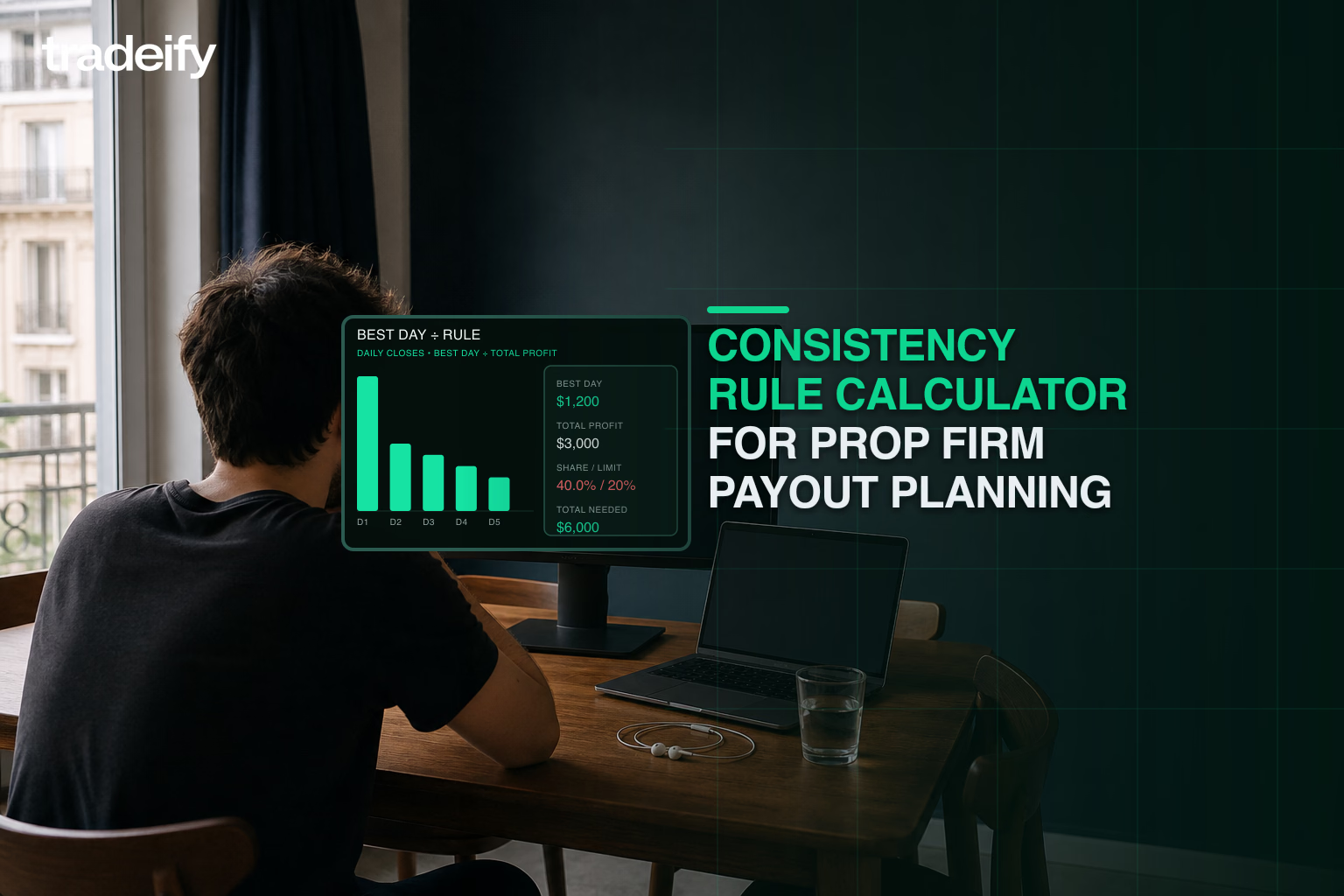
Consistency percentage = largest profitable day ÷ total net profit × 100
If the largest day is $1,000 and total profit is $2,500, the result is 40%. Under a 40% consistency requirement, the trader meets the threshold. Under a 30% requirement, the trader needs more total profit.
The required total can be calculated this way:
Required total profit = largest profitable day ÷ allowed percentage
With a $1,000 largest day and a 30% rule, total profit must reach about $3,334. The trader did not necessarily violate the account by making $1,000. That day simply increased the total profit required for the relevant stage or payout window.
Losing days can make the percentage worse because they reduce total profit while the largest winning day stays the same. Another large winning day may also fail to improve the ratio if it becomes the new largest day.
Check whether consistency applies to:
- Passing an evaluation
- Requesting a payout
- Each payout cycle
- Only certain account types
- Net profit after commissions
- Closed days or real-time results
Do not trade from the percentage alone. Read the formula and identify what happens when the percentage is above the threshold.
Rules Can Change After Passing

An evaluation, simulated funded account, and live funded account are separate stages. Passing one stage does not guarantee that every rule remains the same.
Possible changes include:
- A new daily loss limit
- A different drawdown lock point
- Lower starting contract limits
- A scaling plan
- Minimum profitable or trading days
- New payout consistency requirements
- Restrictions that apply only after funding
- A reset of the account's reference balance
This is why choosing a program based only on the evaluation target can backfire. A fast evaluation may lead to a funded stage that does not fit the trader's normal holding time, average loss, or payout goals.
Read the rules in sequence. Start with the evaluation, then review the first funded payout cycle, later payout cycles, and any criteria for moving to live capital. Build a separate rule sheet for each stage.
Payout Rules Start Before the Request

A profit split tells you how eligible profit is divided. It does not tell you when profit becomes eligible.
Payout policies may include:
- A minimum account balance or safety buffer
- A minimum number of trading or winning days
- A consistency percentage
- A minimum and maximum request amount
- A waiting period between requests
- A cap tied to account size or payout number
- A requirement to earn new profit after the prior payout
- A change to drawdown after funds are removed
A trader can be profitable and still be ineligible to withdraw. That is not the same as failing the account. It means the account has not met the current payout conditions.
The post-payout balance deserves special attention. If a payout removes most of the cushion above a fixed loss floor, the account may reopen with very little usable risk. A large approved payout can therefore reduce the room available for the next trade.
Before requesting funds, calculate:
Post-payout cushion = expected remaining equity − loss floor after payout
Plan the next position size from that cushion. Do not assume the original drawdown amount will be restored.
Trading Times Create New Rule Days

Futures markets trade for much of the day, but a prop firm's trading day follows its stated session boundary. The session may begin in the evening and end the following afternoon.
That creates several traps:
- Two trades placed on the same calendar date can count as different trading days.
- A trade opened in the evening may belong to the next session.
- The daily loss calculation may reset at the session boundary, not at midnight.
- Positions may need to be flat before a maintenance break or early holiday close.
- An automatic close can produce a worse fill than a planned exit.
News rules also vary. A firm may allow trading through scheduled announcements, limit it by account type, or prohibit specific strategies around the release. "News trading allowed" should not be read as protection from spread changes, thin liquidity, slippage, or a hard loss-floor breach.
Keep the firm's time zone next to every deadline. Check holiday schedules separately because early closes can move the required flat time.
Maximum Contracts Are Not Suggested Size

The maximum contract count is an upper boundary. It is not the size a trader is expected to use.
Contract risk depends on the instrument, stop distance, and dollar value per point or tick:
Trade risk = stop distance × value per point or tick × number of contracts
A five-point stop in one market can carry a very different dollar risk from a five-point stop in another. Volatility can also make a normal stop distance too tight or too expensive for the account's remaining cushion.
Micro futures can help traders size below one standard contract. They do not make an oversized plan safe by themselves. Ten micro contracts can approximate one corresponding mini contract, and transaction costs can become more noticeable when many small contracts are used.
A practical size should be based on:
- Personal risk per trade
- Remaining drawdown cushion
- Maximum planned daily loss
- Stop distance supported by the setup
- Contract value and commissions
- Room for normal slippage
The platform contract cap should be the last check, not the first input.
Simulated Funded Is Not Always Live Capital

The word "funded" does not always mean the trader is placing orders in a live brokerage account with company capital. Many programs begin with a simulated funded stage. Trades occur in a simulated setting while payouts may be based on eligible simulated profits under the program agreement.
A firm may move selected traders to a live account later. The timing, criteria, and rule changes vary by program.
This distinction matters for three reasons:
- Marketing labels do not replace the account agreement.
- Simulated performance can differ from live execution.
- A move to live capital may introduce a new balance, size, or risk process.
Read the disclosure and agreement for the exact account type. Confirm whether results are simulated, how payouts are funded, and what conditions apply to a live transition.
A Worked Rule Example

Our current rules show why traders must separate rule updates from rule enforcement. Our trailing max drawdown updates from end-of-day balances, but it is enforced in real time. Touching the current floor during an open trade fails the account immediately, even if the balance would have recovered by the close. Our daily loss limit works differently: reaching it pauses trading for the session rather than failing the account, while the trailing max drawdown remains a hard, permanent account failure.
Suppose the daily loss limit is $2,500, but only $900 remains above the current hard floor. The trader does not have $2,500 of usable room. The hard floor is closer, so the practical maximum is less than $900 after allowing for slippage and costs.
The same care applies to time. Our trading day runs from the evening market open through the following afternoon, and all positions must be closed before the daily deadline ahead of the maintenance break. A trader using a local calendar day instead of the defined market session could miscount trading days or hold a position too late.
These are examples of current program rules, not universal standards. Confirm the current terms for your account type on tradeify.co and in your account dashboard before each new stage, because terms can change.
A Futures Prop Firm Rule Checklist

Use this checklist before the first trade and repeat it after passing, resetting, or taking a payout.
Account Risk
- What is the current hard loss floor?
- Does it use balance or net liquidation value?
- Does unrealized profit and loss count?
- Does the floor trail intraday or at end of day?
- When does the floor stop moving?
Daily Controls
- Is there a daily loss limit?
- Is it a temporary pause or account failure?
- What exact time does it reset?
- Are commissions included?
- What personal daily stop will sit inside it?
Trading Rules
- Which products and contract types are allowed?
- What is the maximum position size?
- Is a scaling plan active?
- Must positions be flat before the close?
- Are news, overnight, or weekend positions restricted?
Progress and Payouts
- What is the profit target?
- How is consistency calculated?
- Are minimum trading or winning days required?
- What balance, buffer, and request limits apply?
- How will a payout change the loss floor and remaining cushion?
Account Stage
- Is the account an evaluation, simulated funded account, or live account?
- Which rules change at the next stage?
- What action counts as a hard breach?
- Where is the latest official rulebook?
Save the answers in a one-page sheet. Include formulas and actual dollar thresholds, not just rule names.
Frequently Asked Questions
Which Prop Firm Has the Easiest Rules?
There is no single easiest rule set. A trader who needs flexible position size may prefer one structure, while a trader who holds longer may care more about session-close rules. Compare usable drawdown, enforcement method, payout conditions, and stage changes against the way you already trade.
What Is the 80% Rule in Futures Trading?
There is no universal futures prop firm rule called the 80% rule. The phrase may refer to an 80/20 profit split, a firm-specific payout condition, or an unrelated trading concept. Find the exact definition in the firm's current rules before applying it to an account.
Does End-of-Day Drawdown Ignore Intraday Losses?
Not necessarily. End of day may determine when the loss floor moves. The existing floor can still be enforced against real-time equity during the session. Confirm both the update method and enforcement method.
Can a Large Winning Day Break a Consistency Rule?
It may delay passing or payout eligibility without failing the account. If the rule measures the largest winning day as a percentage of total profit, a large day raises the total profit required. The consequence depends on the specific program.
Can a Trader Pass an Evaluation and Fail the Funded Account?
Yes. The funded stage may have different drawdown, contract, consistency, and payout rules. Treat it as a new account with a new rule sheet.
Should the Daily Loss Limit Be Used as a Stop Loss?
No. An account-level limit is a last boundary, not a trade-management order. A personal stop and daily shutdown level should sit inside the firm's limits with room for commissions, slippage, and execution delays.
Read the Mechanics Before Trading the Numbers
The futures prop firm rules beginners misunderstand most are rarely hidden. They are often compressed into labels that look more familiar than they are.
Focus on the mechanics. Find the hard floor, learn when it moves, identify what causes a temporary pause versus account failure, calculate consistency in dollars, and model the account after a payout. Then size each trade from the remaining risk cushion rather than the headline balance.
Rules differ across firms and can change. Verify the current official terms for your account type before trading or requesting a payout.
Risk disclosure: Futures trading involves substantial risk and is not suitable for every trader. Prop firm programs may use simulated accounts, and simulated results do not guarantee future live performance or payouts. This article is educational and is not financial advice.
.svg)
.svg)
.svg)
.svg)







.webp)