.svg)

.svg)
.svg)



TL;DR: To get a funded trading account, choose a prop firm and account type, read the profit target, drawdown, daily loss, consistency, payout, platform, trading-hours, and account-cost rules before you buy, then pass the evaluation or select an instant funded path if the firm offers one. A $50K or $100K funded account does not have one standard price because fees, subscriptions, resets, activation costs, and payout deductions vary by firm. The real work is not just hitting a profit target. You need a risk plan that keeps one trade, one day, or one payout request from breaking the account.
Table of contents
- What is a funded trading account?
- How to get a funded trading account step by step
- What to check before you get a funded trading account
- Evaluation vs instant funded trading accounts
- Build a risk plan before getting a funded trading account
- Funded trading account payout rules to verify
- Is a funded trading account worth it?
- A funded trading account path example
- Funded trading account FAQ
What is a funded trading account?
A funded trading account gives you access to a larger account under a firm's rules. In most modern prop firm programs, you first trade an evaluation or simulated funded account. You keep trading privileges only while you stay inside the account rules.
The benefit is controlled access to a larger notional account size or permitted exposure than many traders would use in a personal account. Whether trades stay simulated, are copied, or move into a live account depends on the firm and program. The tradeoff is that the firm can limit products, platforms, position size, drawdown, payout timing, and account behavior.
Do not treat a funded account as free money. Your personal market loss may be limited to account, reset, or evaluation costs, but futures trading still carries risk and rule breaches can end the account.
How to get a funded trading account step by step
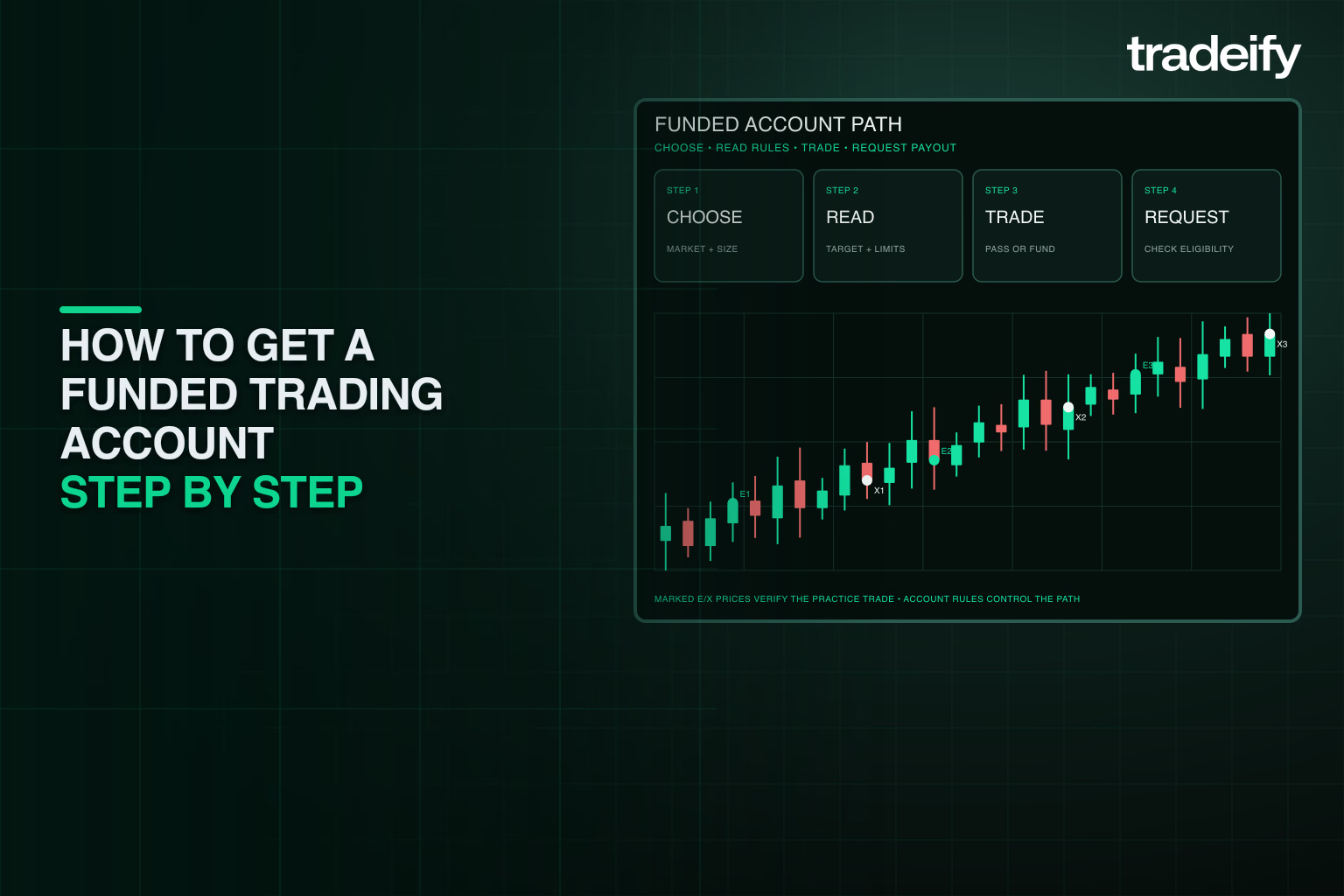
Most funded account paths follow the same broad sequence:
- Choose the market and firm. Confirm whether the account is for futures, forex, stocks, crypto, or another product set.
- Pick an account size. Larger accounts usually come with larger profit targets, drawdown limits, and position limits.
- Read the rule page before paying. Focus on profit target, maximum drawdown, daily loss limit, consistency rule, minimum trading days, product restrictions, platform choices, and payout conditions.
- Trade the evaluation or funded path. The goal is to reach the target without creating a rule breach.
- Request payout only when eligible. Check whether the firm requires winning days, fresh profit after a prior payout, minimum balances, payout caps, or a consistency calculation.
If a firm offers an instant funded path, the evaluation step may be skipped. That does not remove the rules. It just moves the pressure into the funded phase sooner.
What to check before you get a funded trading account
Most traders ask, "What do I need to do to get funded?" The better question is, "What can disqualify me after I pay?" Use this checklist before choosing any funded trading account.
| Requirement | What to verify | Why it matters |
|---|---|---|
| Profit target | The exact dollar target for your account size | You need a realistic plan for reaching it without oversizing. |
| Account cost | Advertised fee, subscription terms, platform or data fees, reset costs, activation fees, and payout deductions | A larger account can look cheap until recurring costs or reset behavior change the real risk-to-reward. |
| Drawdown | Whether the drawdown is end-of-day, intraday, trailing, static, or locked | A drawdown breach can end the account before the profit target is reached. |
| Daily loss limit | Whether the account has a daily pause rule, a hard breach, or no daily loss limit | A daily loss rule changes how much risk you can carry in one session. |
| Consistency rule | Whether a consistency rule applies and how profit concentration is calculated | Some programs measure the largest trading day as a percentage of total profit, so one oversized day can delay passing or block a payout. |
| Minimum trading days | Whether the firm requires a set number of trading or winning days | Some accounts cannot be passed or paid out immediately even after reaching the target. |
| Products and platforms | Allowed instruments, connection options, platform access, and market hours | A strategy that needs unsupported products or overnight holds may not fit the account. |
| Payout rules | Profit split, payout caps, fresh-profit rules, payout windows, and payment method | Passing the evaluation does not automatically mean cash can be withdrawn right away. |
Drawdown terms need special attention. End-of-day drawdown usually describes when the threshold is calculated or adjusted from the account's closing balance, while intraday drawdown rules can monitor account equity during the session. A trailing threshold can move as the account reaches new highs. A static threshold generally stays fixed, and a locked threshold usually means a formerly trailing threshold has stopped moving after a rule-defined point. The exact formula and breach timing vary by program, so read the account-specific rule page before you size trades around it.
Evaluation vs instant funded trading accounts
An evaluation account asks you to prove control first. You usually need to hit a profit target while respecting drawdown, daily loss, consistency, and product rules. This path can be slower, but it gives you a test phase before the funded account.
An instant funded account skips the evaluation. That can be useful if you already understand the rules and have a tested plan. It can also expose weak risk habits faster because payout and drawdown rules apply immediately.
Neither path is automatically better. Choose the one that matches your current discipline, not the one that sounds fastest.
Build a risk plan before getting a funded trading account
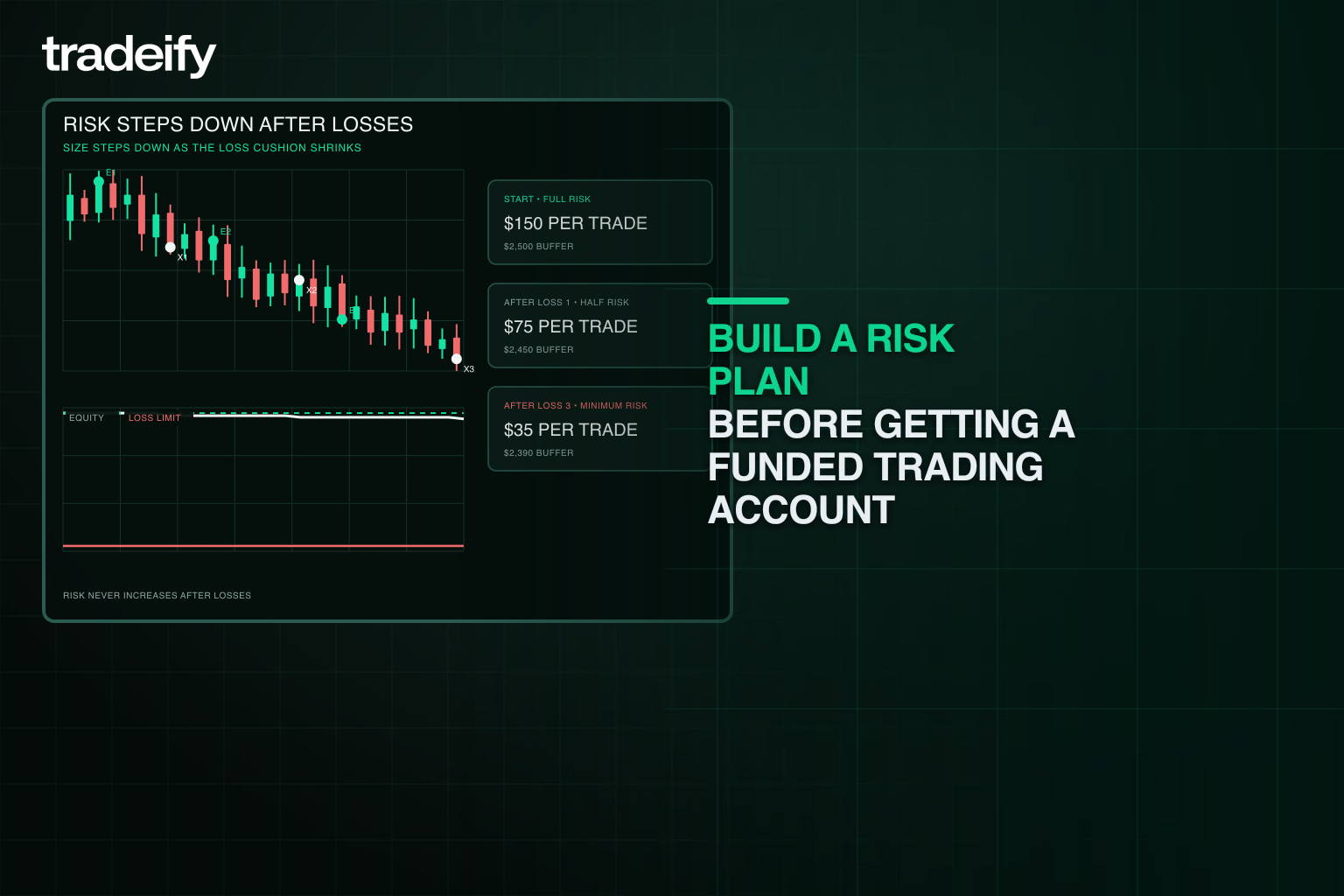
Passing a funded trading evaluation is usually a risk-control problem first and a strategy problem second. Before the first trade, write down:
- Your maximum loss per trade.
- Your maximum loss per day before you stop voluntarily.
- Your maximum number of trades per session.
- The setup types you are allowed to take.
- The time of day you stop trading if execution gets sloppy.
- The account rule that is closest to being breached after each trade.
This matters because funded account rules punish emotional recovery trading. You can be directionally right and still fail by holding too many contracts, averaging into a loser, trading after the daily limit is too close, or trying to fix a bad morning in one trade.
Funded trading account payout rules to verify
Before choosing a funded account, separate passing rules from payout rules. They are not always the same.
Look for these payout details:
- Profit split: the percentage of approved payout the trader keeps.
- Minimum payout: the smallest amount that can be requested.
- Payout caps: the maximum amount per request or per cycle.
- Winning-day rules: whether you need a set number of profitable days before requesting.
- Fresh-profit rules: whether profits left after one payout count toward the next one.
- Consistency checks: whether one trading day can block the request.
If a page advertises fast payouts, read the rule page behind the claim. Speed only matters after eligibility is met.
Is a funded trading account worth it?
A funded trading account can make sense when the account fee is small compared with the personal capital you would otherwise put at risk, and when the rules match a strategy you already trade cleanly. It is a poor fit if you need the larger account size to force bigger trades, recover losses, or trade products and hours the program does not allow.
Before you pay, separate the costs by stage. Start with mandatory upfront or recurring costs, such as the account fee, subscription fee, platform fee, or data fee. Then check failure costs such as resets or repurchases, post-pass costs such as activation fees, and payout-related deductions that apply only if you reach withdrawal eligibility. Calculate the costs that apply to your likely path instead of adding every possible charge into one number.
Then compare those costs with your planned risk per trade and the distance to the drawdown limit. If one normal losing streak can breach the account, the drawdown and loss limits may be too tight for your strategy's normal risk profile.
The right question is not only whether you can get funded. Ask whether the rules help you trade with more discipline or push you toward oversizing, overtrading, and payout pressure.
A funded trading account path example
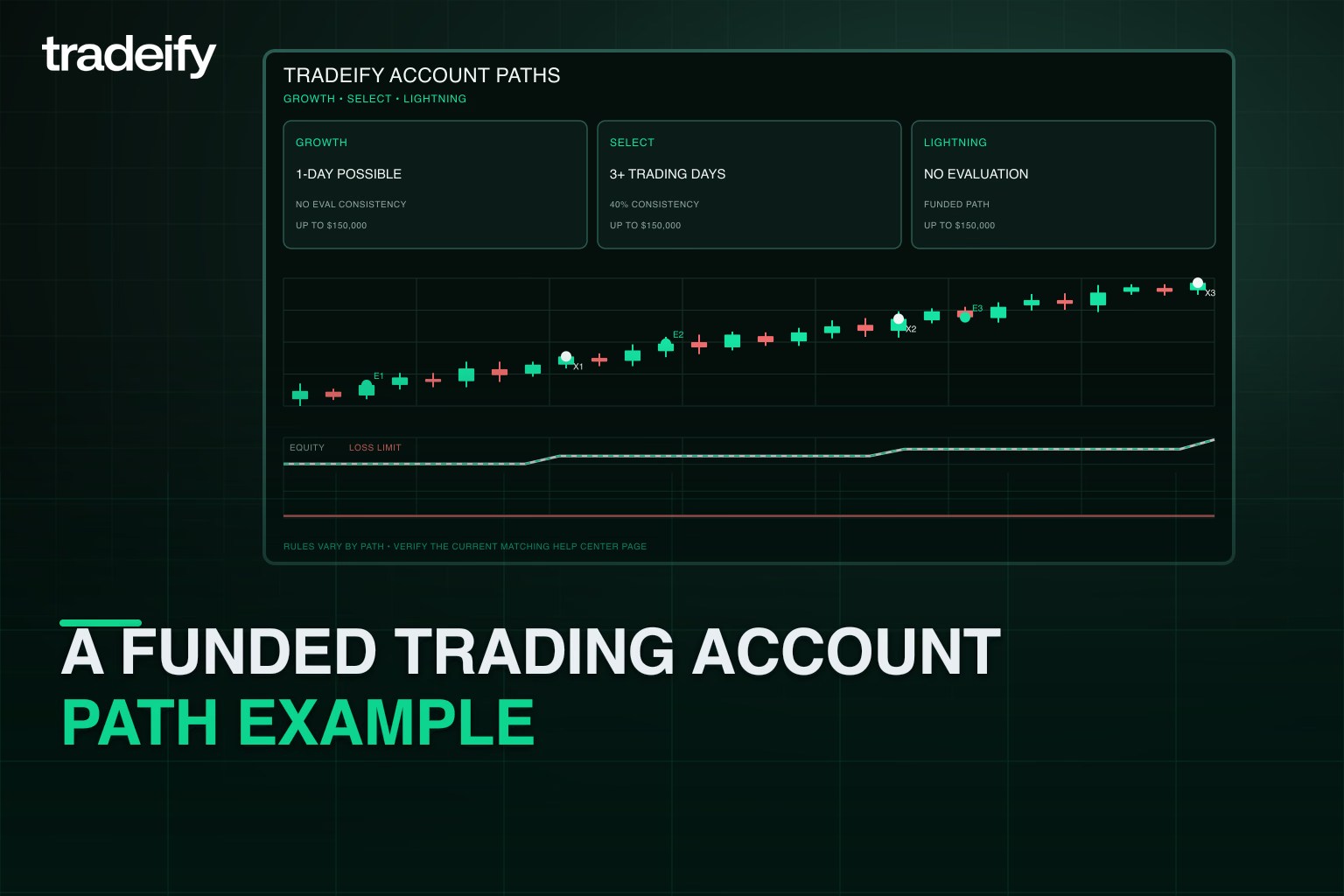
Tradeify is one example of how the process can differ by account type. The current Help Center separates Growth Evaluation, Select Evaluation, and Lightning Funded accounts, so the right path depends on whether you want the fastest evaluation, more payout-policy choice, or no evaluation step.
| Tradeify path | How it works | Rule details to check |
|---|---|---|
| Growth Evaluation | Evaluation account sizes include 25K, 50K, 100K, and 150K. Tradeify's Growth page says Growth can be passed in as few as 1 trading day because there is no evaluation consistency requirement. | Growth has a soft-breach daily loss limit and a fixed payout policy after moving to the Growth Simulated Funded account. |
| Select Evaluation | Evaluation account sizes include 25K, 50K, 100K, and 150K. Tradeify's Select page says Select requires at least 3 trading days because of the 40% consistency rule. | Select has no daily loss limit during evaluation and lets the trader choose Flex or Daily payout policy after passing. |
| Lightning Funded | This path skips the evaluation and starts as a simulated funded account. | Tradeify's Lightning page says payouts can be requested once the consistency rule and profit objective are met, and its Lightning payout policy adds payout caps, minimum payout amounts, reset rules, and account-size-specific conditions to review before trading for withdrawal. |
After a Tradeify evaluation is passed and all evaluation conditions are met, Tradeify's Help Center says there is no activation fee and no waiting period for Growth or Select. The trader activates the funded account from the dashboard with the Activate Account button. The same page states that the funded account starts at the base account size, such as 50K, 100K, or 150K, and that evaluation profits do not carry over into the funded account. See the current funded-after-evaluation Help Center page before planning around the post-pass balance.
Tradeify's essential rules page also states that all positions must be closed before the market closes each day, with regular trading days requiring positions to close by 4:45 PM Eastern Time and holiday early-close days requiring positions to close by 12:59 PM Eastern Time. That is the kind of operational rule you should know before entering a funded account, because overnight or swing trading may not fit the program.
For platform access, Tradeify's Supported Platforms page says traders choose among Tradovate, Rithmic, and WealthCharts connection options at checkout. Tradovate credentials can support TradingView, Rithmic credentials can support platforms such as Tradesea, Quantower, and R|Trader, and NinjaTrader connects through Tradovate only.
Account rules change over time, so use the current rule pages before buying or resetting an account. You can also compare current Tradeify account options from the pricing section.
Funded trading account FAQ
What are the requirements to get a funded trading account?
You usually need to choose an account, pay the evaluation or account fee, trade only allowed products, hit the profit target, avoid drawdown and daily-loss breaches, and meet any consistency or minimum-day rules. The exact requirements depend on the firm and account type.
How much does a funded account cost?
There is no universal funded account price, including for common $50K or $100K account sizes. Compare the current firm pricing page for that exact account size, then add any subscription, reset, activation, platform, data, and payout-related costs that apply to your likely path. A lower upfront fee is not automatically cheaper if the account has tighter drawdown, expensive resets, or payout conditions that do not fit your strategy.
Can you get a funded account without an evaluation?
Some firms offer instant funded or straight-to-funded paths. These paths can remove the evaluation step, but they can still impose drawdown, consistency, product, platform, and payout rules. Verify which requirements apply to the specific account before assuming the faster path is easier.
What is the biggest risk after getting funded?
One major controllable risk is behavior under pressure. Oversizing, revenge trading, ignoring daily loss limits, holding positions too close to required close times, or chasing a payout can end an account even when the strategy has an edge.
How fast can you get paid from a funded account?
Payout timing depends on eligibility first. Some accounts allow faster requests than others, but you still need to satisfy the account's profit, trading-day, payout-cap, and consistency rules before a request can be approved.
How to choose the right funded trading account
Pick the funded account only after you can explain the rules in your own words. If you cannot name the profit target, drawdown type, daily loss rule, consistency rule, platform limits, close time, and payout requirements, you are not ready to trade the account cleanly.
The goal is not to get funded once. The goal is to trade in a way that keeps the account alive long enough for the opportunity to matter. When you are ready to compare current Tradeify options, use the account pricing section, then check the matching Help Center rule page before buying.
.svg)
.svg)
.svg)
.svg)







.webp)