.svg)

.svg)
.svg)



TL;DR How to Pass a Prop Firm Evaluation
To pass a prop firm evaluation, start with the account rules before you choose the setup. Build the plan around daily loss limits, max drawdown, position caps, consistency requirements, trading hours, and your own stop-trading rule. A strategy can be simple and still work if the risk budget is clear, the trade size fits the account, and you stop before one bad session controls the evaluation.
Table of Contents
- What Is a Futures Trading Strategy?
- Build the Evaluation Plan Before the Strategy
- Use a Simple Evaluation Risk Budget
- Rules to Check Before You Pick a Strategy
- Top 10 Futures Trading Strategies for Prop Firm Success
- Account Selection That Matches Your Style
- Common Mistakes That Fail Prop Firm Evaluations
- Prop Firm Evaluation Strategies FAQ
- Evaluation Takeaways
What Is a Futures Trading Strategy?
A futures trading strategy is the rule set you follow before money is on the line. It tells you when to enter, when to exit, how much to risk, and when to stop trading.
For Tradeify evaluations, a strategy must do more than generate profits. It must align with specific parameters like daily loss limits, drawdown tracking methods, position limits, and consistency requirements. Without a strategy that fits these parameters, even profitable trading can fail evaluation requirements.
Build the Evaluation Plan Before the Strategy
A profitable setup can still fail a prop firm evaluation when it conflicts with the rules. Before the first trade, write down the profit target, daily loss limit, max drawdown, consistency requirement, allowed contracts, trading hours, and the point where you stop trading for the day.
| Evaluation rule | Decision to make before trading |
|---|---|
| Profit target | Set a daily pace that does not require one oversized trade or a rushed final day. |
| Daily loss and max drawdown | Use a personal stop below the firm limit so one bad session does not decide the account. |
| Position size | Choose contract size so two or three normal losses still leave room to trade cleanly. |
| Consistency | Plan repeatable profit days instead of relying on one large winner. |
| Trading hours | Set an alert before the close deadline and flatten positions manually before the platform has to act. |
Use a Simple Evaluation Risk Budget
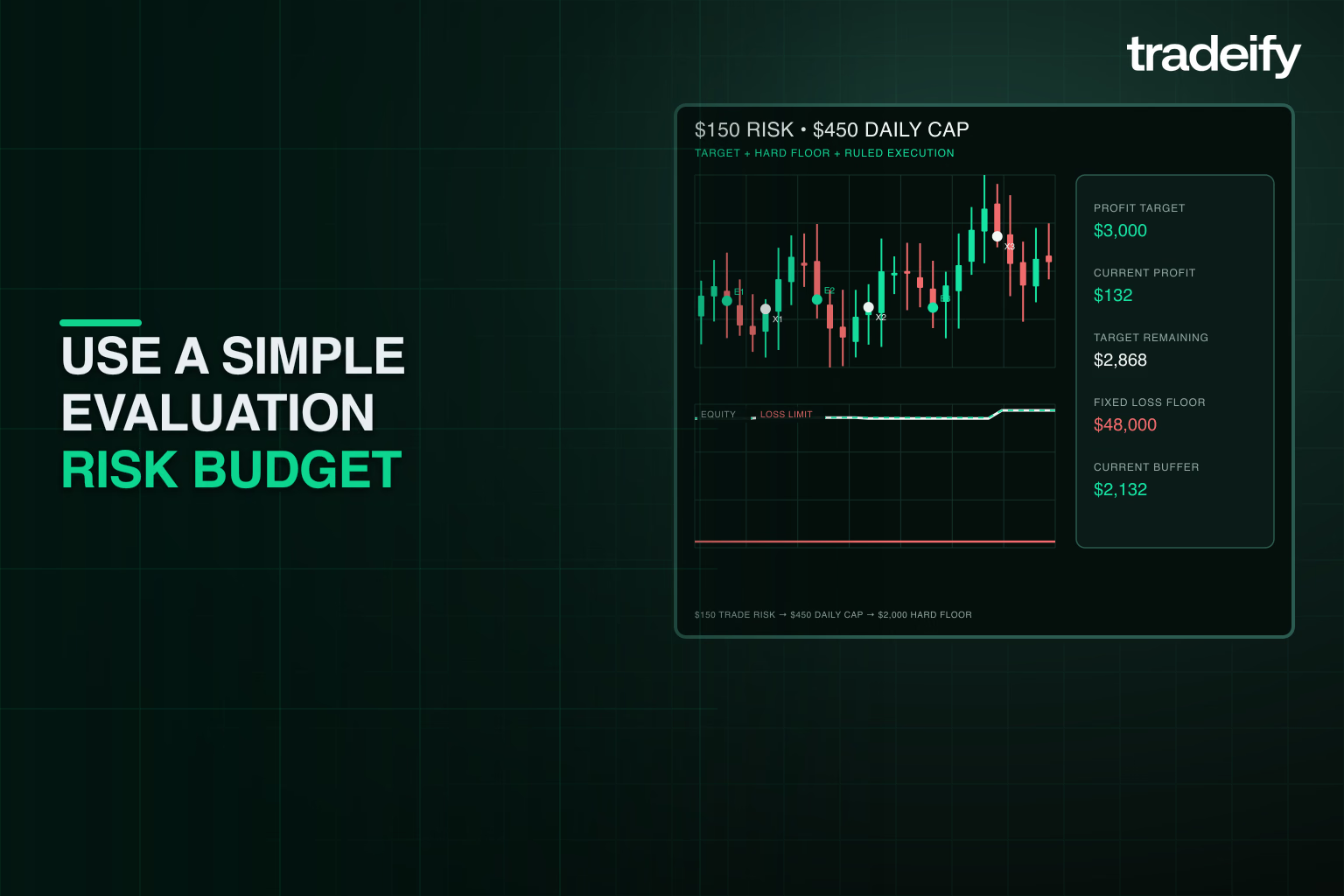
A useful evaluation plan starts with the loss boundary you can actually survive, not the profit you want to make. First check the tighter available limit: remaining Daily Loss Limit if the account has one, remaining max-drawdown headroom, and any personal stop you set below both. For a Select evaluation with no Daily Loss Limit, use the remaining max-drawdown headroom and keep a safety buffer for commissions and slippage.
After that, divide the personal stop by the number of planned losing trades you can tolerate and size each trade below that number. For example, if the checked loss boundary leaves room for a hypothetical $600 personal stop and you allow three losses, the maximum all-in planned loss per trade is $200, including estimated commissions and slippage. If you hit the personal stop, the next action is to stop trading, review the journal, and wait for the next session. The firm limit should be the emergency boundary, not the normal stop loss.
Rules to Check Before You Pick a Strategy
Before you pick a futures trading strategy for prop firm challenges, you must understand the rule set. The deadlines and position-limit guidance below are broadly stated in Tradeify rules, while microscalping, hedging, consistency, activation, and payout checks can depend on account type and review stage. Always confirm the current Help Center rule for your specific account before trading.
⚠️ Critical Warning: The Microscalping Rule
This Tradeify rule is critical for success. Tradeify says noncompliance can prevent account activation or payout requests at the relevant review stage, so you MUST meet both criteria:
- Time Requirement: Over 50% of your trades must be held longer than 10 seconds.
- Profit Requirement: Over 50% of your profit must come from trades held longer than 10 seconds.
If the ratios are not met at review time, Tradeify says activation or payout requests may be blocked until the account satisfies the policy.
1. No Overnight Positions
- Sleep Flat: All positions must be closed by Tradeify's daily close deadline.
- Regular Days: Close manually by 4:45 PM Eastern Time.
- Holiday Early-Close Days: Close manually by 12:59 PM Eastern Time only when Tradeify designates a holiday early-close schedule. Confirm the current notice before trading.
- The Consequence: Tradeify says open positions are automatically closed when the market closes, but traders should still flatten before the listed daily deadline to reduce slippage risk.
2. Hedging and Contract-Mixing Rules
- Rule scope: Tradeify prohibits hedging and treats simultaneous mini/micro contract mixing as hedging under its position-limit guidance.
- Specifics: Do not hold opposing positions, and do not trade minis and micros simultaneously on the same account.
3. Strict Position Limits
- Know Your Cap: Maximum contracts vary by account size. For accounts purchased after September 12, 2025:
- $25k: 1 mini / 10 micros.
- $50k: 4 minis / 40 micros.
- $100k: 8 minis / 80 micros.
- $150k: 12 minis / 120 micros.

Top 10 Futures Trading Strategies for Prop Firm Success
These ten futures trading strategies can fit prop firm evaluations when the risk plan comes first. Choose the one that fits your behavior, account rules, and trade frequency.
1. Day Trading with Defined Targets
Day trading can fit Tradeify evaluations because closing positions intraday aligns with the no-overnight rule.
- The Setup: Enter trades based on technical setups like support and resistance or chart patterns.
- The Exit: Set defined profit targets from the setup structure, current volatility, contract tick value, and your evaluation risk budget. Use strict stop losses to protect capital.
- Why It Works: Intraday-only execution keeps the plan aligned with no-overnight rules and reduces gap exposure.
- Possible fit: Select Accounts when you need no Daily Loss Limit during evaluation but still respect the max drawdown, or Growth Accounts when the Daily Loss Limit soft breach helps enforce a stop for the session.
2. Trend Following With Defined Pullbacks
Trend following captures sustained directional movements using mechanical indicators.
- The Setup: Use moving average crossovers (e.g., 50/200 period) to identify the trend.
- The Execution: Enter on pullbacks to the moving average. Trail stops can help manage open risk or protect part of an unrealized gain, subject to slippage and execution risk.
- Possible fit: Growth Accounts, if trend trades stay within the active drawdown floor, Daily Loss Limit, and open-trade risk budget.
3. Controlled Scalping With Rule Checks
Controlled scalping targets comparatively small, tested moves with quick entries and exits. The target must fit the instrument's tick value, liquidity, current volatility, setup invalidation, and permitted dollar risk.
- The Compliance: The rule is based on trades held longer than 10 seconds. Over 50% of trades and over 50% of profit must come from trades held longer than 10 seconds.
- The Method: Target high-liquidity instruments like ES or NQ. Use order flow or Level 2 data.
- Possible fit: Select Accounts. No Daily Loss Limit during Select evaluation does not remove the max drawdown, position limits, or the need for a personal stop.
4. Mean Reversion With Clear Invalidations
Prices sometimes return toward an estimated average after extreme moves. The strategy seeks to profit from that reversion, but extreme conditions can persist or turn into a trend.
- The Setup: Use Bollinger Bands at 2 standard deviations or RSI at 30/70 levels.
- The Execution: Enter when price touches outer bands. Target a return to the middle band.
- Possible fit: Choppy, range-bound markets where the stop and target fit the risk budget. Growth Accounts can fit controlled risk plans, but the Daily Loss Limit and active drawdown floor still control the session.
5. Breakout Trading With Confirmation
Captures explosive moves when price exceeds established support or resistance levels.
- The Setup: Identify consolidation ranges. Wait for a decisive close beyond a key level.
- The Confirmation: Increased volume can help confirm the breakout, but the exact threshold should be tested by instrument and timeframe.
- Risk Warning: Avoid positions immediately before major economic releases like FOMC or NFP unless you have a tested news plan, defined risk, enough loss-boundary headroom, and clear account-rule compliance.
6. Support and Resistance Trading
One of the most straightforward futures trading strategies. Uses established price levels where buying or selling pressure historically emerged.
- The Setup: Identify key levels on Daily or 4-hour charts.
- The Execution: Enter on retests of broken levels or bounces from support. Set stops beyond the invalidation level using current volatility, tick value, position size, and permitted dollar risk.
- Possible fit: Multiple account types, when the level, stop, and target fit the account rules.
7. Momentum Trading with Indicators
Systematic and rule-based. Predefined indicator rules can reduce discretion, but they do not remove judgment, false signals, or execution risk.
- The Setup: Use MACD crossovers confirmed by RSI direction. Look for RSI above 50 for longs and below 50 for shorts.
- The Execution: Enter on the first pullback after momentum establishes.
- Possible fit: Growth Accounts, if the momentum trade stays inside the active drawdown floor, Daily Loss Limit, and personal risk budget.
8. Time-Based Range Trading
Different trading windows can behave differently, but volatility depends on the instrument, news calendar, liquidity, and daylight-saving shifts.
- Early Globex hours: Often quieter for some index futures, but confirm current liquidity and volatility before using mean reversion.
- European morning overlap: Can bring more movement in some markets, so use tested breakout rules instead of assuming every open will trend.
- U.S. cash open: Can be active for equity index futures, but treat it as a higher-attention window rather than a guaranteed momentum period.
9. News Fade Strategy
Trade a tested overreaction setup only when your data supports it. An initial news spike may retrace, stall, or continue.
- The Method: Some traders wait for the first reaction to settle before looking for overextension, but the timing must be tested for the specific instrument, release, liquidity, and risk budget.
- The Risks: Bid-ask spreads can widen and slippage can occur, especially during fast markets or major releases. Stop orders can fill worse than expected.
- Critical Rule: Never rely on the Daily Loss Limit as your stop loss during news events.
10. Algorithmic Trading
Automation can reduce discretionary execution, but it does not remove the need for testing, monitoring, shutdown rules, and human oversight.
- The Conditions: You must prove sole ownership. No commercial or shared systems allowed.
- The Restriction: High-frequency trading (HFT) is strictly prohibited.
- Verification: Be prepared to demonstrate your strategy on live video.
Account Selection That Matches Your Style
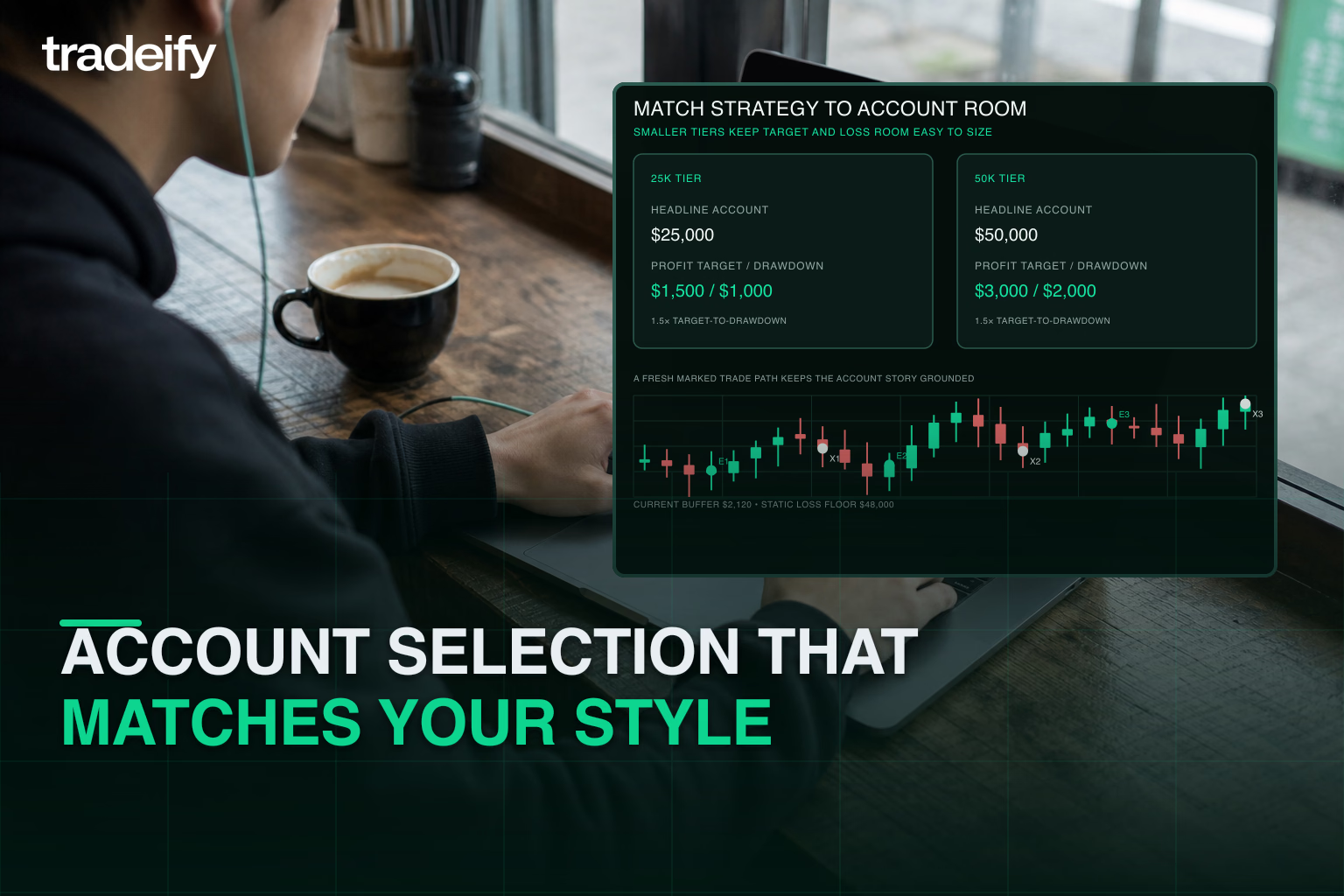
Do not trade every account type the same way. Use this table to match your futures trading strategy to the rules that matter most for the evaluation.
| Strategy Type | Possible account fit | Why It Fits | Risk note |
|---|---|---|---|
| Active Scalping | Select | No Daily Loss Limit during Select evaluation gives more intraday flexibility, but max drawdown and position limits still apply. | Needs a strict personal stop |
| Trend Following | Growth | EOD drawdown recalculates after the session, but the active drawdown floor and Daily Loss Limit still matter while the trade is open. | Monitor open risk |
| Mean Reversion | Growth | Can fit if the stop, target, and position size stay inside the evaluation risk budget. | Avoid averaging down |
| Breakout Trading | Select or Growth evaluations | Can fit when entries are planned, slippage is considered, and the stop is not beyond the risk budget. | Watch news and false breaks |
Common Mistakes That Fail Prop Firm Evaluations
These are common ways a trader can lose control of an otherwise workable evaluation plan.
- Ignoring the Clock: Leaving positions open past the close deadline results in automatic closure. On regular days, close manually by 4:45 PM ET.
- Revenge Trading: Abandoning your plan to recover losses quickly can push the account into rule trouble. Stop when your predefined daily stop or documented plan condition is reached.
- The "One Hit Wonder": The Consistency Rule can affect pass, activation, or payout eligibility depending on account stage. Check the current percentage for the account type, then avoid relying on one outsized day to meet the target.
- Microscalping Violations: Failing either microscalping criterion can block account activation or payout requests at the relevant review stage: over 50% of trades and over 50% of profit must come from trades held longer than 10 seconds.
- Position Limit Breaches: Know your limits. For example, a $50k account purchased after Sept 12, 2025 allows strictly 4 minis or 40 micros.
Prop Firm Evaluation Strategies FAQ
Q: What strategy works best for passing Tradeify evaluations?
A: There is no single best strategy. Day trading, trend following, and support/resistance can fit when the tested setup, holding time, stop size, and position size match Tradeify's requirements.
Q: Can I swing trade at Tradeify?
A: No. All positions must be closed before the daily close deadline. On regular days, Tradeify lists that deadline as 4:45 PM ET. You cannot hold positions overnight.
Q: Is hedging allowed in Tradeify evaluations?
A: Tradeify prohibits hedging and treats simultaneous mini/micro contract mixing as hedging under its current position-limit guidance.
Q: Can I use trading bots in Tradeify evaluations?
A: Tradeify allows bots and algorithms only under its current guidelines. You must be able to prove sole ownership, shared or cross-firm use is restricted, and HFT bots are prohibited.
Evaluation Takeaways
- Discipline Before Outcome: Focus on following your plan consistently. Discipline supports cleaner execution and rule compliance, but it does not guarantee profits or passage.
- Check Current Rules: Use the published Help Center rules and dashboard notices before you trade, especially around deadlines, drawdown, consistency, and payout eligibility.
- Compliance First: A smaller profit within rules beats a larger profit that violates parameters.
- Long-Term Vision: Passing the evaluation is just step one. Sustainable careers require professional habits.
- Start Your Path: Ready to prove your skills? Visit Tradeify.co to explore account options.
.svg)
.svg)
.svg)
.svg)







.webp)