.svg)

.svg)
.svg)



Futures market volatility presents both extraordinary opportunity and significant risk for traders willing to master its dynamics. Understanding how to navigate rapid price swings, identify the right indicators, and implement disciplined risk management separates consistently profitable traders from those who struggle. This comprehensive guide equips serious traders with proven strategies, psychological frameworks, and practical tools to thrive during volatile market conditions. Whether you're managing positions through economic announcements or capitalizing on breakout opportunities, the techniques outlined here will help you trade futures confidently when markets move aggressively.
Understanding Futures Market Volatility
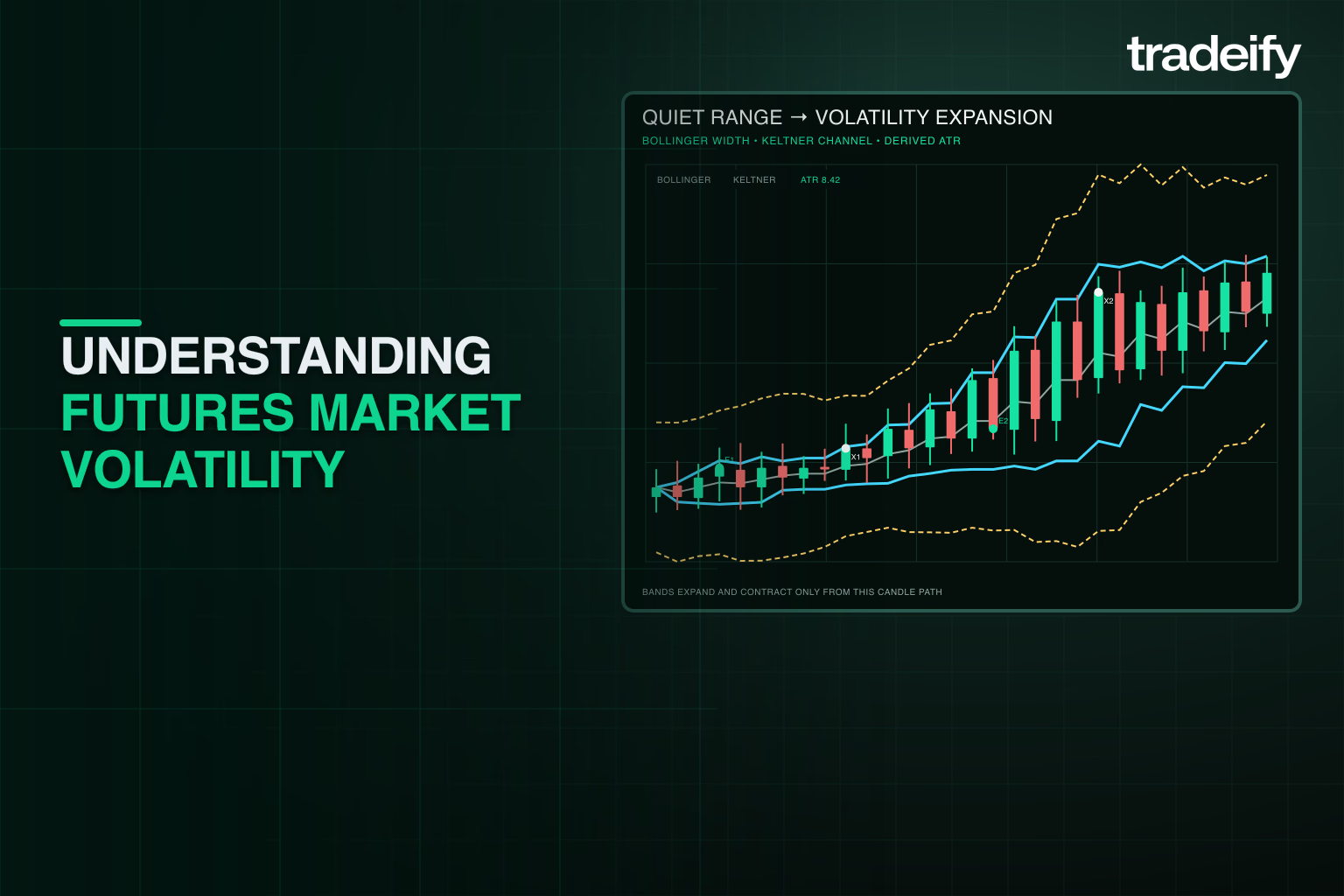
Futures market volatility refers to the frequency and magnitude of price movements within a futures contract over a set time period. Unlike stocks, futures contracts amplify these price swings through leverage, making volatility a double-edged sword that demands respect and strategic management.
Volatility matters profoundly for futures traders because it directly impacts both opportunity and risk. Markets move in cycles driven by greed and fear, creating periods of expansion followed by sharp contractions. These cycles produce both explosive rallies and devastating sell-offs, and traders who understand volatility patterns can position themselves advantageously rather than reactively.
Several key factors drive futures volatility. Economic data releases such as employment reports, inflation figures, and GDP announcements can trigger immediate price reactions across commodity, currency, and index futures. Geopolitical events—from trade disputes to military conflicts—inject uncertainty that manifests as volatility spikes. Sector-specific news, including crop reports for agricultural futures or inventory data for energy contracts, creates targeted volatility in specific markets.
| Volatility Event | Market Impact | Example |
|---|---|---|
| COVID-19 Pandemic (March 2020) | Extreme cross-asset volatility | S&P 500 futures dropped 34% in weeks |
| Surprise Fed Rate Decision | Sharp interest rate futures moves | December 2015 first hike in nine years |
| Oil Price War (2020) | Energy futures collapse | WTI crude briefly traded negative |
| Brexit Vote (June 2016) | Currency futures whipsaw | British pound futures fell 10% overnight |
Understanding these drivers allows traders to anticipate periods of heightened volatility and adjust their strategies accordingly. Rather than fearing market turbulence, informed traders recognize volatility as the mechanism that creates trading opportunities.
Key Indicators for Measuring Volatility in Futures
Effectively analyzing market volatility requires the right measurement tools. Several indicators have proven essential for identifying turbulence early and adjusting strategies in real time.
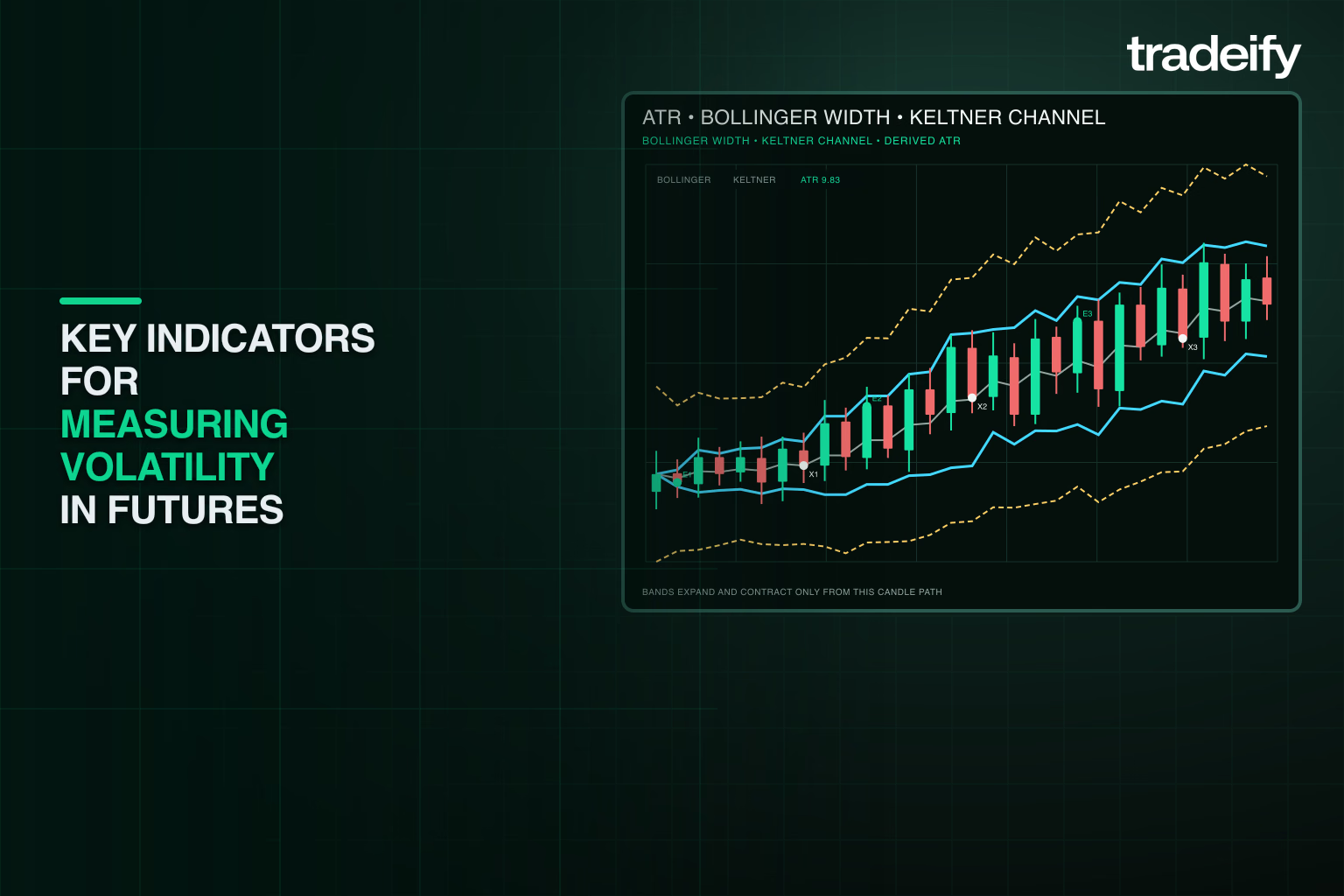
The Average True Range (ATR) measures the average price movement over a set period, typically 14 days, and serves as a foundational volatility indicator. ATR signals changes in market volatility by tracking the largest of three calculations: current high minus current low, absolute value of current high minus previous close, or absolute value of current low minus previous close. Rising ATR values indicate expanding volatility, while declining ATR suggests consolidation.
The Volatility Index, commonly known as VIX, reflects expected market volatility over the next 30 days based on S&P 500 index options. Often called the "fear gauge," VIX typically trades between 12 and 20 during calm markets but can spike above 30 or even 80 during severe market stress. Futures traders monitor VIX not just for equity exposure but as a barometer of overall market sentiment that influences cross-asset volatility.
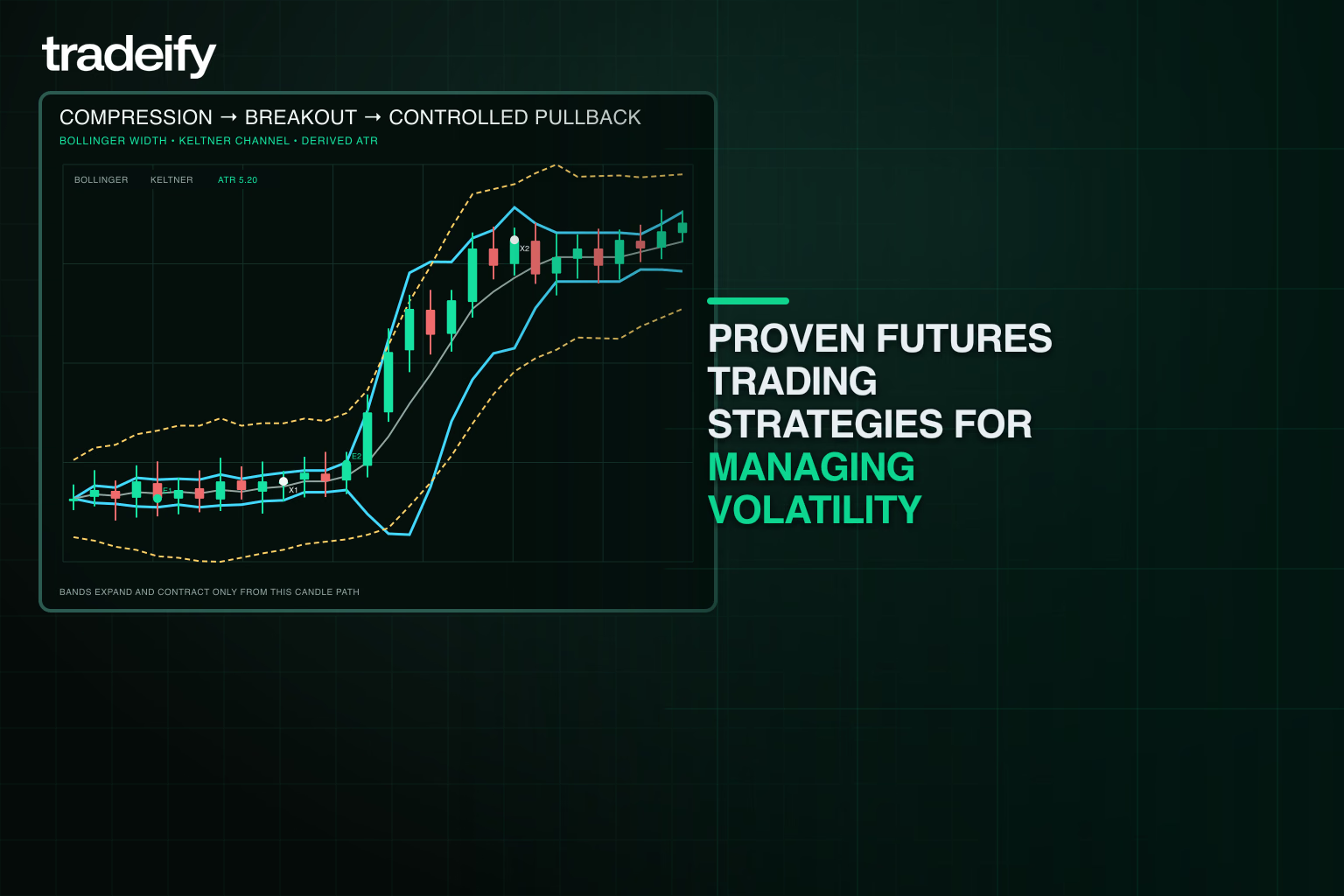
Bollinger Bands identify high and low volatility phases by plotting standard deviation bands around a moving average. When bands contract, volatility is low and often precedes a breakout. When bands expand, volatility is elevated, potentially signaling exhaustion or continuation depending on price action. Traders use Bollinger Band squeezes to anticipate explosive moves and band touches to identify potential reversal setups.
Additional indicators enhance volatility analysis. Volume Profile reveals price levels with significant trading activity, highlighting areas where volatility may increase or decrease. VWAP (Volume Weighted Average Price) provides institutional reference points that often act as volatility anchors. Momentum measures like RSI and MACD help identify when volatility-driven moves are gaining or losing steam.
| Indicator | What It Measures | Practical Use Case |
|---|---|---|
| ATR | Average price range over time | Set dynamic stop-loss distances |
| VIX | Expected 30-day S&P 500 volatility | Gauge overall market fear/complacency |
| Bollinger Bands | Price deviation from moving average | Identify breakout setups and extremes |
| Volume Profile | Price levels with most trading activity | Find support/resistance in volatile moves |
| VWAP | Volume-weighted average price | Track institutional positioning |
| RSI/MACD | Momentum and trend strength | Confirm volatility move sustainability |
By combining these indicators, traders develop a comprehensive view of current volatility conditions and can anticipate when markets are likely to accelerate or stabilize.
Preparing Your Mindset for Volatile Market Conditions
Mastering the psychological demands of volatile futures trading often determines success more than technical skill alone. Rapid price swings trigger emotional responses that can override rational decision-making, leading to costly mistakes.
Volatile markets present unique psychological challenges. The temptation to chase explosive moves, the fear of missing out on large gains, and the panic that accompanies sudden losses all work against disciplined execution. Traders who lack emotional control often overtrade, abandon their strategies mid-trade, or freeze when action is required.
Journaling every trading decision provides a powerful tool for spotting emotional biases and boosting discipline. Recording not just trade details but emotional states, market conditions, and reasoning creates accountability and reveals patterns. Over time, traders identify which market environments trigger their worst decisions and develop countermeasures.
Practical techniques for maintaining objectivity include visualization exercises before market open, where traders mentally rehearse their plan and imagine various scenarios. Pre-trade routines—reviewing key levels, confirming risk parameters, and checking economic calendars—create structure that reduces impulsive decisions. Stress management practices such as controlled breathing, brief walks between trades, or limiting screen time during choppy conditions help maintain composure.
Professional proprietary traders focus on process over outcome, understanding that individual trade results matter less than long-term adherence to proven methods. This mindset shift reduces the emotional weight of each trade and allows traders to execute consistently regardless of recent wins or losses. When volatility spikes, process-focused traders stick to their plan while outcome-focused traders often deviate at the worst possible moments.
Building mental resilience for volatile markets requires honest self-assessment, consistent routines, and acceptance that losses are inevitable. Traders who master their psychology gain a significant edge in environments where others make fear-based or greed-driven mistakes.
Essential Risk Management Techniques in Volatile Markets
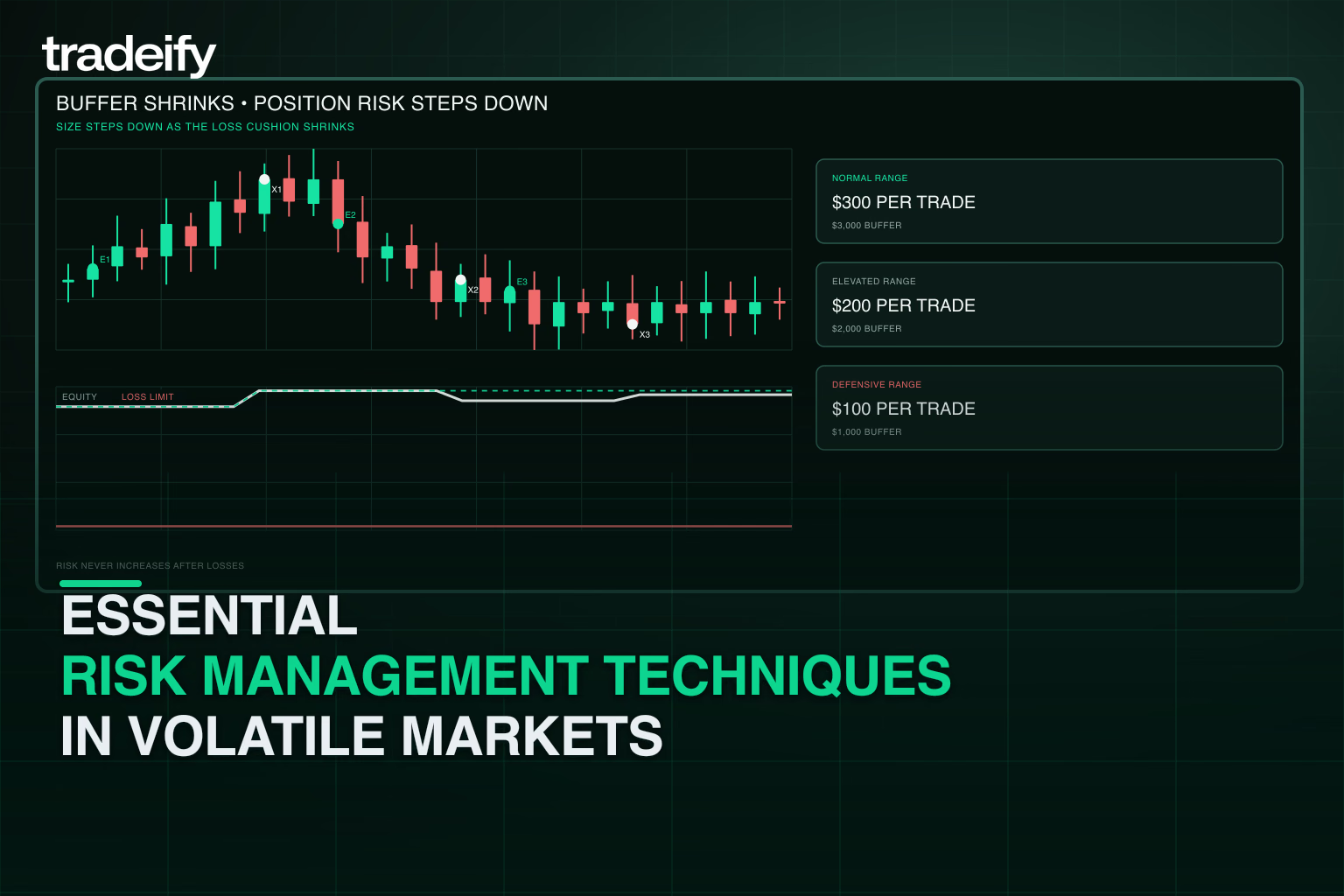
Protecting capital during volatile conditions requires practical, data-driven risk management methods that adapt to changing market dynamics. Without robust risk controls, even skilled traders can suffer catastrophic losses during extreme moves.
Using ATR to set dynamic stop-loss orders provides a volatility-adjusted approach to risk management. Rather than using fixed dollar amounts or arbitrary price levels, traders calculate stop-loss distances as multiples of ATR. For example, a 2x ATR stop in a market with a 50-point daily ATR would place stops 100 points from entry. This method automatically widens stops during volatile periods and tightens them during calm conditions, reducing the likelihood of premature stop-outs while maintaining protection.
Percentage-based risk management caps the amount risked per trade relative to total account equity. Risking only 1-3% of account equity per trade ensures that even a string of losses won't devastate an account. In volatile markets, many professional traders reduce this to 0.5-1% to account for increased uncertainty and potential slippage. Combined with ATR-based stops, percentage risk allows traders to adjust position size appropriately—taking smaller positions when volatility expands and larger positions when it contracts.
Bracket orders provide automated risk management by simultaneously setting profit targets and stop-losses when entering a position. This technique removes emotional decision-making during fast-moving markets and ensures every trade has predefined risk parameters. During major news events, reducing trade size by 25-50% or avoiding trading altogether prevents outsized losses from unpredictable price gaps.
Diversification across uncorrelated instruments reduces portfolio volatility by ensuring that not all positions move in tandem. A trader might combine equity index futures with currency or commodity futures that historically show low correlation. Volatility hedging with options can reduce portfolio volatility by approximately 30% by providing downside protection or capping risk on directional positions.
| Risk Management Rule | Volatile Market Application | Example |
|---|---|---|
| ATR-based stops | Use 2-3x ATR for stop distance | 50-point ATR = 100-150 point stop |
| Percentage risk cap | Risk 0.5-1% per trade | $50,000 account = $250-500 risk |
| Bracket orders | Set target and stop simultaneously | Enter at 4500, stop 4480, target 4530 |
| Size reduction | Cut position size 25-50% during news | Normal 5 contracts → 2-3 contracts |
| Portfolio diversification | Trade uncorrelated instruments | Combine ES, CL, and 6E futures |
| Options hedging | Buy protective puts or calls | Purchase put 5% out of money |
Implementing these techniques systematically transforms risk management from reactive to proactive, allowing traders to survive volatile periods and capitalize on opportunities without jeopardizing their accounts.
Proven Futures Trading Strategies for Managing Volatility
Several time-tested trading approaches allow traders to actively capitalize on volatility while maintaining disciplined risk management. These strategies range from directional momentum plays to non-directional volatility arbitrage.
Long straddles and strangles profit from large price moves in either direction, making them ideal for trading around major news events or earnings. A long straddle involves buying both a call and put at the same strike price, while a long strangle uses different strikes. These strategies exploit volatility expansion regardless of direction, though they require significant moves to overcome the cost of both options. Win rates hover around 55%, but require careful timing, as time decay erodes value if volatility doesn't materialize quickly.
VIX futures trading offers direct exposure to volatility expectations. A common approach involves buying VIX futures when the index falls below 15 and selling when it rises above 30, capitalizing on mean-reversion tendencies. This strategy achieves approximately 60% accuracy historically, as extreme VIX levels tend to normalize over time. Traders must account for contango and backwardation in VIX futures curves, which can significantly impact returns.
Breakout and momentum strategies perform exceptionally well following consolidation periods. When volatility compresses and price coils within a tight range, the eventual breakout often produces sustained directional moves. Traders identify consolidation zones using Bollinger Band squeezes or declining ATR, then enter positions when price breaks through key resistance or support with expanding volume. Trailing stops protect gains by automatically adjusting as the trade moves favorably, allowing traders to capture extended volatility-driven trends.
Volatility hedging strategies use options to offset futures position risk. A trader long equity index futures might purchase put options to limit downside exposure during uncertain periods. Alternatively, selling covered calls against long futures positions generates income during sideways volatility while capping upside. These approaches sacrifice some profit potential in exchange for reduced risk and smoother equity curves.
| Strategy | Best Volatility Condition | Typical Win Rate | Key Consideration |
|---|---|---|---|
| Long straddle/strangle | Pre-news, low implied volatility | ~55% | Requires large move to overcome costs |
| VIX futures mean reversion | Extreme VIX levels (<15 or >30) | ~60% | Account for contango/backwardation |
| Breakout/momentum | Post-consolidation, expanding volatility | 45-55% | Use volume confirmation |
| Volatility hedging | Uncertain directional outlook | Varies | Reduces profit potential |
| Trend following with trailing stops | Established volatile trends | 40-50% | Captures extended moves |
Selecting the appropriate strategy depends on the current volatility regime, market structure, and personal risk tolerance. Traders often combine multiple approaches, using hedging to protect core positions while deploying tactical breakout trades during optimal setups.
Advanced Tools and Platforms to Support Volatility Trading
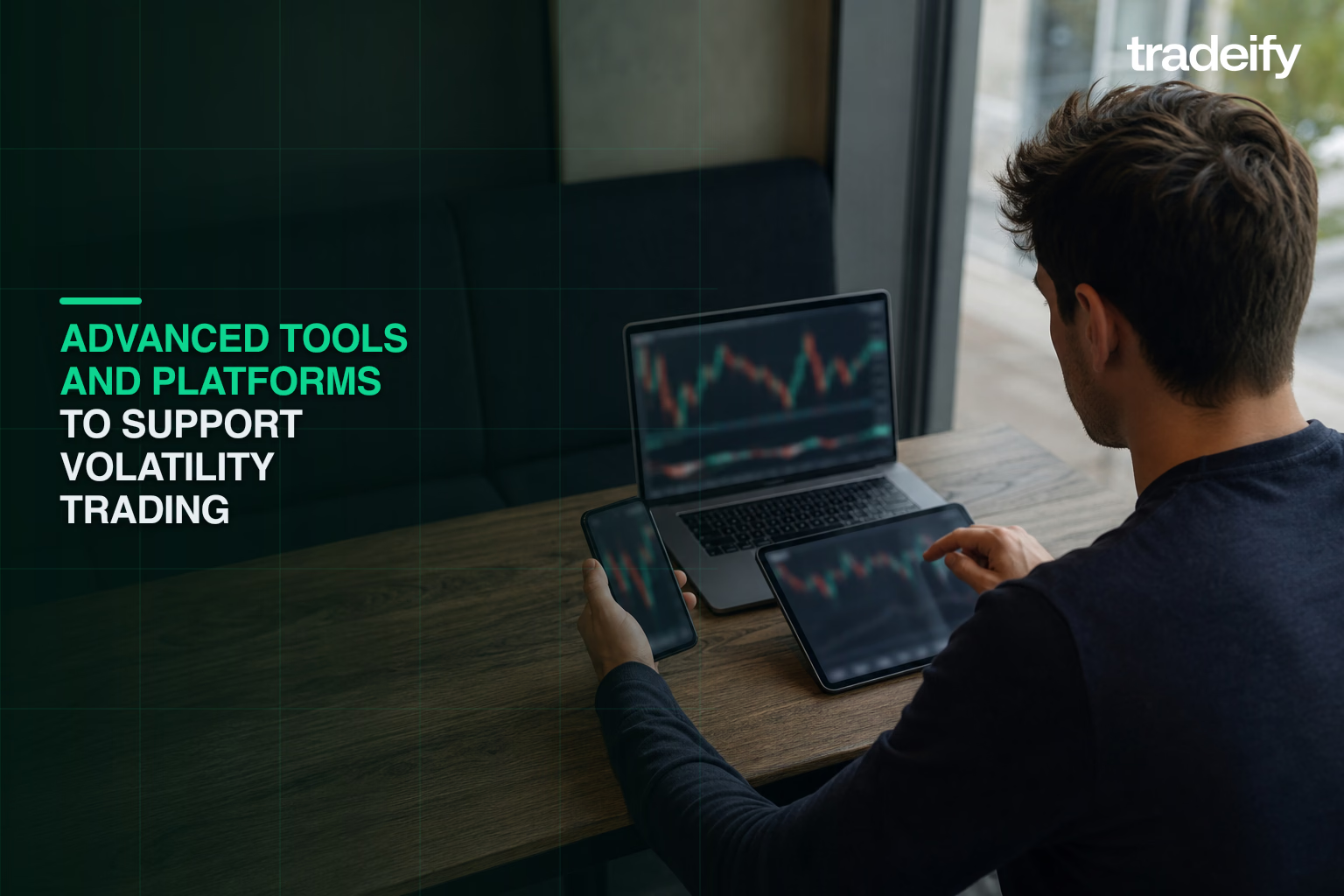
Leveraging the right technology and resources provides traders with critical advantages in monitoring, analyzing, and systematically trading volatility. Modern platforms offer capabilities far beyond basic charting.
Tradeify’s preferred tools, such as TradingView, dominate among retail and professional traders for their advanced charting capabilities, extensive indicator library, and free backtesting tools. The platform's paper trading simulator allows traders to practice volatility strategies in real-time market conditions without risking capital. Thinkorswim offers institutional-grade tools for futures and options traders, including sophisticated options analytics and custom indicator development. Tradersync provides specialized journaling and analytics, helping traders track performance across different volatility regimes and identify which strategies work best in specific conditions.
For options-focused volatility trading, Cboe LiveVol and VolEdge deliver real-time options data, including implied volatility surfaces, skew analysis, and options flow. These tools help traders identify mispriced volatility and spot large institutional positioning that often precedes major moves.
Bookmap revolutionizes order flow analysis by visualizing order book depth and liquidity in real-time. During volatile conditions, Bookmap reveals where large orders sit, how liquidity evaporates before major moves, and where institutional traders are positioning. This transparency allows traders to anticipate volatility spikes and avoid getting caught in liquidity vacuums.
Automated versus discretionary trading tools serve different purposes. Automated trading systems allow portfolio-wide monitoring of Greeks and risk limits in real-time, automatically adjusting positions when predefined thresholds are breached. This systematic approach removes emotion and ensures consistent risk management across multiple positions. Discretionary tools like advanced charting platforms and order flow software support manual decision-making by providing comprehensive market information.
Alternative data sources increasingly enhance volatility prediction. News sentiment analysis tools scan headlines and social media for shifts in market mood before they fully manifest in price. Real-time alert systems notify traders when volatility indicators reach critical levels or when unusual options activity suggests impending moves.
| Platform/Tool | Primary Function | Volatility-Specific Features |
|---|---|---|
| TradingView | Charting and analysis | Custom volatility indicators, backtesting, simulators |
| Thinkorswim | Trading and analytics | Options Greeks, probability analysis, custom scans |
| Tradersync | Performance tracking | Strategy analytics by volatility regime |
| Cboe LiveVol | Options data | Implied volatility surfaces, skew analysis |
| VolEdge | Options flow | Institutional options positioning |
| Bookmap | Order flow visualization | Liquidity heatmaps, order book depth |
| News sentiment tools | Alternative data | Real-time sentiment shifts |
Combining these tools creates a comprehensive volatility trading infrastructure that provides both broad market perspective and granular execution intelligence.
Developing a Robust Trading Plan for Volatile Futures Markets
A comprehensive trading plan tailored for high-volatility periods establishes the framework for consistent decision-making and risk control. Without written rules, traders inevitably make emotional decisions during market stress.
Clear, written rules for trade entry should specify exact criteria that must be met before initiating positions. In volatile markets, this might include requirements such as: ATR above the 20-day average, confirmation from two or more indicators, volume exceeding the 10-day average, and no major news events scheduled within two hours. Exit rules should define both profit targets and stop-loss levels based on volatility metrics rather than arbitrary price levels.
Position sizing rules must account for current volatility conditions. A robust plan specifies formulas for calculating position size based on ATR and account risk percentage. For example: "Position size = (Account Risk Amount) / (ATR × ATR Multiplier)." This ensures positions automatically adjust to volatility—smaller when markets are wild, larger when they're calm.
Backtesting strategies over at least 200 trades spanning two years provides statistical confidence in a strategy's positive expectancy. This testing should include various volatility regimes to ensure the approach works across different market conditions. Traders should document expectancy (average win minus average loss multiplied by win rate), maximum drawdown, and profit factor for each strategy.
Regular post-trade reviews and journaling track adherence to the plan and identify areas for improvement. After each trading session, review whether rules were followed, what market conditions existed, and how emotions influenced decisions. Monthly reviews should analyze which setups produced the best results and whether any rules need adjustment based on evolving market dynamics.
A practical trading plan checklist includes:
- Specific entry criteria with indicator thresholds
- ATR-based stop-loss and target formulas
- Position sizing calculation method
- Maximum daily loss limit
- Maximum number of trades per session
- Pre-market routine and preparation steps
- Prohibited trading conditions (news events, low liquidity)
- Post-trade review questions
- Weekly and monthly performance review schedule
Treating your trading plan as a living document that evolves with experience and market conditions creates a systematic approach that performs consistently across volatile periods.
Common Mistakes to Avoid When Trading Volatile Futures
Even experienced traders fall victim to avoidable errors during volatile conditions. Recognizing these mistakes and implementing countermeasures significantly improves long-term performance.
Over-leveraging represents the most dangerous mistake in volatile futures trading. The leverage inherent in futures contracts already amplifies price movements, and traders who use maximum available leverage risk catastrophic losses from normal volatility. During volatile periods, a single adverse move can trigger margin calls and forced liquidation at the worst possible prices. Professional traders typically use only a fraction of available leverage, preserving capital for future opportunities.
Abandoning stop-losses during volatile swings destroys more accounts than any other single error. Traders convince themselves that a losing position will recover, moving or removing stops as price moves against them. This hope-based trading transforms manageable losses into account-ending disasters. The solution is simple but psychologically difficult: honor every stop-loss without exception, accepting that some will be hit before reversals occur.
Trading without a plan or deviating from established rules during market stress leads to inconsistent results. When volatility spikes, traders feel pressure to "do something" and often take impulsive positions without proper analysis. This reactive trading typically occurs at the worst moments—buying at tops or selling at bottoms driven by fear or greed rather than strategy.
Emotional reactions to recent trades create dangerous feedback loops. After a winning streak, traders often increase position sizes or take lower-quality setups, becoming overconfident. Following losses, they either revenge trade to recover quickly or freeze up entirely, missing valid opportunities. Both responses undermine systematic trading.
Neglecting to adapt strategy based on real-time volatility data means trading the same way in all market conditions. What works during low-volatility grinding markets often fails during explosive volatility. Traders must recognize regime changes and adjust position sizing, stop distances, and strategy selection accordingly.
Mistake Prevention Checklist:
- Never use more than 50% of available leverage; reduce to 25% during high volatility
- Set stop-losses before entering trades and honor them without exception
- Follow a written trading plan with specific entry/exit criteria
- Maintain consistent position sizes regardless of recent wins or losses
- Reduce trading activity immediately after large wins or losses
- Monitor ATR and VIX daily to adjust strategy for current volatility regime
- Avoid trading during major news events unless specifically planned
- Keep detailed records to identify personal error patterns
- Take breaks after violating rules to prevent cascading mistakes
- Use bracket orders to enforce discipline automatically
Implementing these safeguards transforms common mistakes into learning opportunities rather than account-depleting disasters.
Frequently Asked Questions About Futures Volatility Management
What is futures volatility, and why does it matter for traders?
Futures volatility measures how much and how quickly prices change; it matters because higher volatility increases both risk and opportunity for futures traders.
How can I measure and monitor volatility in futures markets?
Traders monitor futures volatility using tools like the Average True Range (ATR), Bollinger Bands, Volume Profile, and the VIX index, which all provide real-time signals about market turbulence.
What are the best strategies for managing risk during periods of high volatility?
Effective risk management during volatility includes using smaller position sizes, dynamic stop-loss orders, percentage-based risk caps, and hedging with options.
How do margin requirements change with increased volatility?
Margin requirements typically increase during volatile periods, meaning traders need more capital to maintain open futures positions.
What tools or indicators help predict or react to volatility spikes?
Key tools include ATR, VIX, Bollinger Bands, order book heatmaps, and momentum measures like RSI and MACD.
How does mark-to-market accounting affect futures trading in volatile markets?
Mark-to-market accounting means all open futures positions are revalued daily, so large price swings can quickly impact account balances during volatile conditions.
What is the impact of leverage on volatility risk in futures trading?
Leverage amplifies both gains and losses in volatile markets, so trading with high leverage magnifies risk and potential drawdowns.
How can I use options or hedging to manage futures volatility?
Options serve as a hedge by limiting downside risk or offsetting losses, helping traders stabilize their portfolios during wild price swings.
What are common mistakes traders make when managing volatility?
Common mistakes include skipping stop-losses, ignoring position sizing rules, overtrading after big moves, and letting emotions override a trading plan.
How do professional traders handle volatility differently from beginners?
Professional traders stick to disciplined strategies, manage risk proactively, and use data-driven backtests and monitoring, while beginners often trade impulsively or size positions poorly.
.svg)
.svg)
.svg)
.svg)






.webp)