.svg)

.svg)
.svg)


Table of Contents
- Best futures prop firms for beginners summary
- How beginners should compare firms
- How evaluation accounts work
- Drawdown rules that beginners must check
- A rule-set example for beginners
- A structured education example
- Advanced firm tradeoffs
- Beginner comparison matrix
- Platform choices for beginners
- Beginner risk plan
- Tax and payout records
- Best futures prop firm checklist
Best Futures Prop Firms for Beginners at a Glance
TL;DR: The best futures prop firms for beginners are the ones with clear evaluation rules, a drawdown model you can explain before trading, transparent fees, simple platform access, realistic payout conditions, and enough support to keep a new trader from forcing trades. Compare drawdown reference value, update timing, breach timing, daily loss limits, consistency rules, minimum profitable days, payout caps, reset costs, supported platforms such as Tradovate, NinjaTrader, TradingView, Rithmic, and Quantower, and whether the account is simulated, funded-style, or routed to live markets later.
End-of-Day drawdown generally means the threshold updates from an end-of-session balance reference, but breach monitoring still depends on the firm's written rules.
Intraday trailing drawdown can raise the drawdown threshold during open trade movement, reducing the remaining loss cushion if price pulls back.
- Can you explain the drawdown rule in one sentence?
- Does the account add a Daily Loss Limit, a consistency rule, or both?
- Can you trade micro contracts like MNQ or MES while you learn?
- Are payout timing, payout caps, reset fees, and platform fees written clearly?
- Does the firm publish current rules, support pages, and risk disclosures?
Prop firm rules, pricing, payouts, and eligibility standards change often. Always verify current terms directly with each firm before buying an evaluation or funded-style account.

How Beginners Should Compare Futures Prop Firms
Do not choose a futures prop firm by headline account size alone.
A $50,000 or $150,000 account label does not mean you can lose that amount. Your real working room is the drawdown, daily loss limit, position limit, payout rule, and reset cost. That is why a lower advertised price can become expensive if the rules push you into repeated failures.
The useful takeaway is simple: the best futures prop firm for beginners usually gives you clear rules and enough room to trade small while your process develops.
Start by comparing these six items:
- Drawdown type: static, End-of-Day, trailing, or intraday trailing.
- Daily Loss Limit: whether one bad morning can end the account for the day or breach the account.
- Consistency rule: whether one strong day can delay a pass or payout.
- Payout access: profitable-day count, minimum profit per day, payout caps, and loss recovery rules.
- Platform fit: whether you can use the platform cleanly before money is on the line.
- True cost: evaluation fee, reset fee, activation fee, market data, platform subscriptions, and commissions.
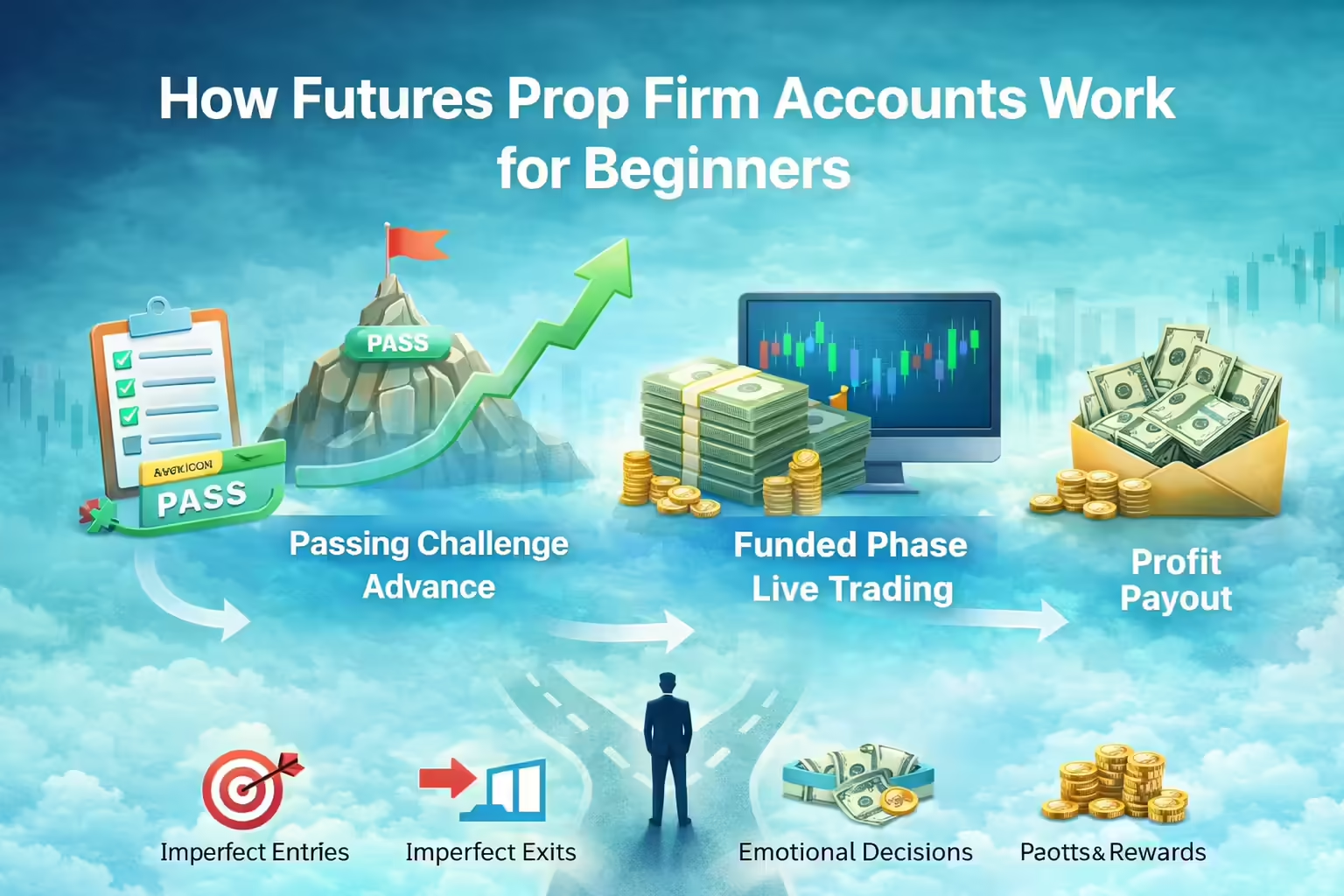
How Futures Prop Firm Accounts Work for Beginners
Most firms begin with an evaluation, sometimes called a combine or challenge. You pay for access to a simulated account and must meet evaluation rules before you can move to the next account phase.
The Evaluation Model for Beginner Futures Traders
Most evaluations include:
- a profit target
- a maximum loss threshold
- a position size limit
- a trading product list
- sometimes a Daily Loss Limit
- sometimes a consistency requirement
If you pass, you move into the firm's funded-style phase. Names vary by provider, and some accounts remain simulated while others may later qualify for live routing under the firm's internal review process.
Funded Style Accounts for Beginner Futures Traders
After passing, the work is not finished. Payout rules usually live in this next phase, not in the evaluation itself. Check the winning-day count, minimum profit per winning day, payout caps, profit split, loss recovery rules, and any new Daily Loss Limit or consistency rule before you request a withdrawal.
Many beginner traders fail because they size up immediately, withdraw too early, or ignore new funded-phase rules that did not matter during the evaluation.
For a beginner, the goal is not to find the flashiest account. Choose rules you can follow on a bad day.
Why Drawdown Rules Matter for Futures Prop Firm Beginners
The most important rule for futures prop firm beginners is how the firm calculates drawdown. Drawdown decides how much room you really have before the account is breached.
Price, payout split, and account size matter. Drawdown matters more because it controls whether you can survive long enough to learn.
Drawdown Rules That Beginners Must Check
Intraday Trailing Drawdown Risk
Some firms use intraday trailing drawdown. In this model, the maximum loss limit can adjust as your account reaches new intraday equity highs.
In plain terms, always separate three mechanics:
- Reference value: balance or equity, depending on the firm.
- Update timing: intraday, End-of-Day, static, or another published method.
- Breach monitoring: whether the firm checks the line intraday, at session close, or under another stated rule.
If the threshold trails intraday, a favorable open move can raise the threshold and shrink your remaining cushion. New traders often need room for imperfect entries, partial exits, and early trade management mistakes.
End-of-Day Drawdown Benefit
Other firms use End-of-Day drawdown. In that model, the value used to update the drawdown threshold is usually based on an end-of-session balance reference rather than every intraday equity high.
That does not automatically mean intraday breaches are impossible. Each provider can define breach monitoring differently, so read the specific rule page. In practice, End-of-Day models often matter to beginners because:
- temporary intraday highs may have less impact on how the threshold updates
- the written rule may be easier to plan around than a fast-moving intraday trail
Why beginners often prefer it:
End-of-Day models can be easier to understand, but you still need to know the firm's exact reference value, update time, and breach timing.
Daily Loss Limits for Futures Prop Firm Beginners
Some accounts include a Daily Loss Limit. This rule stops or breaches trading when your losses hit a set daily threshold.
A DLL can be a useful risk control, but it can also add pressure for beginners because it creates one more number to watch during a losing session.
- It can make a normal losing morning feel urgent.
- It can tempt a trader to force recovery trades.
- It can add another failure point beyond total drawdown.
That is why some beginner-friendly accounts remove the DLL during evaluation or make the daily rule easier to manage than the total drawdown rule.
A Rule Set Example for Beginner Futures Traders
One useful way to compare beginner-friendly rules is to look at a specific published rule set. Tradeify's current Select Evaluation pages state that Select has End-of-Day drawdown, no Daily Loss Limit during evaluation, a 40% consistency rule during evaluation only, and no activation fees for current Tradeify account types.
What the Published Rule Set Shows Beginners
Verified beginner-relevant traits:
- Drawdown: End-of-Day.
- Daily Loss Limit: none during evaluation.
- Activation fee: $0 for current account types.
- Consistency Rule: 40% during the Select evaluation, with no consistency rule for Select funded mode according to the Help Center.
- Payout path: choose Select Flex or Select Daily after passing, and that choice is permanent for the account.
The practical beginner lesson is rule-first. Fewer intraday failure points can help you focus on execution instead of dashboard stress.
Flex and Daily Payout Choices
The payout documentation separates two paths:
1) Flex Policy- payout eligibility every 5 winning days
- minimum profit per winning day varies by account size
- larger payout caps than the Daily path
- no Daily Loss Limit in the funded phase according to the current policy page
- daily payout eligibility
- tighter risk parameters than Flex
- better fit for traders who already control size and daily loss behavior
Why Beginners Often Prefer Fewer Rules
A beginner does not need the fastest possible withdrawal path if that path adds pressure. A slower payout cadence with fewer daily constraints may be easier to follow while you build consistency.
A Structured Education Example
Topstep's beginner guide emphasizes the education side of futures prop firms. Its page explains the Trading Combine, simulated evaluation, rules around profit targets and maximum loss limits, and a funded account path with payout eligibility after qualifying winning days.
- It is useful for beginners who want structure and community support.
- It frames a prop firm as a way to practice discipline before trading larger personal capital.
- It also includes risk disclosures and states that simulated performance has limits.
That is a helpful pattern for any beginner comparison: favor firms that explain the process clearly and publish the risks, not just the account size.
A firm with strong education can be a good fit if you need structure. Still, check payout conditions, fees, platform access, and drawdown rules before treating education as the deciding factor.
Other Value Focused Futures Prop Firms
Some firms compete on low entry cost, faster payout timing, or simpler account menus. These can be attractive, but beginners should verify the current rule page before buying.
- Does the firm use End-of-Day drawdown, static drawdown, or intraday trailing drawdown?
- Does the funded phase add a Daily Loss Limit?
- Are reset fees, activation fees, platform fees, and market data costs clear?
- Are payout conditions written in a way you can calculate before requesting a withdrawal?
If the answer is unclear, keep comparing. A cheap evaluation is not beginner-friendly when you cannot explain the rules before your first trade.
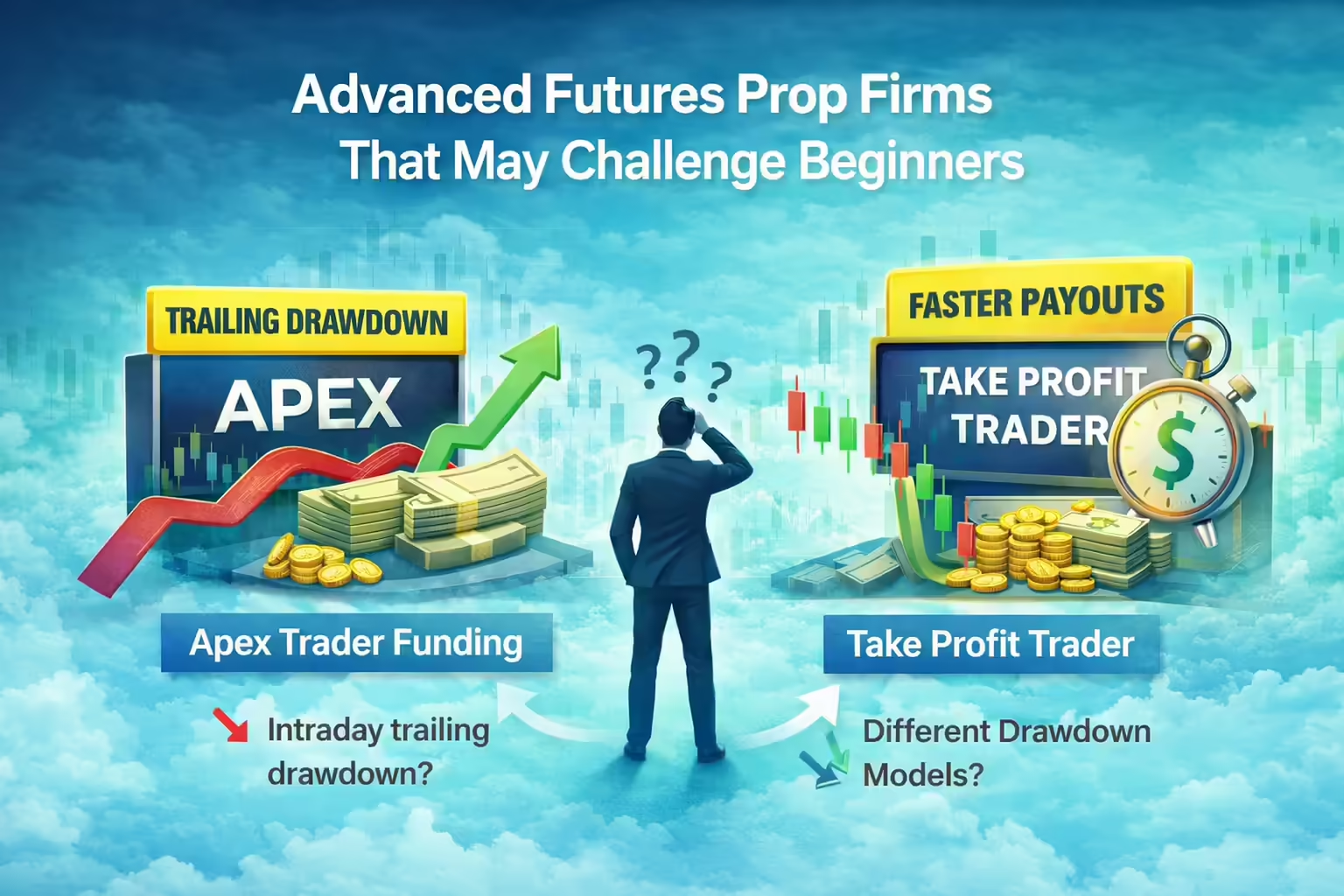
Advanced Firm Tradeoffs Beginners Should Notice
Some popular futures prop firms may appeal to experienced traders because of discounts, account stacking, large menus, or aggressive payout framing. Those features are not automatically bad, but they can distract beginners from the core question.
Intraday Rule Models Can Be Harder for Beginners
If a firm uses intraday trailing drawdown, tight daily rules, or phase-based rules that change after passing, read the terms twice. A rule that looks manageable in a marketing table can feel very different during a fast futures session.
Beginner takeaway: choose the rules you can follow on your worst trading day, not the rules that look best when everything goes right.
Fast Payout Claims Need Extra Review
Fast payout access is useful only if the conditions are clear. Check profitable-day requirements, minimum profit thresholds, consistency rules, payout caps, and loss recovery rules. If one big green day delays payout eligibility, you need to know that before you scale up.
Beginner Comparison Matrix for Futures Prop Firms
| Beginner checkpoint | Why it matters | What to verify |
|---|---|---|
| Drawdown Type | Controls your real room for mistakes. | Static, End-of-Day, trailing, or intraday trailing. |
| Daily Loss Limit | Adds a second risk line during each session. | Whether it applies in evaluation, funded mode, or both. |
| Consistency Rule | Can delay passing or payout access after one large day. | Percentage limit, calculation period, reset after payout, and whether losing days affect the formula. |
| Payout Conditions | Fast payout language can hide minimum-day or cap rules. | Winning-day count, minimum daily profit, payout cap, profit split, and loss recovery requirement. |
| Total Cost | The cheapest evaluation may not be the cheapest path. | Evaluation fee, reset fee, activation fee, market data, platform fees, and commissions. |
| Platform Fit | Execution mistakes often come from setup friction. | Tradovate, NinjaTrader, TradingView, Rithmic, Quantower, Sierra Chart, or another supported platform. |
Examples to compare: traders often review firms such as Tradeify, Topstep, My Funded Futures, Take Profit Trader, Apex, FundedNext, and other futures programs. Use the same checklist for each one, then verify the latest terms directly on the firm's official site.
- For simpler published risk rules: Tradeify Select is worth comparing because its official Help Center lists End-of-Day drawdown, no Daily Loss Limit during evaluation, no activation fees for current account types, and a post-pass choice between Flex and Daily payout policies.
- For education and structure: Topstep is worth comparing because its official beginner guide explains a simulated Trading Combine, maximum loss limits, consistency expectations, community support, and payout eligibility after qualifying winning days.
- For multiple challenge styles: FundedNext is worth comparing because its official futures page presents several challenge types and highlights no DLL, no buffer, and no consistency after passing. Verify the specific challenge rules before buying.
There is no universal best firm for every beginner. Pick the firm whose published rules match your current skill, platform preference, and risk discipline.
Platform Choices for Beginner Futures Traders
Platform setup matters because beginners already have enough to manage. If order entry, brackets, data agreements, or broker connections are confusing, execution mistakes become more likely.
Tradovate and Browser Based Trading
Tradovate-style access is often approachable for beginners because it can be:
- browser-based
- Mac-compatible
- connected to common charting workflows
- simpler to test before scaling size
Tradeify's current platform documentation says traders select one of three broker connections at checkout: Tradovate, Rithmic, or WealthCharts. Tradovate credentials can connect to Tradovate, NinjaTrader, and TradingView. Rithmic credentials can connect to Tradesea, Quantower, Sierra Chart, and R|Trader. WealthCharts uses its own platform access.
Rithmic and Advanced Platform Setups
Rithmic-based setups can fit experienced traders who want specific tools, but they may involve:
- more complex setup
- separate credentials
- platform-specific configuration
For beginners, the best platform is the one you can operate cleanly with small size, brackets, and clear order confirmation. Risk control matters more than advanced chart features in the first evaluation.
Beginner Risk Plan for Futures Prop Firms
Passing an evaluation is only step one. Keeping the account is where many beginners struggle.
The Buffer Strategy for Beginner Futures Traders
When a trader enters a funded-style phase, the first mistake is often sizing up too fast. The account may have little or no profit cushion, which means:
- one bad day can put them close to drawdown
- fear and overtrading often follow
- the account becomes emotionally fragile
Build a buffer before you scale.
Step by Step Plan for Futures Prop Firm Beginners
- Start with micro contracts such as MNQ or MES if your firm permits them.
- Set a daily max loss that is smaller than the firm's Daily Loss Limit or drawdown line.
- Stop trading when you hit your own rule, even if the firm would still let you trade.
- Build a profit cushion before increasing contract size.
- Request payouts only after you understand the payout cap, loss recovery rule, and next-cycle requirement.
This helps avoid the most common beginner cycle: pass, overtrade, breach, reset, repeat.
Tax and Payout Records for Beginners
Tax treatment depends on your country, account terms, payout method, entity setup, and the documents issued by the firm or payment provider. Do not assume prop firm payouts are treated the same as personal futures trading gains.
- save payout confirmations and account statements
- track evaluation fees, reset fees, commissions, and platform costs
- ask a qualified tax professional how to report payouts in your situation
Best Futures Prop Firm Checklist for Beginners
For futures prop firm beginners in 2026, the priority is survivability over speed.
The best firm is the one whose rules give you room to learn without repeated account failure.
Final Beginner Checklist
Before you choose any futures prop firm, confirm:
- drawdown type and when it updates
- Daily Loss Limit rules in every account phase
- consistency rule percentage and calculation method
- all purchase, reset, activation, platform, market data, and commission costs
- payout timing, caps, profit split, and loss recovery requirements
- supported platforms and broker connections
If two firms look similar, pick the one with clearer rules and fewer ways to fail by accident. A beginner-friendly account should make risk easier to understand, not harder to track.
Futures trading involves substantial risk. Prop firm accounts have rules, fees, and payout conditions that can change. Verify current terms with the firm before buying.
.svg)
.svg)
.svg)
.svg)









.webp)