.svg)

.svg)
.svg)

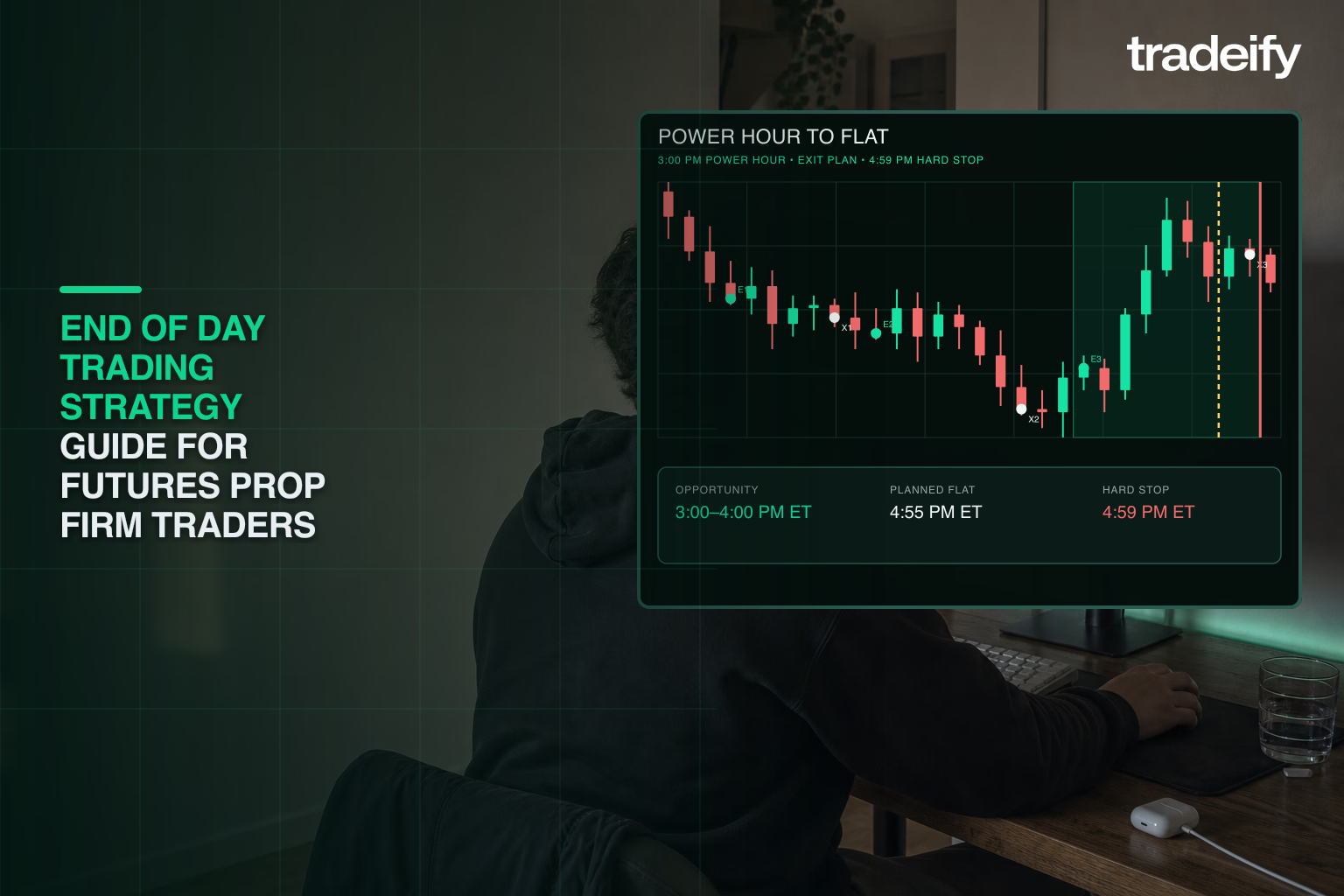


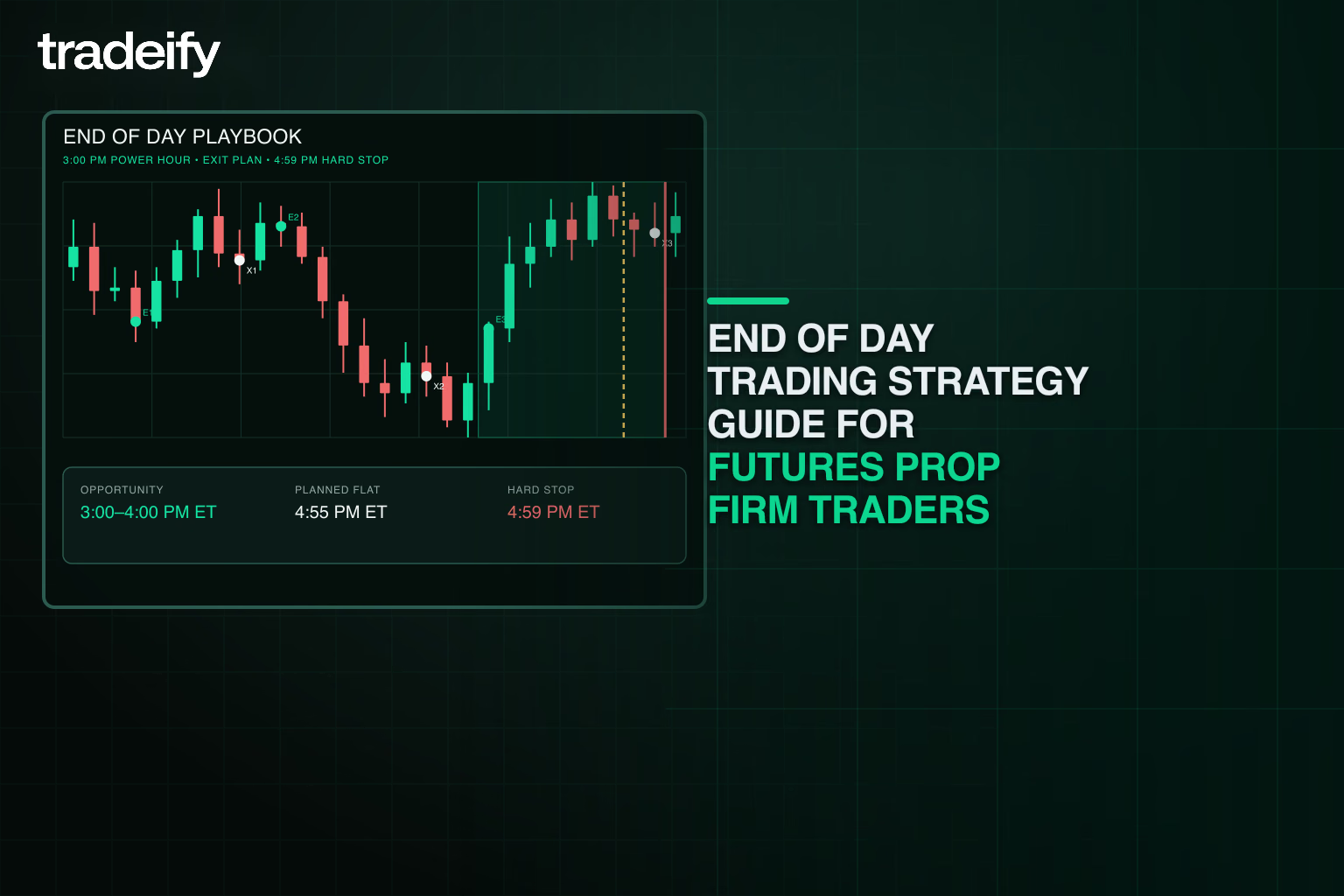
TL;DR: End of Day (EOD) futures trading optimizes the "Power Hour" (3:00 PM–4:00 PM ET) liquidity flush while enforcing a strict 4:59 PM ET hard stop to satisfy prop firm "flat" requirements. To avoid auto-liquidation and slippage, Tradeify traders should exit positions by 4:55 PM ET, utilizing Market orders rather than Limit orders for guaranteed execution near the bell. Core strategies include the Power Hour Flush, VWAP Reversion, and Virtual Swing Trading. Tradeify's EOD Trailing Drawdown only ratchets upward based on your closing balance, meaning intraday unrealized profit spikes won't tighten your drawdown buffer, though the drawdown floor is still monitored in real-time.
In the high-stakes world of futures trading, how you finish is just as important as how you start.
For many retail traders, the opening bell is the main event. It's chaotic, loud, and full of adrenaline. But for the "smart money" (the institutions, hedge funds, and professional desks) the real work often happens at the End of Day (EOD). This is when the market renders its verdict, closing prices are solidified, and the stage is set for the next session.
If you are trading with a prop firm like Tradeify, understanding End of Day trading is not just a strategy; it is a survival skill. Prop firm trading requires disciplined risk management, strict adherence to trading hours, and a deep understanding of how drawdown rules affect your longevity.
This guide breaks down exactly what End of Day trading means in the futures market, how to exploit the volatility of the "Power Hour," and how to capitalize on Tradeify's specific End-of-Day Trailing Drawdown to gain an edge over the competition.
What Is End of Day Trading in the Context of Futures
In traditional investing, "End of Day trading" often refers to analyzing the market after the close and placing orders for the next day, or holding positions overnight (swing trading).
However, in the context of futures prop firms, the definition shifts slightly but critically. For a Tradeify trader, End of Day trading refers to two distinct concepts:
- Trading the "Power Hour": Capitalizing on the high volume and volatility that occurs between 3:00 PM and 4:00 PM ET as institutions rebalance their portfolios.
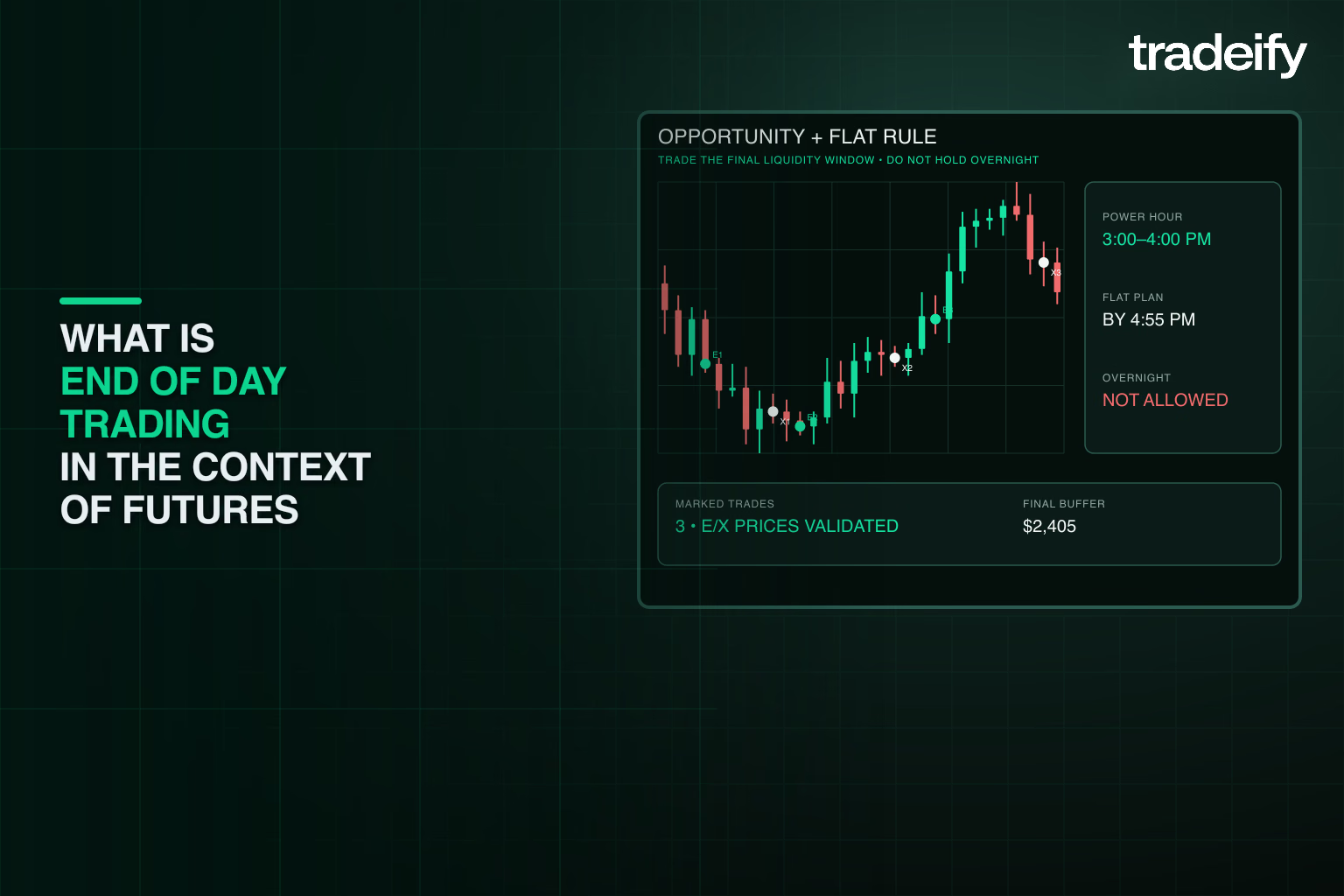
- The "Flat" Requirement: Managing the mandatory closure of positions before the market closes (4:59 PM ET) to avoid rule violations.
While traders cannot hold positions overnight in funded futures accounts due to risk parameters, treating trading with an "End of Day" mindset allows for capturing the final trend of the session. It involves analyzing the intent of the daily candle close to set a bias for the next morning.
Futures Trading Strategies Near the Closing Bell
The market has a rhythm. If the opening bell is the morning rush hour, the closing bell is the race to the finish line.
The Power Hour End of Day Trading Window
"Power Hour" is the final hour of the regular equity trading session (3:00 PM to 4:00 PM ET). During this window, volume spikes as:
- Day traders rush to close positions to avoid overnight fees.
- Institutional algorithms execute "Market on Close" (MOC) orders to hit benchmark targets.
- Economic news impact has settled, allowing the market to finally pick a definitive direction.
The Hard Stop for Futures Traders at 4:59 PM ET
Traders utilizing prop firms like Tradeify must have this time permanently etched in their minds.
The Safety Net: All positions must be closed by 4:59 PM ET. While Tradeify will auto-liquidate positions left open (and this won't fail your account), auto-liquidation often comes with poor fill prices (slippage).
The Best Practice: Aim to be flat by 4:55 PM ET to account for internet lag or platform issues.
How Futures Traders Execute Strategies at Market Close
Limit Orders vs Market Orders
In the final minutes, volatility expands rapidly. The S&P 500 (ES) or Nasdaq (NQ) can jump 10 points in seconds.
- Market Orders: These guarantee execution but not price. In the thin liquidity of the final seconds, a market order is the safest choice to ensure you meet the mandatory 4:59 PM flat rule.
- Limit Orders: These guarantee price but not execution. Pro Tip: Do not rely on Limit orders to exit a trade in the final minute. If the market moves away, you might be left holding a position through the close.
Drawing Key Levels
End of Day traders rely heavily on Support and Resistance from the daily timeframe:
- Previous Day High/Low: A close near the high suggests bullish momentum carrying into the next session.
- VWAP (Volume Weighted Average Price): If price drifts far from VWAP late in the day, algorithms often trigger "mean reversion" to pull price back to average.
The Tradeify Advantage with End of Day Trailing Drawdown
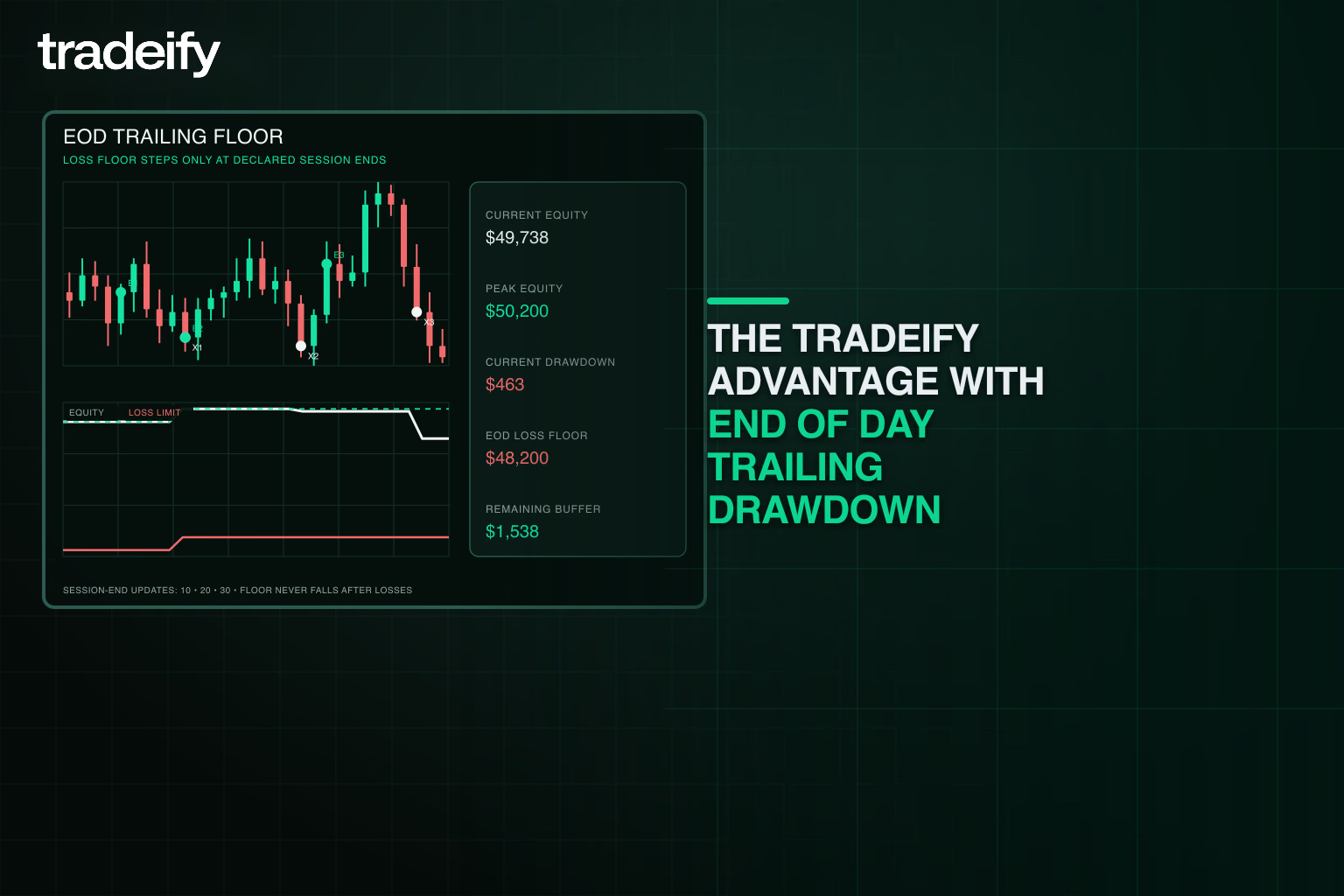
Tradeify uses an End-of-Day (EOD) Trailing Drawdown for its Growth, Select, and Lightning accounts. This is a massive advantage compared to "Intraday" models.
How it works:
In an Intraday model, your drawdown floor moves up the moment your profit spikes, even if you don't close the trade. With Tradeify’s EOD model, the drawdown floor only updates based on your closing balance at the end of the day.
Example: If you are up $1,500 in a trade but it reverses and you close at $0 profit, your drawdown floor does NOT move up. You haven't lost any "breathing room."
Crucial Nuance: While the floor only trails higher based on the EOD balance, the limit is still enforced in real time. If your balance touches that floor at any point during the session, the account fails immediately.
3 End of Day Strategies for Futures

Strategy 1: Power Hour Flush
Concept: Looking for a breakout of the daily range after 3:00 PM ET.
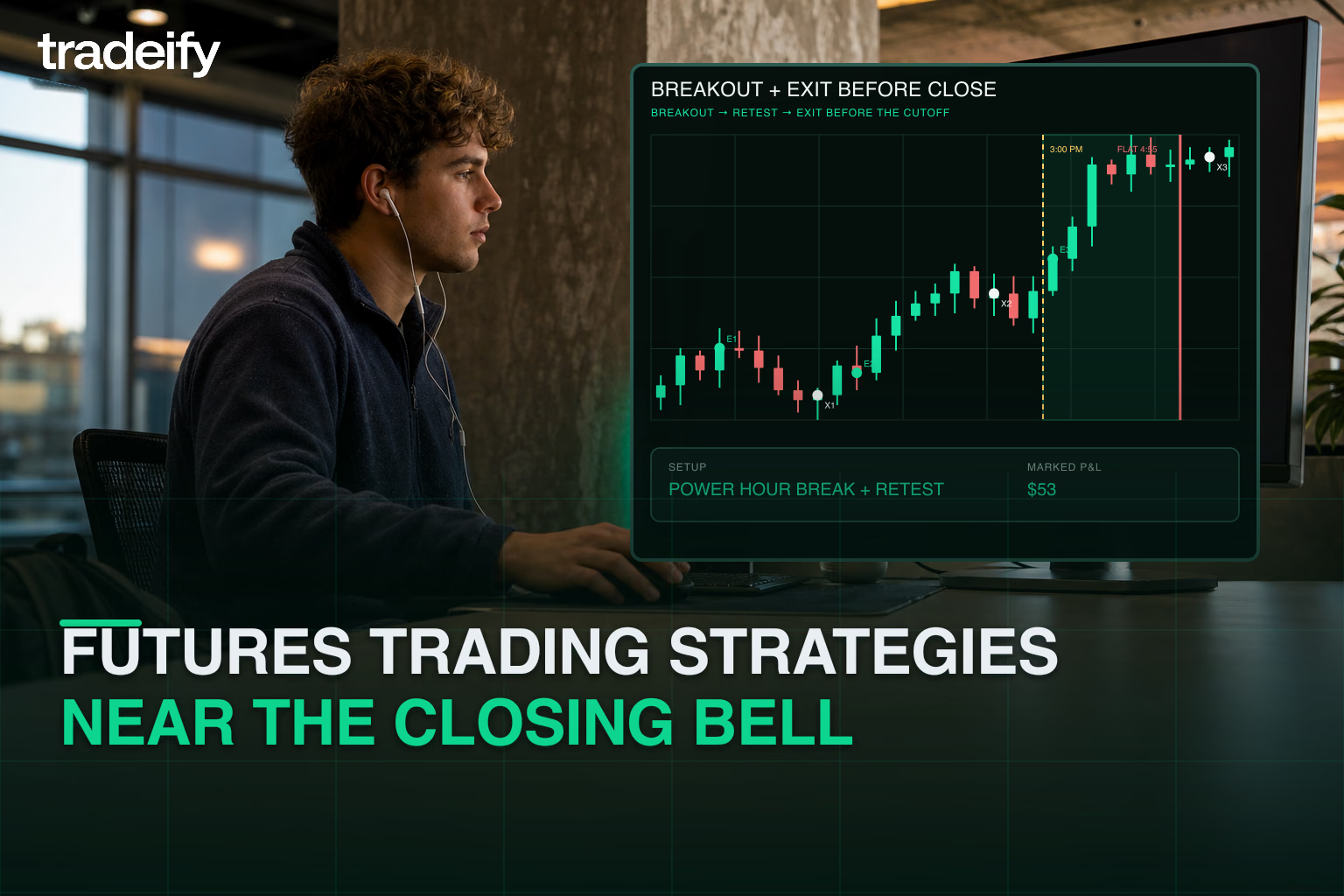
Execution: If the market breaks the High of Day (HOD) with high volume at 3:15 PM, it often triggers a squeeze into the close. Enter on the retest of the breakout and exit by 4:50 PM.
Strategy 2: VWAP Reversion
Concept: Price tends to return to value (Mean Reversion).
Execution: If price is significantly overextended from the VWAP by 3:00 PM, look for exhaustion candles. Fade the move, targeting the VWAP line as the "magnet" price into the close.
Strategy 3: Virtual Swing Trade
Concept: Identify a swing trade setup but execute it as two separate day trades to bypass overnight rules.
Execution: Observe a bullish daily close. Instead of holding overnight, buy the open the following morning if the bias remains intact.
Tools for End of Day Analysis
- TradingView: Use the D1 chart for context, H1 for trend, and M5 for entries.
- Economic Calendar: Watch for late-afternoon Fed speakers.
- Global Market Watch: Monitor the DAX (Frankfurt) or SSE (Shanghai) closes for global confluence.
Discipline Wins
The beauty of the End-of-Day Trailing Drawdown at Tradeify is that it rewards patient, disciplined trading. Intraday volatility won't ruin your drawdown buffer, giving you the room to navigate the volatile "Power Hour."
.svg)
.svg)
.svg)
.svg)







.webp)