.svg)

.svg)
.svg)




Blown Trading Account Recovery: What to Do Next
TL;DR: If you just blew a trading account, stop trading for at least 24 hours. Do not buy a new evaluation, double size, or try to make the money back today. First, confirm what happened to open positions, margin, drawdown, and funded program status. Then write down the exact trade or behavior that caused the failure. Recovery starts with stabilization, not math. After the emotional spike passes, review your journal, cut size, rebuild on SIM or micros, and only return live after you can follow a written risk plan for a full sample of trades.
If You Just Blew Your Account, Do This First
A blown account feels personal, but the next decision matters more than the last trade. The first job is to stop the damage from spreading. Close the platform, save your trade history, and do not place another trade today. A blown account often creates the urge to recover immediately. That urge is exactly why many traders blow a second account right after the first one.
Give yourself one full day before making a new trading decision. During that window, check the administrative details: whether your account is failed, whether any open positions were liquidated, whether a daily loss limit or maximum trailing drawdown was hit, and whether the account can be reset or must be repurchased.
Quick Risk Guardrails (Fill This In Before You Trade Again)
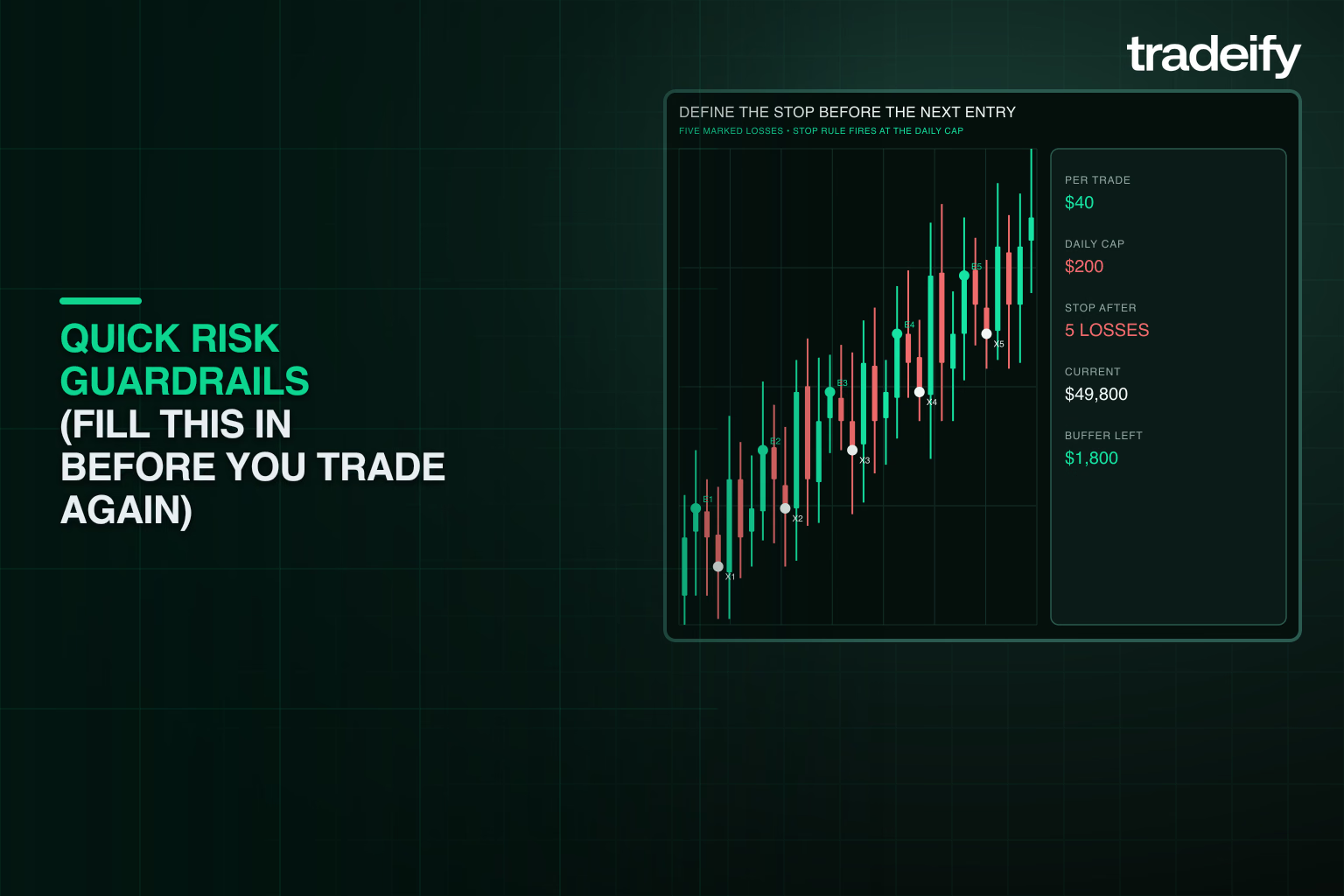
Before you buy another evaluation, reset an account, or return to live size, fill out a one-page risk plan. If you cannot write the answer in a sentence, the rule is not clear enough yet.
| Guardrail | What it controls | Write this before re-entry | Required action |
|---|---|---|---|
| Daily stop | The maximum you can lose in one session. | A dollar amount and a hard stop time. | Go flat, close the platform, and do not re-enter until the next session. |
| Per-trade risk | The planned entry-to-stop loss on one setup, plus a written allowance for normal costs and expected slippage. | A dollar amount based on usable buffer, not headline account size. | If the trade needs a wider stop, reduce contracts or skip it. If gaps or abnormal execution can exceed the plan, size smaller or stand aside. |
| Loss-streak rule | The number of losses that ends the session. | A limit such as two or three planned losses. | Stop trading before frustration changes the plan. |
| Stop policy | Where the stop goes and whether it can move. | A rule for valid stop movement only when risk is reduced. | If you widen a stop to avoid a loss, the session is over. |
| News policy | Whether you trade around scheduled volatility. | The events you avoid and the minutes you stand aside. | No exceptions during recovery mode. |
| Reset rule | When you are allowed to pay for another attempt. | A checklist that must be complete before spending again. | No reset or repurchase until the checklist is done. |
What Happens When a Trading Account Blows?
In a personal brokerage account, blowing up usually means the account balance has taken a major loss. In a funded or evaluation account, it usually means a rule was breached. Your balance does not need to reach zero. If your drawdown threshold, daily loss limit, or account-specific rule is broken, the account can be closed even if the displayed account balance still looks large.
After a hard breach, verify the final account status and any remaining position details directly in your trading platform and Tradeify dashboard. In Tradeify's rules, the key distinction is that evaluation resets may be available for Growth and Select Evaluations, while Lightning Funded and Sim Funded account failures do not have reset options. Some programs pause trading after a soft breach, while max trailing drawdown breaches end the account.
The First 24 Hours After a Blowout
- Stop trading immediately. No revenge trades.
- Export or screenshot the trade history before emotions distort the story.
- Write the account rule that was breached in plain language.
- Record the exact trigger: oversized position, moved stop, no stop, news volatility, tilt, or repeated small losses.
- Do something away from the screen before reviewing the trades.
This sounds basic, but it matters. The first 24 hours are when traders turn one failed account into a pattern. Your goal is not to feel better. Your goal is to avoid making a second expensive decision while your judgment is impaired.
Why Traders Keep Blowing Accounts
Most blown accounts come from a small number of repeat behaviors. The most common are trading too large for the drawdown buffer, adding to losers, moving stops, trading after a daily loss, and trying to recover a failed day in one trade. Some traders also use account balance as their risk reference instead of usable drawdown. That makes the real risk far higher than it looks.
For example, a $50,000 funded account with a $2,000 drawdown buffer does not give you $50,000 of risk capital. It gives you a $2,000 failure boundary. A $500 loss is not 1% of meaningful risk. It is 25% of the buffer. Four losses like that can end the account.
How to Review the Damage Without Spiraling
Do the review like an audit, not a confession. Label every losing trade with one cause. Was it a valid setup that failed? Was the entry late? Was the stop too wide? Did you size too large? Did you break a rule after the loss? The answer decides what to fix.
If most losses were valid setups, the strategy may need a larger sample or better market filters. If one or two trades caused the damage, the problem is risk control. If the account failed after you were already down on the day, the problem is a stop-trading rule.
Recovery Milestones (Pass/Fail Gates)
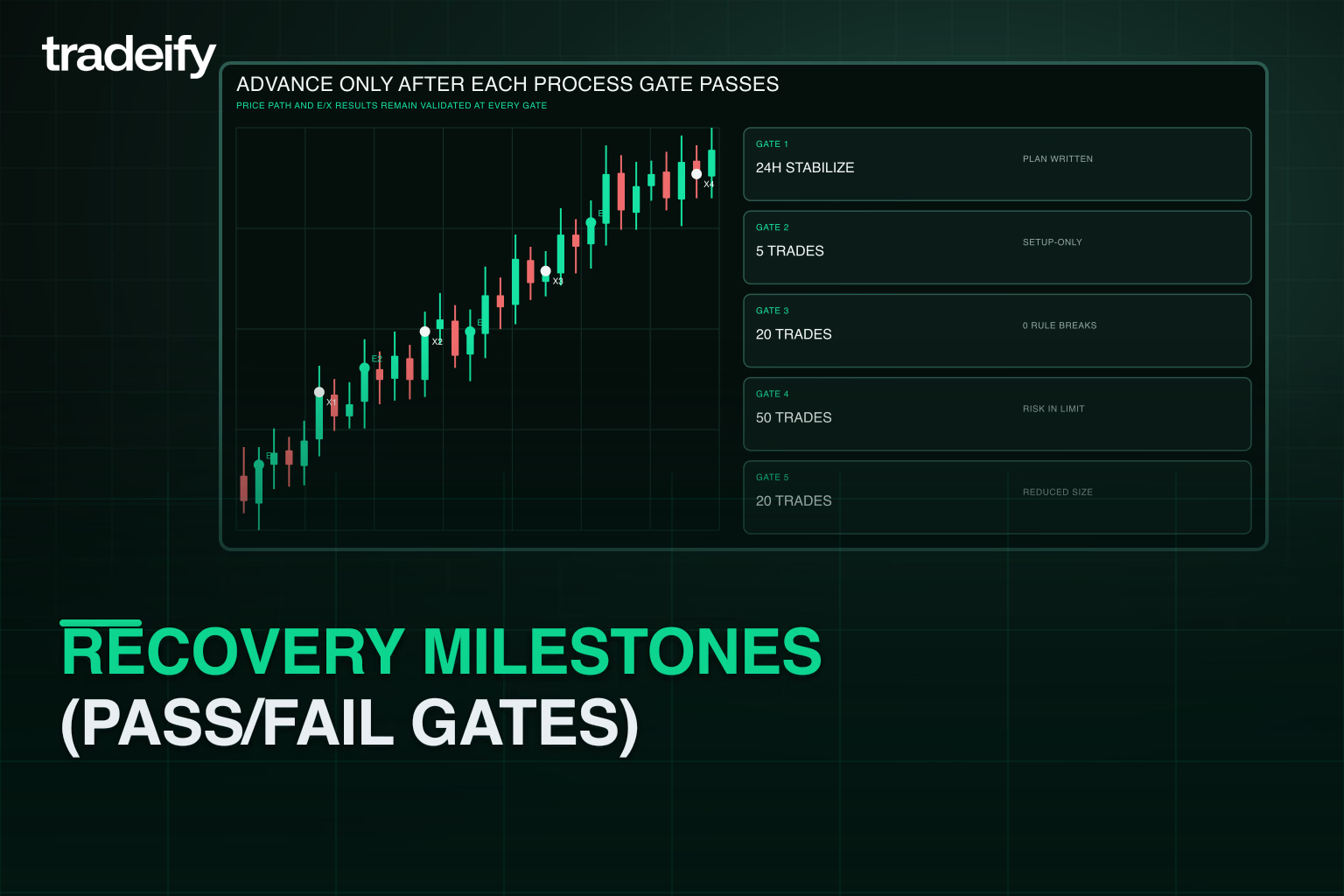
Recovery works better when it has pass/fail gates. Your goal is not to make the money back quickly. Your goal is to prove you can follow process under stress.
- Gate 1, stabilize for the rest of the day: No new account purchases and no revenge trades. Pass only if you have handled any open exposure, completed the written review, and can explain what happened, what rule broke, and what you will do differently after the next loss.
- Gate 2, complete 5 setup-only trades: Use SIM, micros, or the smallest practical size. Before the sample begins, write what counts as a valid setup. Pass only if all 5 trades have a planned entry, stop, target logic, size, screenshot or journal note, and actual execution that matches the written plan.
- Gate 3, finish a 20-trade review: Keep size constant and compare every entry, stop adjustment, exit, and contract size with the written plan. Pass only if there are zero stop-widening moves, zero unauthorized stop changes, zero revenge entries, zero session-stop violations, and every trade has a completed journal note showing whether it matched the setup rules.
- Gate 4, finish a 50-trade review: Track average win, average loss, largest loss, largest losing day, setup compliance, and whether results are still within the strategy assumptions you wrote before the sample began. Pass only if there are zero sizing violations, zero session-stop violations, drawdown stays within your written cap, and the sample does not contradict the strategy's documented risk limits.
- Gate 5, return with reduced size: Start below your prior size for the next 20 trades. Increase only if those 20 trades have zero rule violations, every loss stayed within your written planned-risk range, and the results still support the strategy assumptions. If the setup is losing consistently or the sample no longer fits the plan, stay in simulation or minimal size instead of progressing.
Choose Simulation or Smaller Live Size Before Re-entry
Use simulation when the blown account came from rule-breaking, stop-widening, revenge entries, or trades you cannot explain from your journal. The goal is to prove the behavior changed before money is back on the line.
Use the smallest practical live size only when the loss came from valid setups, the review is complete, and the next sample has a written daily stop, per-trade risk cap, and loss-streak rule. If either path produces another rule violation, step back to the previous gate instead of adding size.
If you fail a gate, do not jump forward. Reduce size, fix the rule that broke, and repeat the previous gate.
Worked Examples (Drawdown-Buffer Math)
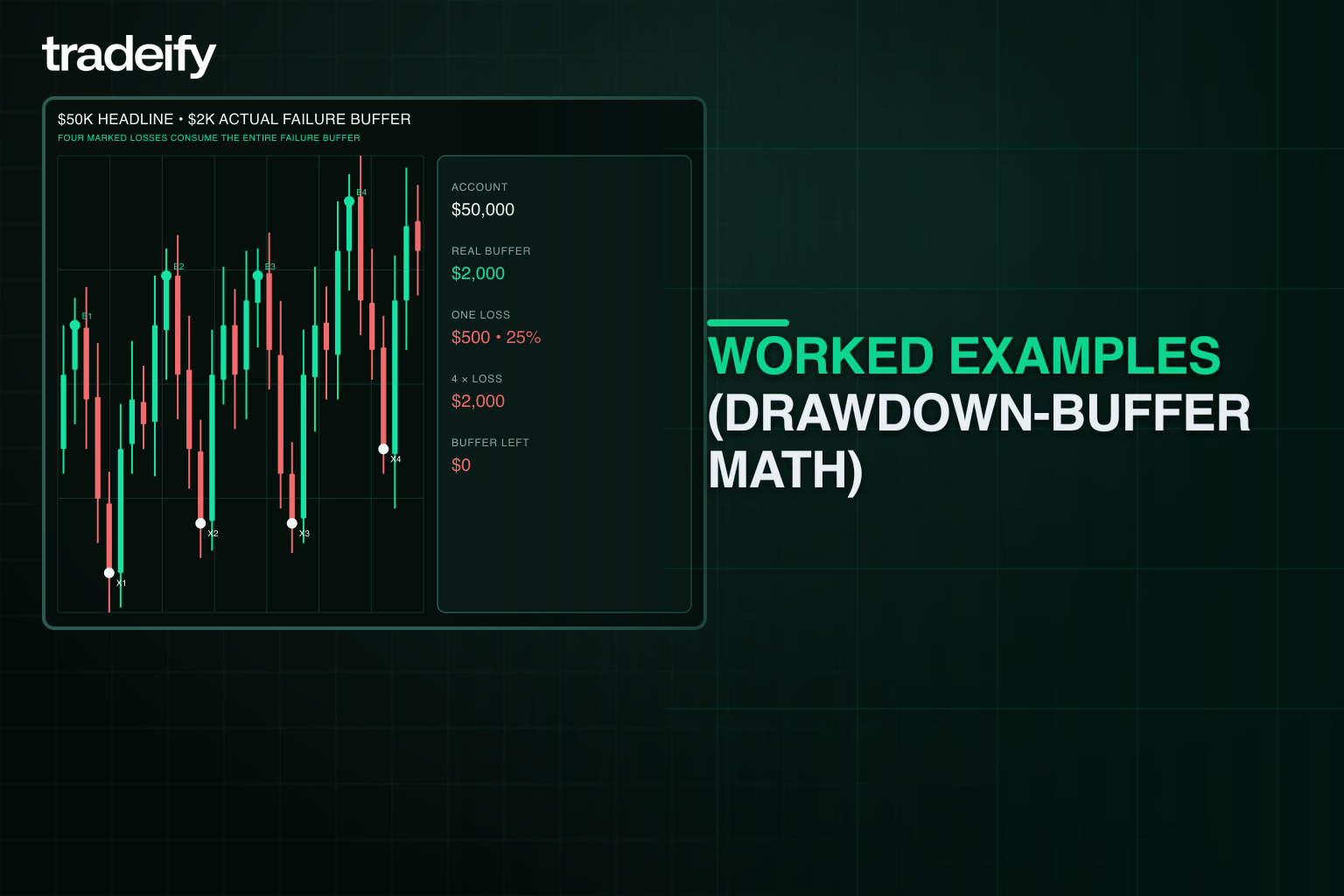
These examples are intentionally simple. The point is to make your next decision feel concrete.
Example 1: Why “$50,000 account” is not $50,000 of risk
If an account has a $2,000 max loss buffer, then a $500 loss is 25% of the buffer. Four losses of that size can end the account, even if the headline balance still says $50,000.
Example 2: Picking max loss per trade from the buffer
If your buffer is $2,000 and you decide to risk 0.5% of buffer per trade, your max loss is $10 per trade. If you risk 2% of buffer, your max loss is $40 per trade. The smaller number gives you more attempts to execute your plan without blowing the account.
Example 3: Loss streak planning
If your max loss per trade is $40, then a 5-loss streak is a $200 drawdown. Ask: would that push you into tilt or violate a daily stop? If yes, the size is too large.
When the Math Comes Back In
After the emotional part is contained, the recovery plan becomes mathematical. Risk a small percentage of the actual drawdown buffer, not the headline account size. Many traders should start around 0.25% to 0.5% of account balance or an even smaller percentage of the drawdown buffer, depending on the account rules.
Use this simple check before the next trade: if three normal losses in a row would make you panic or violate a rule, the size is too large.
.svg)
.svg)
.svg)
.svg)








.webp)