.svg)

.svg)
.svg)

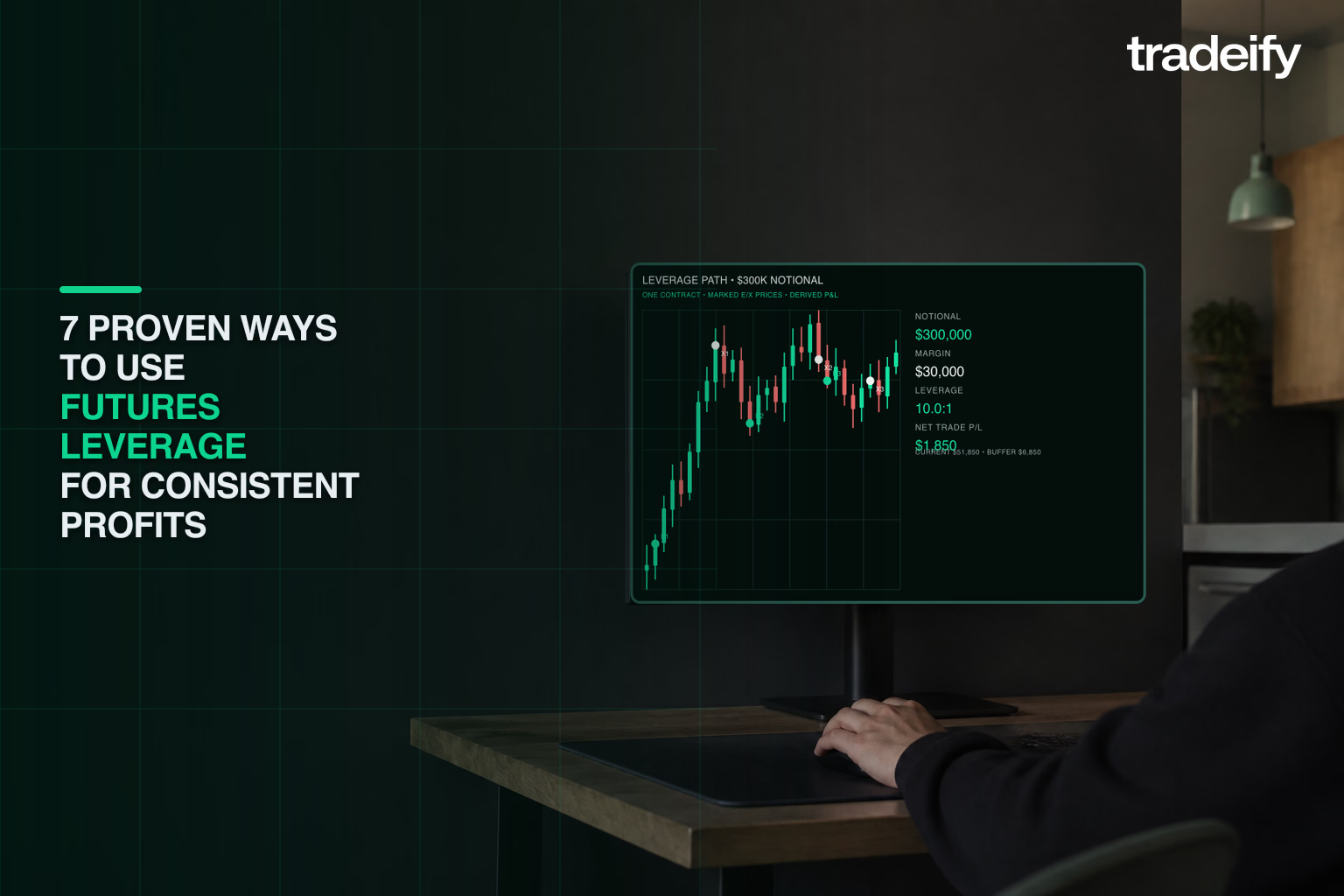


Futures leverage lets you control a larger contract value with a smaller margin deposit. That is the benefit. It is also the risk. A small move in the contract can create a much larger change in your account or drawdown buffer.
The mistake is treating leverage like extra buying power instead of extra exposure. Before you trade, know the contract value, the margin requirement, the dollar value of each tick or point, and the maximum loss your account can absorb.
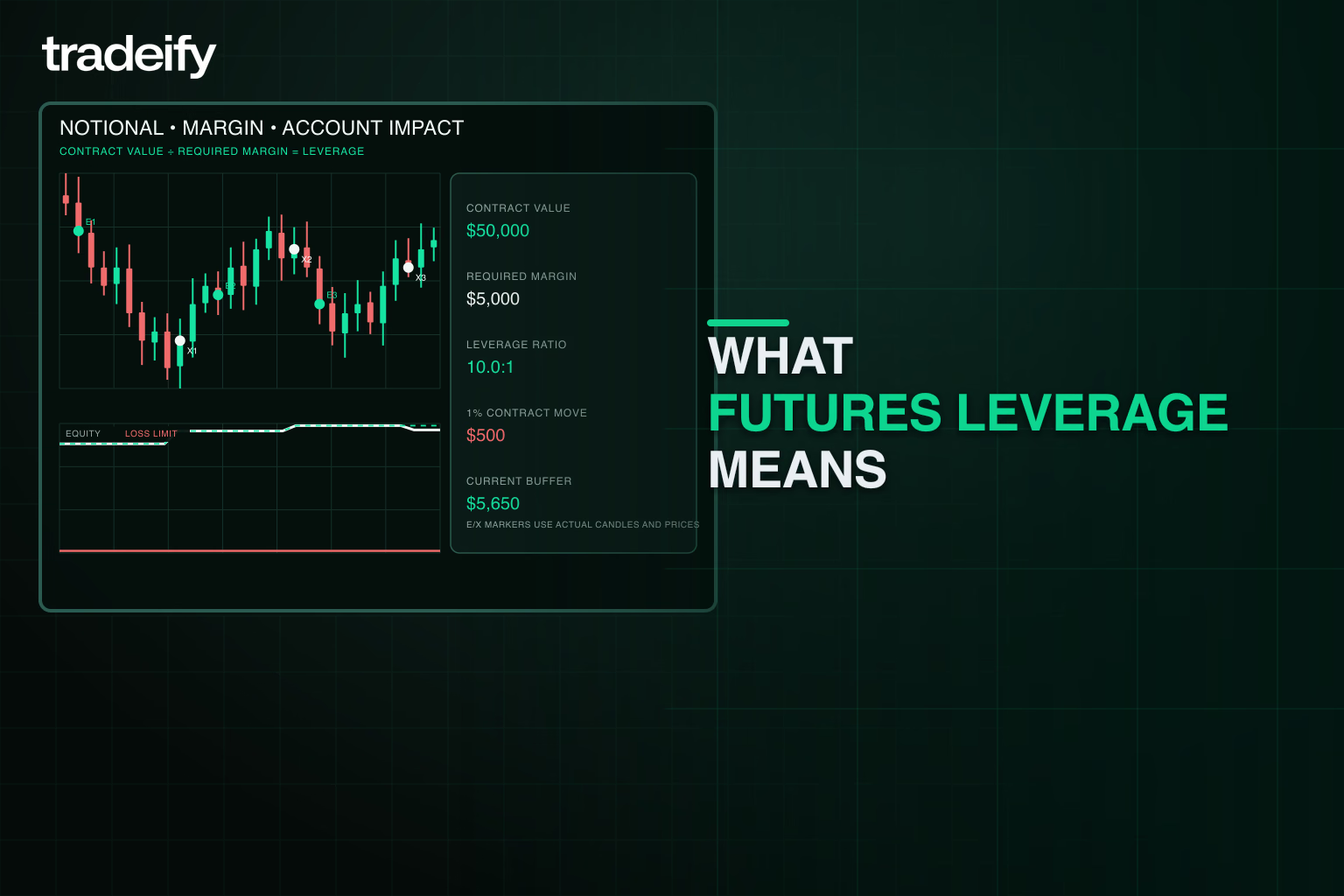
TL;DR: Futures leverage equals contract value divided by required margin. A $50,000 contract controlled with $5,000 in margin is 10:1 leverage, so a 1% contract move creates profit or loss equal to about 10% of that posted margin before fees and slippage. Futures margin is a performance bond, not a down payment on the full contract, and margin requirements can change by product, broker, session, volatility, and whether the position is held intraday or overnight. Size positions from the loss you can absorb, not from the biggest contract your platform allows.
What Futures Leverage Means
In futures, leverage is built into the contract. You do not buy the full notional value up front. You post margin, which acts as a performance bond, while gains and losses are marked against the position as price moves.
That structure makes futures capital efficient. It also means the account impact is faster than many new traders expect. A position can move against you before you have time to think through the math.
Authoritative risk disclosures say the same thing in plain terms: small margin requirements can work for you or against you, and leveraged futures can produce large losses as well as gains. Treat that as the starting point, not a footnote.
How To Calculate Futures Leverage
The basic formula is simple:
| Item | Formula | Example |
|---|---|---|
| Contract value | Futures price x contract multiplier | 6,000 x $50 = $300,000 |
| Leverage ratio | Contract value / required margin | $300,000 / $30,000 = 10:1 |
| Margin impact | Dollar P/L / margin posted, where dollar P/L = price move x multiplier x contract count | A 1% move on $300,000 is $3,000, or 10% of $30,000 margin |
The exact ratio changes when the contract price or margin requirement changes. That is why a static table of “typical leverage” can mislead you. Use the current contract specs and the current margin shown by your broker or platform.
A simple $50,000 example still helps: if a trader controls $50,000 of futures exposure with $5,000 in required margin, the leverage ratio is 10:1. A 1% favorable move in the contract creates dollar P/L equal to about 10% of that margin amount. That percentage is not automatically the return on the full account unless the account equity equals the posted margin. A 1% adverse move creates the same size loss before commissions, fees, slippage, and any liquidation rules.
Margin Types That Change Risk
Searchers usually ask “how much leverage can I get?” The better question is “which margin number am I using?” Futures platforms may show more than one margin requirement.
- Initial margin: the amount generally required to establish a futures position.
- Maintenance margin: the minimum equity level generally required after the position is open. Falling below it can lead to an additional-funds request, forced reduction, or liquidation depending on the broker and market conditions.
- Intraday or day-trading margin: a broker-set concession where offered. It may apply only during eligible hours and can be changed or disabled.
- Overnight margin: a common broker label for the requirement outside eligible day-trading hours. It is often based on the higher exchange-style initial or maintenance requirement rather than a separate universal margin category.
Coinbase’s futures help page gives a clean example of the same math: notional value divided by required margin produces the leverage multiple. It also warns that leverage can amplify profits and losses, and that risk can exceed the initial investment.
Intraday margin is not permanent. Brokers and platforms can adjust requirements during volatile markets, around weekends, or around specific products. Check the live margin screen before taking a position.
Contract Size And Point Value
Leverage is not just a ratio. It is dollars per point, dollars per tick, and how many contracts you trade.
CME lists E-mini S&P 500 futures with a $50 multiplier and Micro E-mini S&P 500 futures with a $5 multiplier. That 10-to-1 difference is why micro contracts matter for smaller accounts. A one-point ES move is $50 per contract. A one-point MES move is $5 per contract.
If you are learning contract specs, review the product’s official exchange page and a practical contracts guide before you trade. The contract multiplier controls your real exposure.
| Contract example | Multiplier | One-point move | Why it matters |
|---|---|---|---|
| E-mini S&P 500 | $50 x index | $50 per contract | Fast account swings when size is too large |
| Micro E-mini S&P 500 | $5 x index | $5 per contract | More precise sizing for small risk budgets |
Risk Controls Before Using Leverage
Do the risk math before the entry. Once the trade is live, leverage makes hesitation expensive.
- Set the invalidation point first. Know where the setup is wrong before you know how many contracts to use.
- Convert the stop into dollars. Contracts x points or ticks x point or tick value equals planned loss.
- Compare planned loss to the real risk budget. For a personal brokerage account, that may be account equity. For a prop account, it is usually the drawdown buffer.
- Respect daily limits. If you hit your max loss or daily stop, stop trading instead of increasing size.
- Avoid doubling after a loss. Revenge sizing is one of the fastest ways leverage turns a normal loss into an account-ending loss.

Risk per one trade should be tied to the distance to your stop, not to the maximum number of contracts available on the platform.
Volatility And News Risk
The same futures leverage can feel manageable in a slow market and reckless during a fast one. Volatility widens candle ranges, increases slippage risk, and can make a normal stop too tight.
Before major news, economic releases, contract roll periods, or thin-liquidity sessions, reduce size or wait. A smaller position with a valid stop is cleaner than full size with a stop that has no room to work.
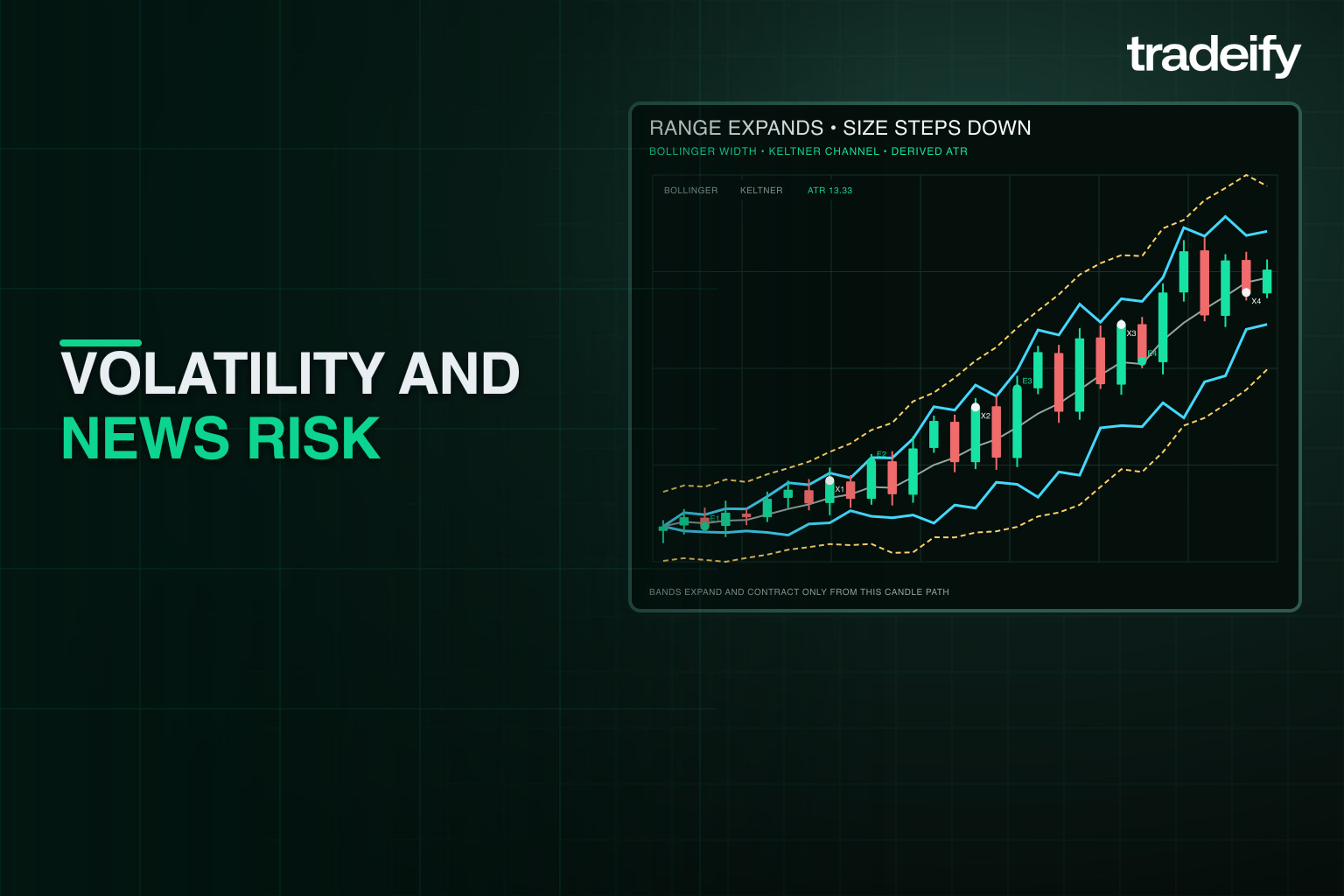
If you want more detail on sizing during unstable sessions, the related guide on volatility spikes covers the practical adjustment process.
A Prop Firm Buffer Example
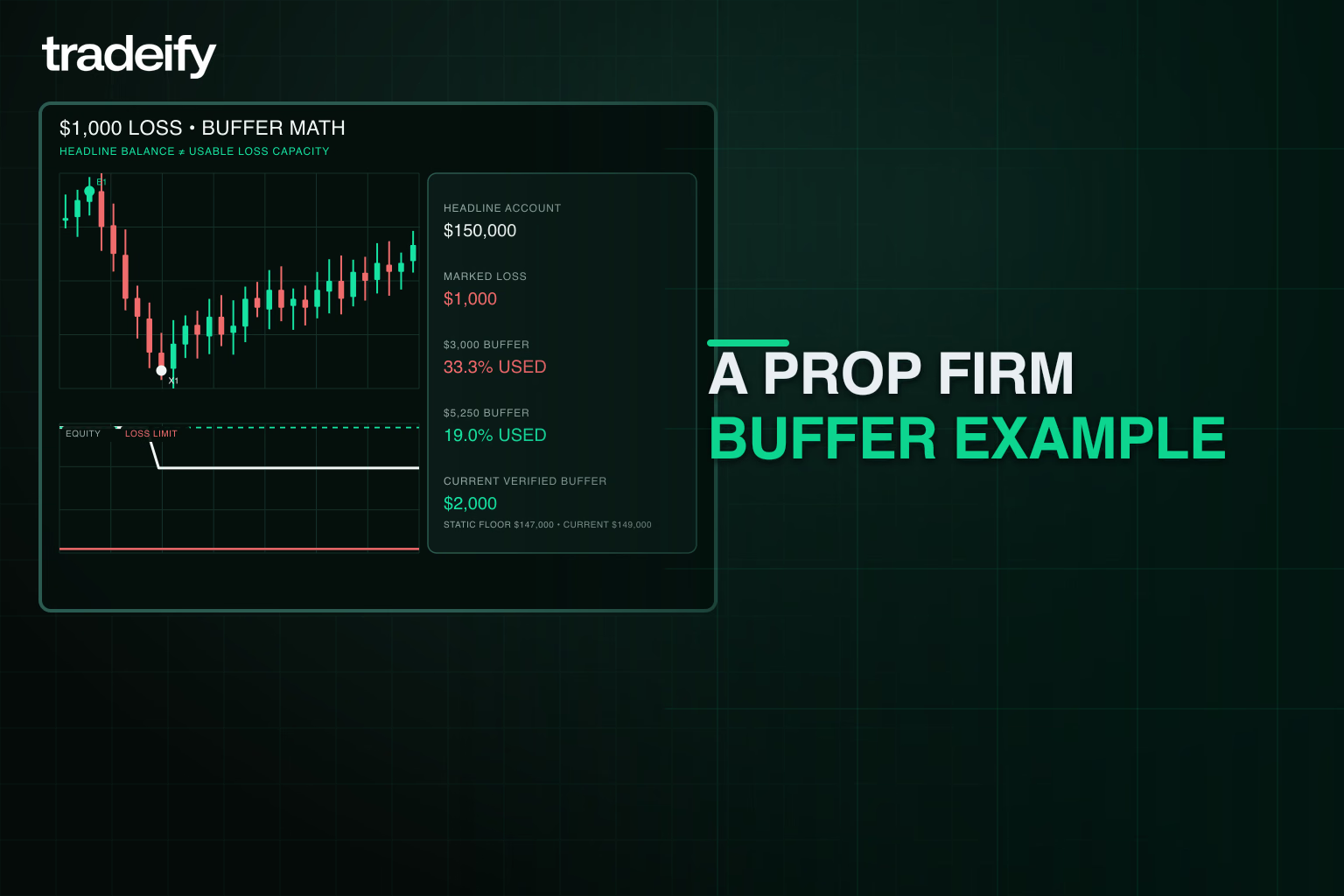
In many prop firm accounts, the displayed account size is not the same as usable risk capital. Your risk is constrained by whichever drawdown, daily-loss, and position limits apply to the specific program, and those rules vary by firm and account type.
For example, if a 150K account has a $3,000 to $5,250 drawdown buffer, a $1,000 loss is not “less than 1% of the account.” It is roughly 19% to 33% of the buffer. That is the number that matters for survival.
Use the official rules for micros, minis, drawdowns, and any live-account scale up terms before sizing. Because terms can vary by account and the scaling page was not usable during this run, treat that link as a place to check current terms, not as support for a fixed scaling claim.
That is also why futures trading basics still matter after you get more buying power. More buying power is not permission to max out size; it only helps if your risk per trade stays controlled.
Futures Leverage FAQ
What is leverage in futures trading?
Futures leverage is the ability to control a contract’s notional value with a smaller margin deposit. The leverage ratio is contract value divided by required margin.
How much can you leverage futures?
It depends on the product, contract price, broker margin, session, volatility, and whether the position is held intraday or overnight. Check the current margin requirement on the platform instead of relying on a generic ratio.
What is 10x leverage in futures?
10x leverage means the contract exposure is 10 times the margin posted. If $5,000 in margin controls $50,000 of exposure, the ratio is 10:1.
Can futures losses exceed the initial margin?
Yes. Futures leverage can amplify losses, and fast adverse moves may create losses larger than the initial margin amount. That is why stops, daily limits, and position sizing matter.
How should beginners use futures leverage?
Start with the smallest contract size that lets you practice the setup. Use micros when appropriate, define the stop first, and keep the planned loss small enough that one mistake does not decide the account.
Futures Leverage Takeaways
- Know the formula. Contract value divided by margin equals leverage.
- Trade the dollar risk. Point value and contract count matter more than the headline ratio.
- Use current margin data. Requirements can change by product, broker, session, and volatility.
- Size from the buffer. In a prop account, drawdown matters more than headline account size.
- Keep the next step simple. Review the rules, choose the right contract size, and trade only when the planned loss is acceptable.
Ready to compare account rules?
Review current account options before sizing any leveraged futures trade.
.svg)
.svg)
.svg)
.svg)








.webp)