.svg)

.svg)
.svg)

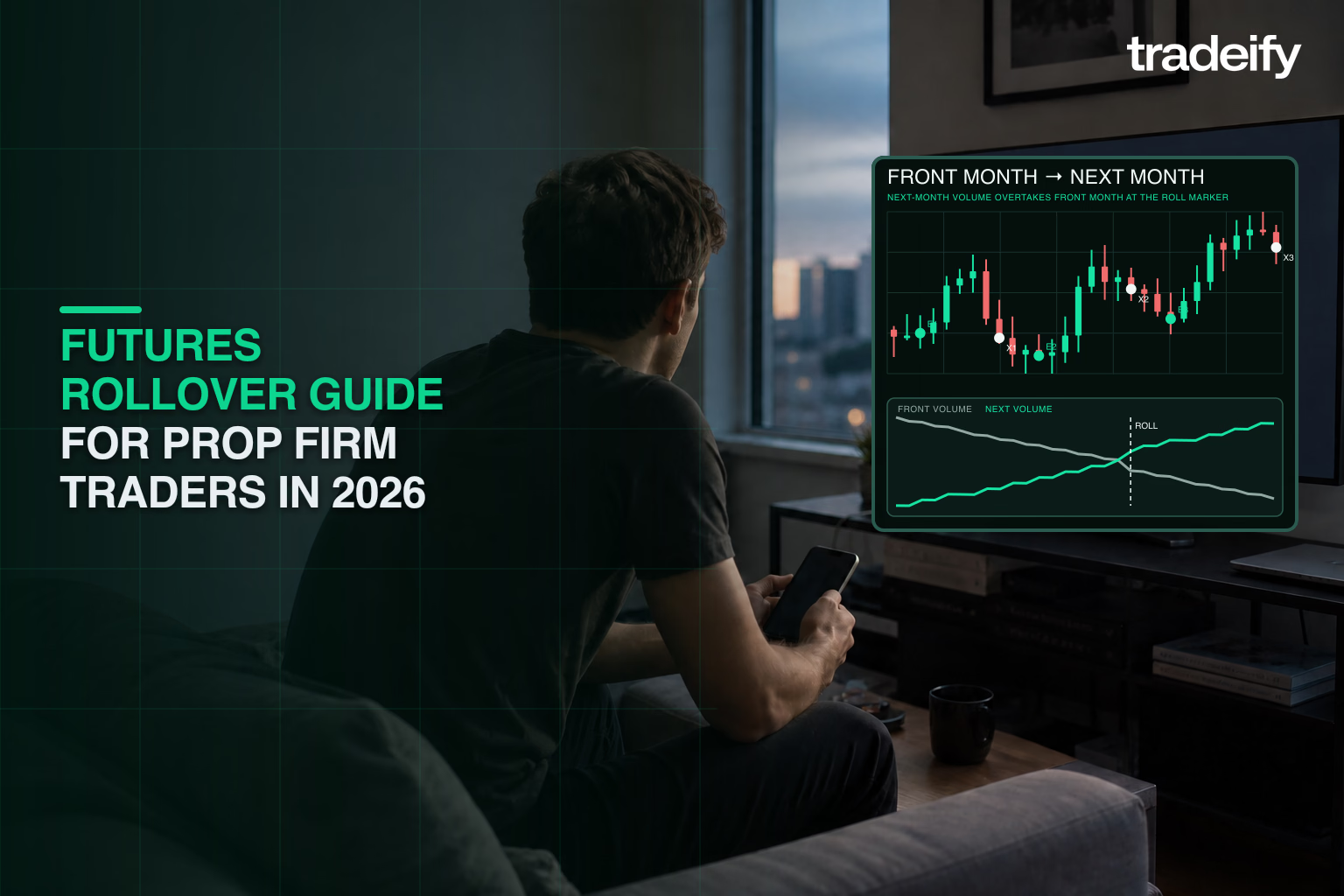


TL;DR: Futures contract rollover is the process of moving positions from an expiring contract to the next active month, and getting it wrong at a prop firm like Tradeify can cost you your funded account. Tradeify offers Select (a unified evaluation with a $1,500–$9,000 profit target and a 40% consistency rule, then a choice between Select Flex with no DLL and 5-day milestone payouts or Select Daily with a DLL, buffer system, and daily payouts), Growth (1-day evaluation possible, fixed payout policy, DLL during evaluation, 35% consistency on funded), and Lightning Funded (instant funding, no evaluation, 20% / 25% / 30% progressive consistency, non-resettable). All Sim Funded accounts use End-of-Day trailing drawdown. Equity index contracts (ES, NQ, RTY, YM) roll quarterly on the Monday of expiration week (March 16, June 15, September 14, December 14 in 2026), crude oil (CL) rolls monthly about 8–10 days before last trading day, and gold (GC) follows a bi-monthly cycle with First Notice Day as a key planning deadline. Tradeify supports Tradovate, Rithmic, and WealthCharts, with 50k account position limits of 4 mini or 40 micro contracts (for accounts purchased after September 12, 2025). The Elite Live program (which requires either 3 payouts on a single account or 10 total payouts across all funded accounts as the minimum threshold for consideration, not automatic qualification) offers an 80/20 profit split, no DLL, daily payouts, and milestone bonuses. Key rollover-week considerations include the 10-second microscalping guideline (over 50% of trades and over 50% of profits must come from holds longer than 10 seconds), the 4:59 PM ET daily close requirement (12:59 PM ET on holiday early close days), and ATR-based position sizing to handle elevated roll-week volatility.
The retail futures trading market in 2026 has matured into something genuinely competitive. Sophisticated proprietary trading firms now give independent traders access to institutional-grade capital and technology, and Tradeify has become one of the more recognizable names in that space, offering several pathways to demonstrate trading proficiency and earn funding. Making the jump from a discretionary retail mindset to a professional prop trading methodology, though, requires a working knowledge of the operational mechanics of the futures market. Contract rollover is one of the most important of those mechanics. For a trader operating under a futures prop firm's risk framework, the quarterly and monthly rollover cycles represent both an operational risk and a strategic opportunity to align with institutional liquidity flows.
Why Futures Rollover Matters for Prop Firm Traders
Managing contract expiration is not just a technical chore. It is a core competency that separates consistent professionals from traders who burn out in their first quarter. Futures contracts, unlike equities, are finite instruments with predefined expiration dates. That structural reality forces a periodic migration of positions from the expiring contract to the next active delivery month, the process traders call rolling forward. At a futures prop firm, where you are evaluated on your ability to manage drawdown and trade consistently, rollover weeks are the kind of windows where a careless execution or a misread of liquidity can punch a real hole in your equity curve, or in some cases, end the account entirely.
Tradeify provides a transparent, streamlined path to professional funding through a few different account models, including Select, Growth, and Lightning. Each operates under specific risk parameters, and Sim Funded accounts use End-of-Day (EOD) trailing drawdown, which calculates the maximum permissible loss based on the closing balance at the end of the trading session rather than continuously throughout the day. That mechanism gives traders some intraday breathing room, which is particularly useful during the choppier price action of rollover weeks. Knowing the 2026 schedule and the technical workflows of platforms like Tradovate, Rithmic, and WealthCharts is what allows a trader to stay aligned with the most liquid contracts and minimize the slippage that quietly erodes performance metrics.
How Futures Contracts Expire and Why Prop Firm Traders Must Roll
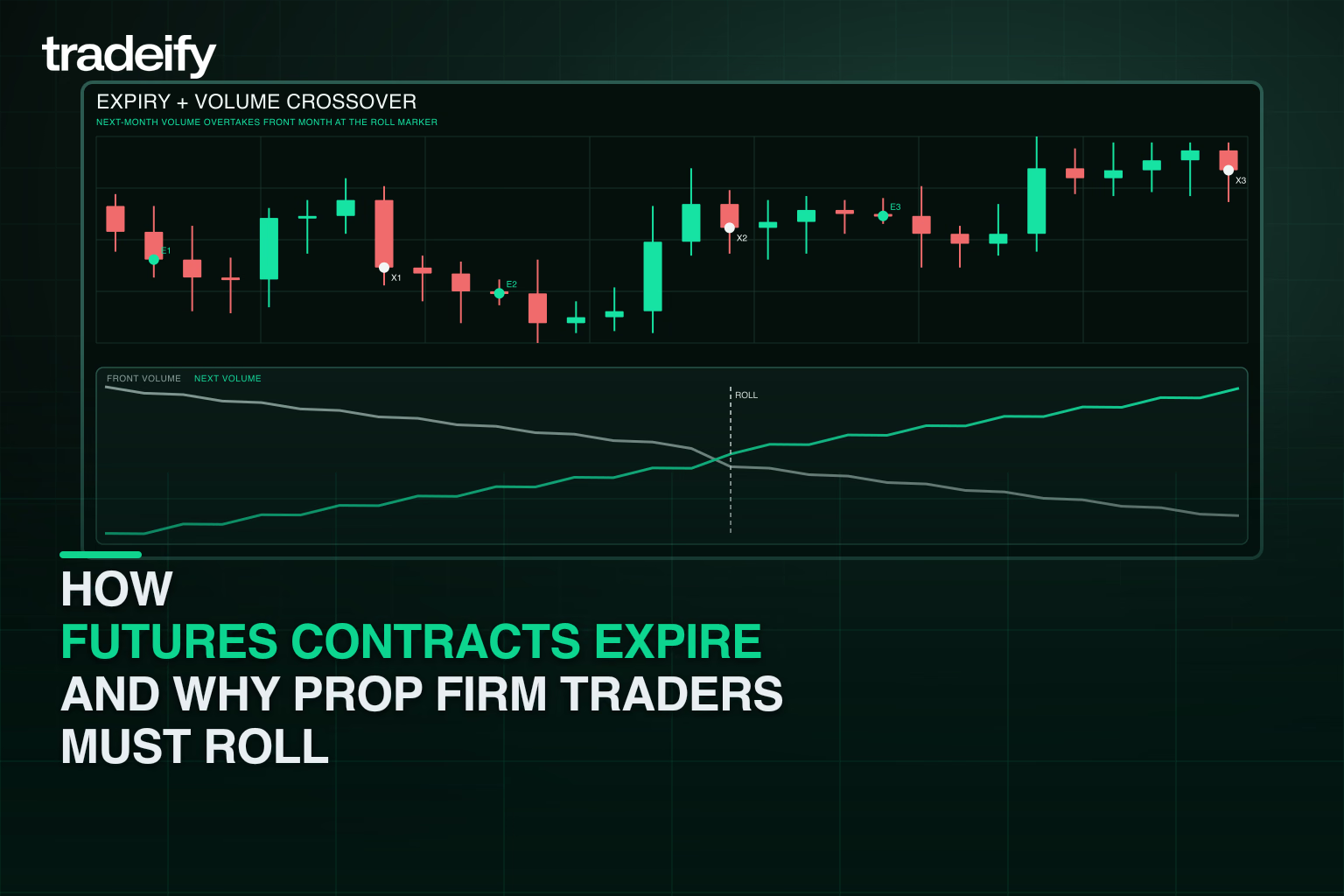
To work through the 2026 rollover schedule effectively, you need to understand the underlying lifecycle of futures instruments traded on the CME, COMEX, NYMEX, and CBOT exchanges. Every contract goes through a lifecycle: listing, peak liquidity (becoming the front month), and eventually expiration. For most day traders, the focus is almost entirely on the front month because that is where the volume, the tight spreads, and the cleanest price action all live.
The transition between contracts is driven by the migration of open interest and trading volume from the near-term month to the deferred month. Institutions typically begin moving several days to a week before the actual expiration date. The roll is most often signaled by daily volume in the next contract month exceeding volume in the current month. Adhering to that institutional timing is essential to avoid the liquidity trap of an expiring contract, where the bid-ask spread widens and the order book gets too thin to support meaningful position sizes without slippage.
2026 Futures Contract Month Codes
Contract delivery months are standardized using single-letter codes. Knowing them is a prerequisite for managing multiple instruments across different asset classes.
| Delivery Month | Code Identifier |
|---|---|
| January | F |
| February | G |
| March | H |
| April | J |
| May | K |
| June | M |
| July | N |
| August | Q |
| September | U |
| October | V |
| November | X |
| December | Z |
In 2026, the year code "26" is appended to these identifiers. The E-mini S&P 500 contract for June 2026 is denoted ESM26, and the Crude Oil contract for December 2026 is CLZ26.
Cash Settlement Versus Physical Delivery for Futures Rollover
The implications of contract expiration vary depending on settlement method. Equity index futures like the ES (S&P 500) and NQ (Nasdaq 100) are cash-settled, meaning that at expiration the difference between the final settlement price and the entry price is credited or debited to the account. Many energy and metals contracts, including Crude Oil (CL) and Gold (GC), involve physical delivery mechanisms.
While Tradeify operates in a simulated funding environment, the platform's price feeds and trading rules mirror live market conditions. As a matter of professional habit, traders should treat physical delivery contracts with caution and roll their positions before the First Notice Day. Rolling early avoids the operational complications associated with delivery processes in a live setting, and it keeps your performance data reflective of how you would manage a professional-grade live account. In any case, all Tradeify positions must be closed before the daily close, so holding into delivery is not a practical concern within a Tradeify account, but the discipline of treating First Notice Day as a hard exit deadline is worth carrying with you regardless.
2026 Equity Index Rollover Calendar for Prop Firm Traders
The equity index suite, comprising the E-mini and Micro E-mini contracts for the S&P 500, Nasdaq 100, Russell 2000, and Dow Jones Industrial Average, follows a quarterly expiration cycle. These contracts expire on the third Friday of March, June, September, and December.
Equity Index Rollover Schedule for 2026
The roll date for equity indices traditionally falls on the Monday of expiration week. That is when the bulk of institutional volume migrates to the next quarterly contract.
| Contract Quarter | Expiration Date | Customary Roll Date | Lead Contract Month |
|---|---|---|---|
| March (Q1) | March 20, 2026 | March 16, 2026 | ESM26 / NQM26 |
| June (Q2) | June 19, 2026 | June 15, 2026 | ESU26 / NQU26 |
| September (Q3) | September 18, 2026 | September 14, 2026 | ESZ26 / NQZ26 |
| December (Q4) | December 18, 2026 | December 14, 2026 | ESH27 / NQH27 |
The June expiration is worth flagging because of its proximity to the Juneteenth holiday. With markets observing modified hours on June 19, expect a more rapid volume migration during the week of June 15.
How Basis and Fair Value Affect Futures Rollover
The equity roll is a period of increased structural volatility. The price difference between the front month and the deferred month, known as the basis, is primarily determined by interest rates and dividend expectations. The fair value formula for a futures contract is:
F = S x e^(r - d) x T
Where F is the futures price, S is the spot index price, r is the risk-free interest rate, d is the dividend yield, and T is the time to maturity. Fluctuations in these variables can produce a noticeable price gap between, for example, the H26 and M26 contracts. When you roll your position, you have to adjust your technical levels, support, resistance, and moving averages, to account for that basis shift. Failing to do so can place stop-loss orders at mathematically incorrect levels, leading to premature stop-outs and unnecessary drawdown.
2026 Energy and Metals Rollover Calendar for Prop Firm Traders
Energy and metals contracts operate on more frequent cycles and are tied to the logistical realities of physical commodities markets. These instruments often see elevated volatility during rollover as participants manage the risks of physical delivery.
Crude Oil (CL) 2026 Rollover Schedule
Crude oil futures on the NYMEX are among the most liquid energy products. They expire monthly, and the volume roll typically happens 8 to 10 days before the last trading day.
| Contract Month | Code | Last Trading Day | Customary Roll Window |
|---|---|---|---|
| January | F26 | Dec 19, 2025 | Dec 10 - Dec 15 |
| February | G26 | Jan 20, 2026 | Jan 09 - Jan 14 |
| March | H26 | Feb 20, 2026 | Feb 10 - Feb 13 |
| April | J26 | March 20, 2026 | March 10 - March 13 |
| May | K26 | April 21, 2026 | April 10 - April 14 |
| June | M26 | May 19, 2026 | May 08 - May 12 |
| July | N26 | June 22, 2026 | June 10 - June 15 |
| August | Q26 | July 21, 2026 | July 10 - July 14 |
| September | U26 | August 20, 2026 | August 10 - August 13 |
| October | V26 | Sept 22, 2026 | Sept 10 - Sept 15 |
| November | X26 | Oct 20, 2026 | Oct 09 - Oct 13 |
| December | Z26 | Nov 20, 2026 | Nov 10 - Nov 13 |
Energy traders need to stay aware of contango and backwardation. In a contango market, the deferred month trades at a premium to the front month, reflecting storage costs and interest. In backwardation, the front month trades at a premium, signaling immediate demand or supply shortages. These structural states can meaningfully impact the P&L of a rolled position and should factor into your longer-term strategy.
Gold (GC) 2026 Rollover Schedule
Gold futures on the COMEX follow a cycle that emphasizes the even months (February, April, June, August, October, December) as the most liquid delivery periods.
| Active Month | Code | Last Trading Day | First Notice Day |
|---|---|---|---|
| February | G26 | Feb 24, 2026 | Jan 29, 2026 |
| April | J26 | April 28, 2026 | March 31, 2026 |
| June | M26 | June 26, 2026 | May 29, 2026 |
| August | Q26 | August 27, 2026 | July 31, 2026 |
| October | V26 | Oct 28, 2026 | Sept 30, 2026 |
| December | Z26 | Dec 29, 2026 | Nov 30, 2026 |
For gold and other physically delivered contracts, treating First Notice Day as your planning deadline for being out of the expiring contract is the professional habit. The point is to never let the calendar surprise you, because by the time delivery considerations matter, you should have already moved on.
How to Roll Futures Contracts on Tradovate, Rithmic, and WealthCharts

Knowing how to execute a rollover technically is just as important as knowing when to do it. Tradeify supports three platform connections: Tradovate, Rithmic (with R|Trader Pro and compatible third-party platforms like NinjaTrader, TradingView, and Quantower), and WealthCharts.
Futures Rollover Procedures in Tradovate
Tradovate provides a streamlined, cloud-based interface that suits the modern day trader well. The platform is configured by default for automatic rollovers, which means your charts, SuperDOM, and watchlists will update to the most liquid contract month automatically as the roll date approaches.
Many traders prefer manual control to avoid being caught off guard by a sudden change in market data. In Tradovate's Application Settings, under the Preferences tab, you can enable the Prohibit Autoroll Contracts option. With that active, you update each module manually. The technical steps are:
- Identify the module to be rolled (Chart, SuperDOM, or watchlist).
- Click the View Settings gear icon at the top-right of the module.
- Select Roll Forward to transition to the next contract month.
One critical distinction: rolling the module does not roll an open position. You have to flatten your existing position in the expiring contract and re-enter the new contract. Within Tradeify, all positions must be flat before the 4:59 PM ET daily close, since holding across the session break is not allowed.
Futures Rollover Procedures with Rithmic
Rithmic is widely used by professional futures traders, and its R|Trader Pro platform handles rollovers in a couple of different ways depending on what you trade. If you trade specific front-month contract codes (for example, ESH26), you need to switch to the new contract before expiration just like on any other platform. If you trade continuous contracts (such as ES1 or NQ1), the rollover happens automatically at the platform level and no manual action is needed on your part.
Rithmic also supports a number of compatible charting and execution platforms (NinjaTrader, TradingView via Tradovate, Quantower, Sierra Chart, and Tradesea, depending on which Tradeify platform you connected), and rollover handling will follow the conventions of whichever charting tool you use. Note that for Tradeify-specific issues like account rules, drawdown, or payouts, Tradeify support handles those questions, but for platform-specific bugs or features within R|Trader Pro itself, Rithmic is the appropriate point of contact.
Futures Rollover Procedures in WealthCharts
WealthCharts is Tradeify's all-in-one platform with built-in trade copier functionality, an extensive indicator library, and prop-specific tools including an integrated trade journal. For rollover management, WealthCharts has a few useful advantages.
The platform's charting system supports continuous contracts, which automatically stitch together front-month data for seamless technical analysis across rollover boundaries. When the roll date arrives, traders should:
- Verify the active contract month in the Order Entry panel.
- Update any saved chart templates or workspaces to reference the new contract symbol.
- If using the Trade Copier across multiple accounts, confirm that all linked accounts reflect the new contract month before placing trades.
WealthCharts displays real-time drawdown and P&L in its Risk and Account Settings panel, which is especially useful during roll weeks when you want to keep close tabs on your account metrics. The platform is available on desktop, web, and mobile.
As with Tradovate, rolling the chart does not roll an open position. You have to flatten all positions in the expiring contract and re-enter in the new month before 4:59 PM ET.
Risk Management for Prop Firm Traders During Futures Rollover
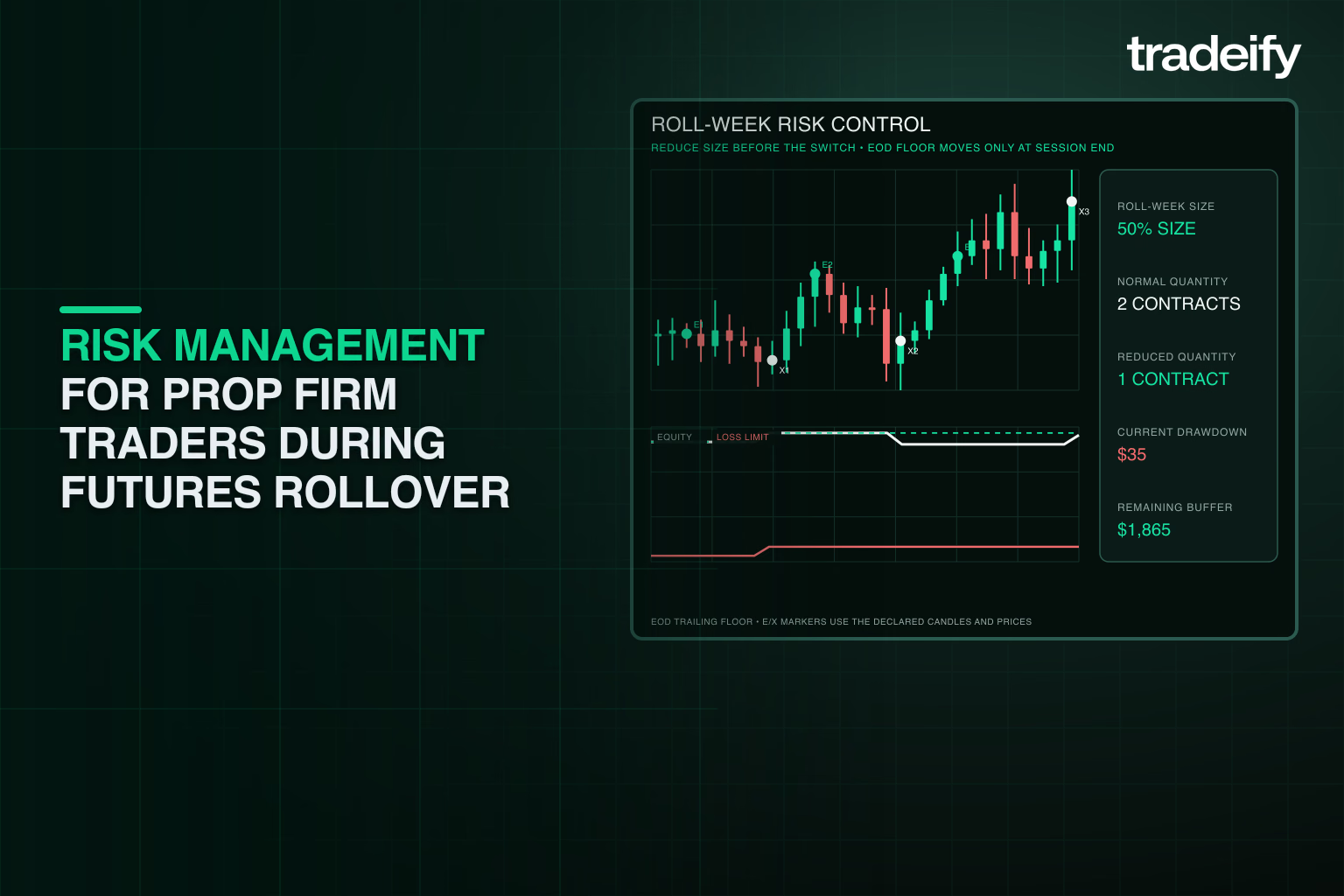
Rollover periods are characterized by a liquidity migration that can produce aberrant price behavior. For a prop firm trader, managing risk during this window is not optional. Tradeify provides several guardrails: the Daily Loss Limit (DLL) on Growth, Select Daily, and Lightning accounts, and the End-of-Day (EOD) trailing drawdown across Sim Funded models.
How EOD Trailing Drawdown Protects Traders During Rollover
Tradeify's use of EOD trailing drawdown is a real advantage for traders working through rollover volatility. In an intraday trailing drawdown model, your maximum loss limit trails your peak unrealized profit in real time. If a trade moves deep into profit and then pulls back, which is common during the erratic volume shifts of a roll, you can be failed even while still in a profitable position.
Tradeify's EOD mechanism only recalculates the drawdown at the close of the trading session. The line in the sand stays static throughout the trading day, which lets you ride out normal pullbacks and the technical noise of the roll without worrying about a premature account termination from intraday drawdown movement. Once the day closes in profit, the drawdown level moves up, locking in your gains and narrowing the risk window for the next session.
Important caveat: While EOD drawdown only updates at end of day, it is enforced in real time. If your balance hits the current drawdown limit during trading, your account fails immediately, even if you might have recovered by end of day.
Volatility-Adjusted Position Sizing for Rollover Weeks
Elevated volatility during roll weeks calls for a dynamic approach to position sizing. Many traders use the Average True Range (ATR) as a volatility gauge. The principle is to maintain a constant dollar risk regardless of market conditions:
Position Size = Account Risk Capacity / (ATR x Tick Value)
If the ATR of the Nasdaq (NQ) increases by 40% during the quarterly roll, the professional response is to reduce the number of contracts traded so that a standard stop-loss does not represent a larger percentage of the account balance than usual. Within Tradeify's contract limits, such as the 4 mini or 40 micro limit on a 50k account (for accounts purchased after September 12, 2025), traders have the flexibility to scale down from minis to micros to maintain that precise risk control. Note that you can hold either minis or micros, but not both at the same time.
The 10-Second Microscalping Guideline and Rollover Liquidity
Tradeify enforces a microscalping guideline: over 50% of your trades and over 50% of your profits must come from positions held longer than 10 seconds. Falling outside this guideline can prevent you from activating your evaluation or requesting a payout.
During rollover periods, when liquidity is split between two contracts, the risk of accidental microscalping goes up. You may enter a position only to see the bid-ask spread widen or the market jump, forcing an immediate exit to protect capital. If too many of these fast exits stack up, you can fall outside the microscalping guideline and run into payout denials. The mitigation is to widen your targets and stops during roll weeks, essentially slowing down your trading to keep yourself within the good faith trading principles the firm requires.
2026 Macro Events That Affect Futures Rollover
The 2026 trading year features several macro events that coincide with contract expirations. Being aware of them is just as important as the roll schedule itself.
Holiday Hours and Early Closes for Prop Firm Traders
Tradeify enforces a daily close requirement strictly. On regular trading days, all positions must be flat by 4:59 PM ET. On holiday early close days, that deadline shifts to 12:59 PM ET.
| Date | 2026 Holiday Event | Market Impact | Tradeify Requirement |
|---|---|---|---|
| January 19, 2026 | Martin Luther King Jr. Day | Modified Hours | Close by 12:59 PM ET |
| February 16, 2026 | Presidents' Day | Modified Hours | Close by 12:59 PM ET |
| April 3, 2026 | Good Friday | Markets Closed | No Trading |
| May 25, 2026 | Memorial Day | Modified Hours | Close by 12:59 PM ET |
| June 19, 2026 | Juneteenth | Modified Hours | Close by 12:59 PM ET |
| July 3, 2026 | Independence Day (Observed) | Modified Hours | Close by 12:59 PM ET |
| September 7, 2026 | Labor Day | Modified Hours | Close by 12:59 PM ET |
| November 26, 2026 | Thanksgiving Day | Modified Hours | Close by 12:59 PM ET |
| December 25, 2026 | Christmas Day | Markets Closed | No Trading |
The convergence of the September equity roll (September 14-18) with the seasonal volatility that month is known for often produces extreme price action. If you fail to close your positions by the 4:59 PM ET cutoff, Tradeify's risk system will automatically liquidate them. Auto-liquidation will not fail your account, but the market order liquidation during thin after-hours liquidity can cause meaningful slippage.
News Trading Policy During Futures Rollover
Tradeify allows news trading, but you do so at your own risk. During rollover weeks, the impact of high-priority news (FOMC rate decisions, Non-Farm Payrolls) is amplified. The interaction of institutional roll orders and news-driven volatility can produce flash crashes or rapid price spikes that bypass stop-loss orders. Tradeify's good faith policy prohibits taking advantage of platform errors or price display delays during these high-stress periods. Many traders avoid opening new positions 5-10 minutes before and after major economic releases to protect their account's drawdown limit.
Tradeify's 2026 Funded Account Programs and Rollover Considerations
Tradeify has refined its program structure to serve a diverse range of trading styles. The Select plan in particular allows traders to choose their funded path after passing a unified evaluation.
Select Evaluation Versus Growth Evaluation
Before talking about funded payout policies, it helps to understand the evaluation phase itself. Select Evaluation has a profit target ($1,500, $3,000, $6,000, or $9,000 depending on whether the account is 25k, 50k, 100k, or 150k) and a 40% consistency rule, meaning no single trading day can represent more than 40% of your total profit. Because of that, Select Evaluation requires a minimum of three trading days to pass. There is no Daily Loss Limit during Select Evaluation. Growth Evaluation, by contrast, can be passed in as little as one trading day because there is no consistency rule during evaluation, but it does have a Daily Loss Limit.
Select Flex Versus Select Daily During Futures Rollover
Once you pass Select Evaluation, you choose between two permanent payout policies for your funded account:
- Select Flex: Designed for swing-style traders and those who want maximum intraday flexibility. This policy features no Daily Loss Limit and EOD-only trailing drawdown. Payouts are milestone-based, with 5-day winning periods and caps that scale with account size.
- Select Daily: Designed for high-frequency day traders who prioritize cash flow. This policy allows daily payout eligibility but introduces a Daily Loss Limit and a buffer system.
Neither Select Flex nor Select Daily has a consistency rule once funded.
During rollover weeks, the choice between Flex and Daily matters. A Flex trader can absorb the intraday whipsaws of a roll week more easily, while a Daily trader needs to be more surgical to avoid hitting the DLL and getting locked out of the session.
Lightning Funded Accounts and Rollover Risk
For experienced traders who want to bypass the evaluation phase, Tradeify offers the Lightning Funded model. This path provides instant access to simulated funding for a one-time purchase. Lightning accounts are subject to a progressive consistency rule for accounts purchased after September 12, 2025: 20% for the first payout, 25% for the second, and 30% for all subsequent payouts. Accounts purchased before that date follow a flat 20% rule.
Because Lightning accounts cannot be reset, the rollover period is particularly dangerous. A single error during the contract switch can result in permanently losing the account, which is why a conservative, data-driven approach during expiration weeks is the right default.
How to Trade the Futures Roll Week at a Prop Firm
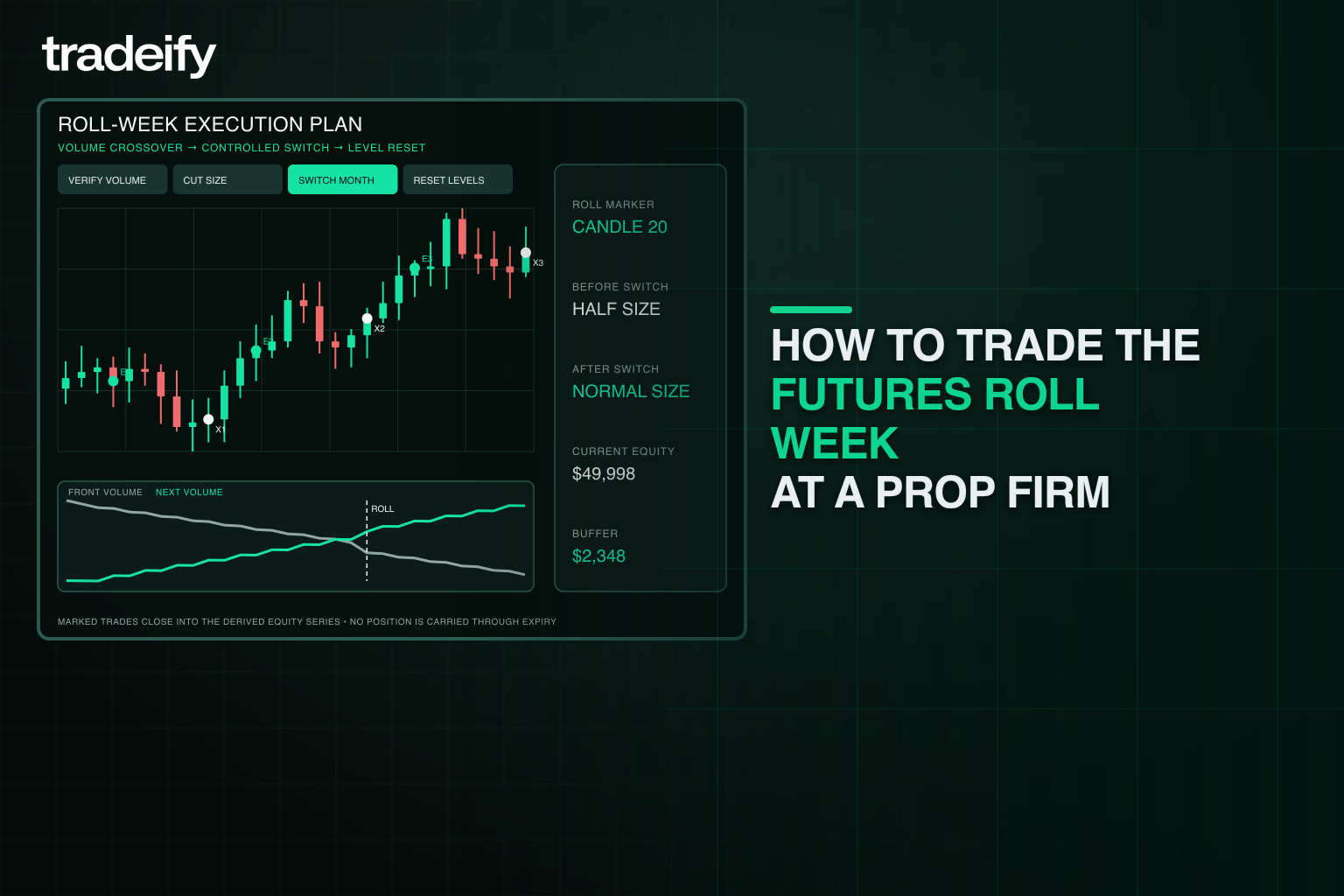
A professional prop trader does not just survive the roll, they use it as an input into their broader strategy. Different approaches (trend following, controlled scalping, mean reversion) interact with the rollover in different ways.
Trend Following and Futures Rollover
Trend followers use moving averages (50/200 period, for instance) to capture sustained directional moves. During a roll, the transition between contracts can create a gap in the price data. A trend follower needs to determine whether the trend is continuing in the new contract or whether the basis shift has altered the technical structure. Many trend followers reduce their risk by 50% during the roll week, wait for the new contract to establish a clear daily range, and then re-establish their full position once the back month becomes the front month.
Mean Reversion Strategies During Futures Rollover
Mean reversion strategies (Bollinger Bands, RSI) profit from prices returning to their average after extreme moves. Roll weeks often provide ideal conditions for mean reversion because the choppy nature of volume migration prevents clean breakouts. The trader has to be careful, though, not to mistake a basis-related price shift for an overbought or oversold condition. Comparing the RSI of the expiring contract and the new contract is one technique to confirm the signal is valid across the entire market complex.
Controlled Scalping and the 10-Second Guideline During Rollover
Scalping targets small price movements (2-10 ticks) at high frequency. Within Tradeify, scalpers need to stay mindful of the microscalping guideline. During the roll, execution speed is paramount. Order flow or Level 2 data (available via Tradovate's OrderFlow+ or WealthCharts' advanced DOM tools, among others) lets you see the resting orders of institutional participants. Identifying where institutional players are parking their roll orders can let a scalper get ahead of the liquidity migration, but only if the 10-second hold time guideline is respected.
Tradeify Elite Live Program and Rollover
For many traders, the goal is the Tradeify Elite Live program. Eligibility for consideration begins once a trader meets one of the following minimum thresholds:
- 3 payouts on a single account, or
- 10 total payouts since the last live transition (across all plan types)
Important: These thresholds are minimum requirements for consideration, not automatic qualification. Tradeify evaluates traders holistically, with a strong focus on consistency, risk management, and overall trading behavior. Most traders will not be transitioned to live immediately upon hitting these thresholds. Tradeify's team reaches out directly when a trader is selected.
Elite Live traders enjoy several premium benefits:
- No Daily Loss Limit: Elite Live accounts operate with maximum flexibility.
- 80/20 Profit Split: 80% of profits go to the trader, 20% to Tradeify.
- Daily Payouts: Payouts can be requested daily.
- Milestone Bonuses: Cash bonuses are tied to cumulative payout milestones.
For an Elite Live trader, rollover stops being a simulation and becomes a real-world cost of doing business. Commissions and slippage incurred during a roll in a live account directly affect the net split. Many Elite Live traders use Calendar Spread orders to roll their positions in a single transaction, which minimizes execution risk and ensures the long and short legs of the roll are executed simultaneously at a guaranteed spread price.
2026 Eurex Products for Prop Firm Traders
The 2026 futures market extends well beyond the traditional US indices and commodities. Tradeify supports access to Eurex products including DAX (FDAX), Mini-DAX (FDXM), Euro Stoxx 50 (FESX), and several other European index and bond futures. Eurex products require an additional exchange data subscription.
Eurex index futures follow different expiration cycles than US equity indices, which means traders managing both have to track multiple schedules concurrently. A rollover dashboard tracking the specific Last Trading Day and First Notice Day for every instrument in your portfolio is a standard professional tool, and worth setting up if you trade across multiple exchanges.
Note: Tradeify does not currently support cryptocurrency derivatives, including Bitcoin futures. For crypto trading, Tradeify offers a separate platform.
Futures Rollover Action Plan for Prop Firm Traders
The 2026 futures market demands operational precision. For the Tradeify trader, the quarterly and monthly rollovers are the test of that precision. By aligning with the institutional schedule, using the EOD trailing drawdown to absorb volatility, and mastering the workflows of Tradovate, Rithmic, and WealthCharts, a funded trader can handle these transitions with confidence.
The roadmap for a successful 2026 roll week:
- Verification: Confirm the 2026 codes (H, M, U, Z) and the specific expiration dates for each held asset.
- Timing: Initiate the roll 7-10 days before expiration for equities, and before First Notice Day for metals and energy.
- Execution: Flatten all front-month positions before the 4:59 PM ET close (12:59 PM ET on holiday early close days) and re-enter in the new contract month.
- Risk Adjustment: Reduce position sizes based on ATR increases and widen stop-losses to account for basis shifts.
- Consistency: Make sure that over 50% of your trades and over 50% of your profits continue to meet the 10-second hold time guideline.
Rollover discipline does two things at once: it protects your capital, and it builds the kind of track record that Tradeify's Elite Live program looks for. Get the operational details right, and the rest of the trading work has a fair chance of paying off.
Quick-Reference Rollover Windows
If you need the fast version, switch your attention to the next contract when it starts carrying the cleaner volume and tighter spread. For physically delivered products, treat First Notice Day as a planning deadline, not a surprise. For cash-settled index futures, traders often watch the standard quarterly roll week and then confirm the switch with live volume in the deferred month.
| Product Type | Typical Cycle | What Usually Triggers the Switch | Main Risk Note |
|---|---|---|---|
| Equity index futures | Quarterly | Expiration week plus stronger volume in the next quarter | Basis changes can shift chart levels and stops |
| Energy futures | Often monthly | Roll before liquidity thins near last trading day | Front-month spreads can widen quickly |
| Metals futures | Contract-specific active months | Plan around First Notice Day for deliverable months | Do not rely on a generic chart label alone |
This is a quick triage view, not a substitute for the exact exchange calendar for the contract you are holding. The practical workflow is simple: check the exchange deadline, confirm where volume has migrated, and make sure your platform, chart, and order entry all point to the same month before you trade again.
Futures Rollover Execution Checklist
A rollover gets messy when traders treat it like a chart-only change. Use a fixed sequence so the operational work stays clean:
- Confirm the deadline: Check the contract's last trading day and, if applicable, First Notice Day on the exchange calendar.
- Check where liquidity moved: Verify that volume and market depth have shifted to the next contract month.
- Flatten the expiring contract: Exit the old month first so you know exactly what position remains open.
- Open the replacement position: Re-enter in the new month with the correct symbol, quantity, and direction.
- Reset technical levels: Rebuild stops, targets, alerts, and key chart levels off the active contract instead of copying old price levels blindly.
- Verify platform alignment: Make sure chart tabs, DOM windows, watchlists, saved workspaces, and any copier or automation are all pointing to the same contract.
- Trade smaller if needed: If spread, ATR, or slippage expands during the switch, reduce size until the new month is trading normally.
The checklist is deliberately short. If you cannot work through those steps in order, you are not ready to trade the new month yet.
Futures Rollover FAQ
When should you roll a futures contract?
Most discretionary traders do not wait for the final expiration day. They usually roll when the next contract month begins to carry the cleaner liquidity and tighter spread, while still respecting the official exchange deadline for that product.
What is the difference between First Notice Day and Last Trading Day?
First Notice Day matters most for physically delivered contracts because delivery notices can begin after that point. Last Trading Day is the final session in which the contract trades. If a product can enter delivery, First Notice Day is the earlier line you should be planning around.
How do you know volume has really moved to the new month?
Look for sustained daily volume and order-book depth in the deferred month, not a brief intraday spike. Once the next contract is consistently trading more size and showing the cleaner spread, that is usually the better execution venue.
Can you just roll the chart and leave the position open?
No. Changing the chart symbol does not move an open position. The operational roll is a trading action: close the expiring contract and establish the replacement position in the next month.
Why do stops and targets need to be recalculated after a roll?
The new contract may trade at a premium or discount to the old one because of carry, storage, interest-rate, or dividend effects. If you copy levels without checking the basis difference, your stop and target placement can be wrong the moment you switch.
What should a day trader do differently during rollover week?
Expect liquidity to split temporarily between months, which can change spread behavior and slippage. That is why many traders reduce size, confirm the active month earlier than usual, and avoid assuming the old contract still represents the cleanest execution.
.svg)
.svg)
.svg)
.svg)






.webp)