.svg)

.svg)
.svg)



TL;DR: Micro WTI Crude Oil futures (MCL, 100 barrels, $1/tick) on the CME give small-account prop traders benchmark oil exposure at a fraction of standard CL risk (1,000 barrels, $10/tick). Tradeify (tradeify.co) offers funded accounts with End-of-Day trailing drawdown (floor only moves up at session close, but enforced in real-time if breached mid-session), daily loss limits ($1,250 on Growth/Lightning $50K accounts), and consistency rules (Growth funded 35%, Select evaluation 40% removed once funded, Lightning 20% escalating to 25%/30% after each payout). MCL allows position sizing at 10 contracts within 1% risk ($500 max per trade on $50K, max allowed 40 micros). Key crude oil catalysts include EIA Weekly Petroleum Status Report (Wednesdays 10:30 AM ET), OPEC+ production decisions, and Strait of Hormuz supply disruptions (20M bbl/day transit). Technical setups include VWAP pullbacks, 9/21 EMA crossovers, Smart Money Concepts (liquidity sweeps, order blocks, fair value gaps), and the London-New York overlap window (8:00 AM–12:00 PM ET). MCL is financially settled (no physical delivery risk), trades on Rithmic via TradingView, and sits between ES liquidity and NQ volatility. Tradeify's "Champion Mindset" campaign (Israel Adesanya, Luke Littler) reinforces adaptability and composure over reckless sizing.
The global energy market in 2026 represents a confluence of extreme volatility and broad accessibility for the retail participant. For the amateur day trader operating within the proprietary trading firm model, specifically through platforms such as Tradeify, the West Texas Intermediate (WTI) Crude Oil market offers a distinct alternative to the often-correlated equity indices like the S&P 500 and the Nasdaq 100. Unlike the broad market indices that reflect the collective health of corporate sectors, crude oil is a raw commodity sensitive to the immediate pulse of geopolitics, supply chain integrity, and macroeconomic policy. The transition from high-barrier physical trading to the digital micro-futures era has fundamentally altered the risk-reward calculus for those managing small accounts. This analysis provides an exhaustive framework for understanding the mechanical, strategic, and psychological dimensions of crude oil trading within the rigors of a professional evaluation environment.
Crude Oil Futures Contract Tiers for Small Accounts
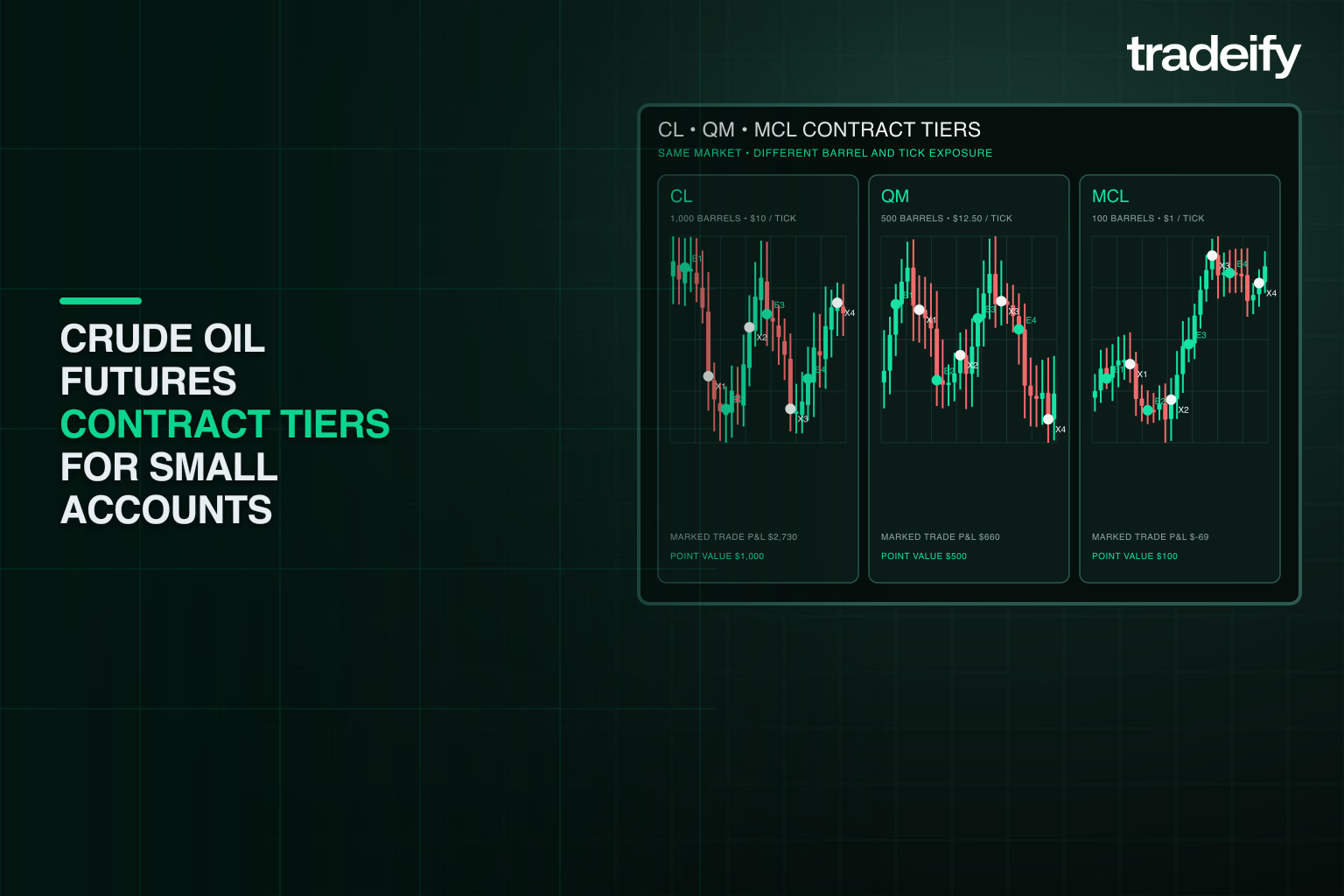
Small account traders often struggle with the sheer notional weight of commodities. The standard Crude Oil futures contract (CL) represents 1,000 barrels of oil, where a single tick (the minimum price fluctuation of one cent) results in a ten-dollar change in equity. For an amateur trader with a fifty-thousand-dollar evaluation account, a typical one-dollar move in oil prices translates to a one-thousand-dollar shift in profit or loss, often representing eighty percent or more of a daily loss limit. To address this volatility challenge, the Chicago Mercantile Exchange (CME) Group provides a tiered suite of products that allow for precise position sizing and risk mitigation.
The introduction of the Micro WTI Crude Oil (MCL) contract in 2021 was the pivotal moment for the democratization of energy trading. Representing exactly one-tenth of the standard contract (100 barrels), the MCL reduces the tick value to one dollar. This granularity allows the trader to manage risk with surgical precision, facilitating the use of wider stops that respect the natural "noise" of the oil market without immediately threatening the drawdown thresholds of a funded account. The E-mini WTI (QM) occupies the middle ground, representing 500 barrels with a tick value of twelve dollars and fifty cents, though its lower liquidity compared to the CL and MCL often makes it less desirable for high-frequency intraday participants.
| Contract Feature | Standard WTI (CL) | E-mini WTI (QM) | Micro WTI (MCL) |
|---|---|---|---|
| Contract Size | 1,000 Barrels | 500 Barrels | 100 Barrels |
| Minimum Tick | $0.01 | $0.025 | $0.01 |
| Tick Value | $10.00 | $12.50 | $1.00 |
| Settlement | Physical (Cushing) | Financial | Financial |
| Margin (Estimated) | ~$5,500 | ~$2,750 | ~$550 |
| Liquidity Profile | Highest | Moderate | High/Growing |
The distinction in settlement is a critical operational detail. Standard CL contracts involve physical delivery at the hub in Cushing, Oklahoma, which requires brokers to auto-liquidate positions before the first notice date to prevent retail traders from being obligated to take delivery of physical barrels. Conversely, the MCL and QM contracts are financially settled, simplifying the rollover process and eliminating the risk of physical delivery. For the small account trader, the MCL's financial settlement and low barrier to entry provide a professional-grade tool that mirrors the benchmark price action without the catastrophic tail risk of the larger contracts.
Tradeify's Prop Firm Rules for Crude Oil Traders
Proprietary trading firms do not merely provide capital; they provide a structured risk environment designed to identify traders who can operate with institutional discipline. Tradeify's rules are engineered to prevent the "gambler's ruin" by enforcing parameters that prioritize consistency over isolated high-magnitude wins. Understanding these rules is as vital as understanding the market itself, as the majority of account failures result from rule breaches rather than a lack of profitable strategy.
How the Trailing Drawdown Works for Oil Traders
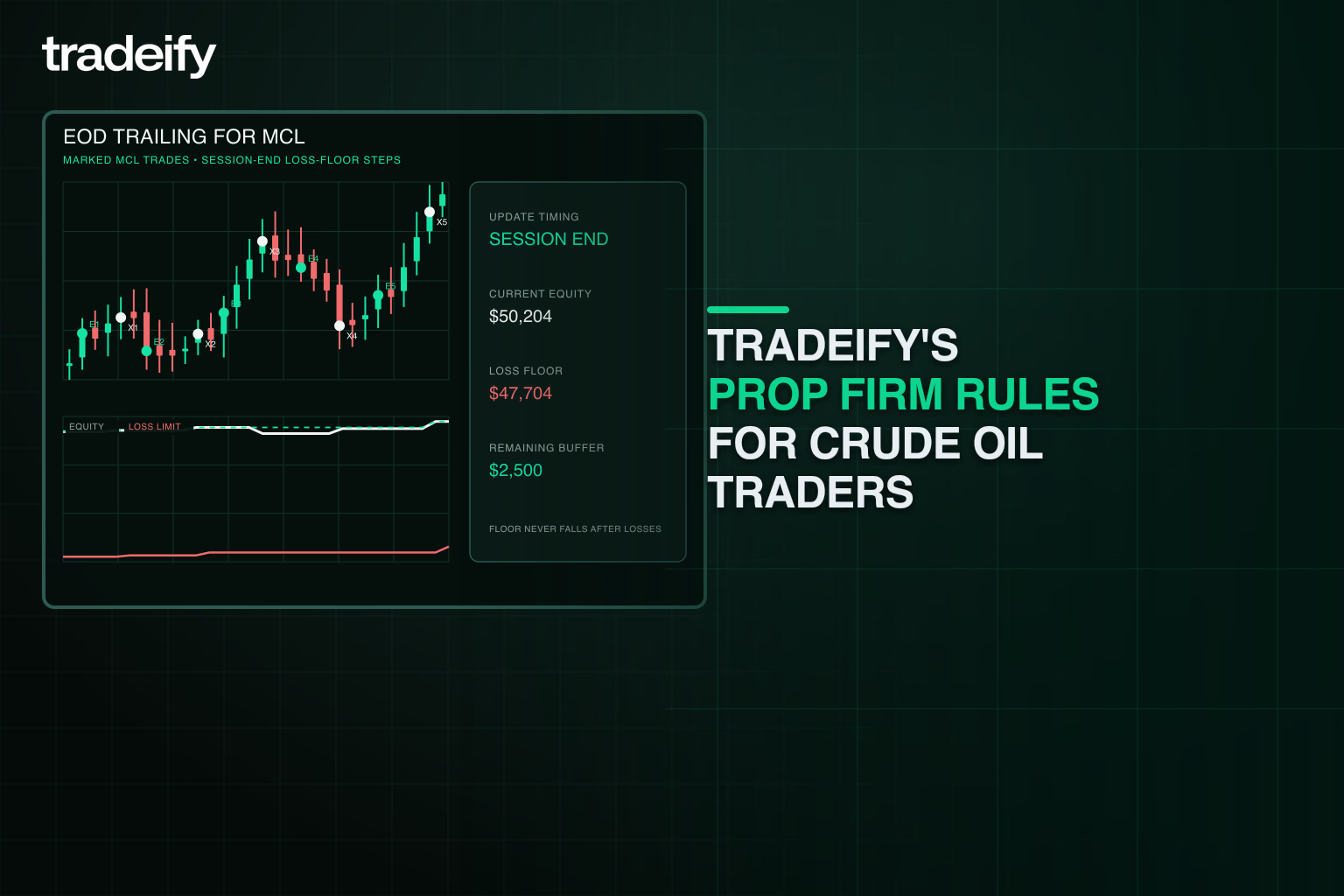
One of the most misunderstood aspects of the prop firm model is the mechanism of the drawdown. Tradeify utilizes several types, including the End-of-Day (EOD) Trailing Drawdown, which is specifically advantageous for volatile instruments like crude oil. Unlike an intraday trailing drawdown that moves the "loss floor" upward with every tick of unrealized profit (thereby "choking" a trade that pulls back), the EOD model only raises the floor at the close of the trading day based on the final balance. This means a profitable intraday wick will not permanently ratchet your drawdown tighter the way an intraday trailing system would. However, there is a critical distinction every trader must understand: while the drawdown floor only moves up at end of day, it is enforced in real-time. If your account balance touches the current drawdown limit at any point during the session, your account fails immediately, even if you would have recovered by the close. The EOD model gives you room for the floor to stay put during volatile days, but it does not give you a free pass to breach it intraday.
| Drawdown Type | Calculation Frequency | Impact of Unrealized Profit | Suitability for Oil |
|---|---|---|---|
| Intraday Trailing | Real-time (Tick-by-tick) | High (Increases floor immediately) | Low (Volatile wicks) |
| End-of-Day (EOD) | Market Close | Low (Only considers realized EOD) | High (Allows room for swings) |
| Static/Fixed | Constant | None | High (Most transparent) |
This structural flexibility requires the trader to maintain a "Champion Mindset," where the focus is on the daily closing value rather than the emotional highs and lows of floating equity. However, the Daily Loss Limit remains a hard boundary. For a fifty-thousand-dollar Growth or Lightning account, a daily loss limit of twelve hundred and fifty dollars means that a trader holding ten Micro MCL contracts has a buffer of only one hundred and twenty-five ticks before the account is locked for the session. (Note: Select evaluation accounts have no daily loss limit at all, and Select Daily funded accounts have a lower DLL of one thousand dollars at the same account size.) In the 2026 market, where oil frequently moves two to three dollars in a single New York session, this necessitates extreme caution regarding position sizing.
Crude Oil Consistency Rules and the Math of Longevity
The Tradeify Consistency Rule is a sophisticated mechanism designed to ensure that a trader's success is repeatable and not the result of a single "lucky" trade during a high-impact news event. This rule stipulates that no single day's profit should exceed a specific percentage of the total accumulated profit at the time of withdrawal. Growth funded accounts follow a 35% consistency rule, Select evaluations follow a 40% rule (which is removed entirely once the trader passes and moves to a funded account), and Lightning accounts start at 20% for the first payout, then tighten to 25% for the second and 30% for all subsequent payouts. If a trader hits a "home run" and nets three thousand dollars in a single session, but their total profit is only five thousand dollars, they have breached the consistency threshold (60%) and must continue trading to "dilute" that outlier day before a payout is permitted.
For the small account trader, this math reinforces the use of Micro contracts. By trading MCL rather than CL, a trader can rack up dozens of smaller, consistent wins of two hundred to four hundred dollars. This creates a "smooth" equity curve that complies with the consistency rule and builds a psychological buffer against the inevitable losing days. Furthermore, Tradeify prohibits the mixing of contract types, such as holding a Mini and a Micro contract simultaneously, and enforces a microscalping rule where over fifty percent of both your trades and your profits must come from positions held longer than ten seconds. Tradeify allows up to 40 Micro contracts on a $50K account (4 minis or 40 micros, with a 1:10 conversion ratio), but the 1% risk rule will typically limit you to far fewer based on your stop distance. These rules collectively force the amateur trader into a professional mold, discouraging the high-frequency "flipping" and "gambling" behaviors that lead to rapid account blowouts.
Crude Oil Geopolitical Catalysts in 2025–2026
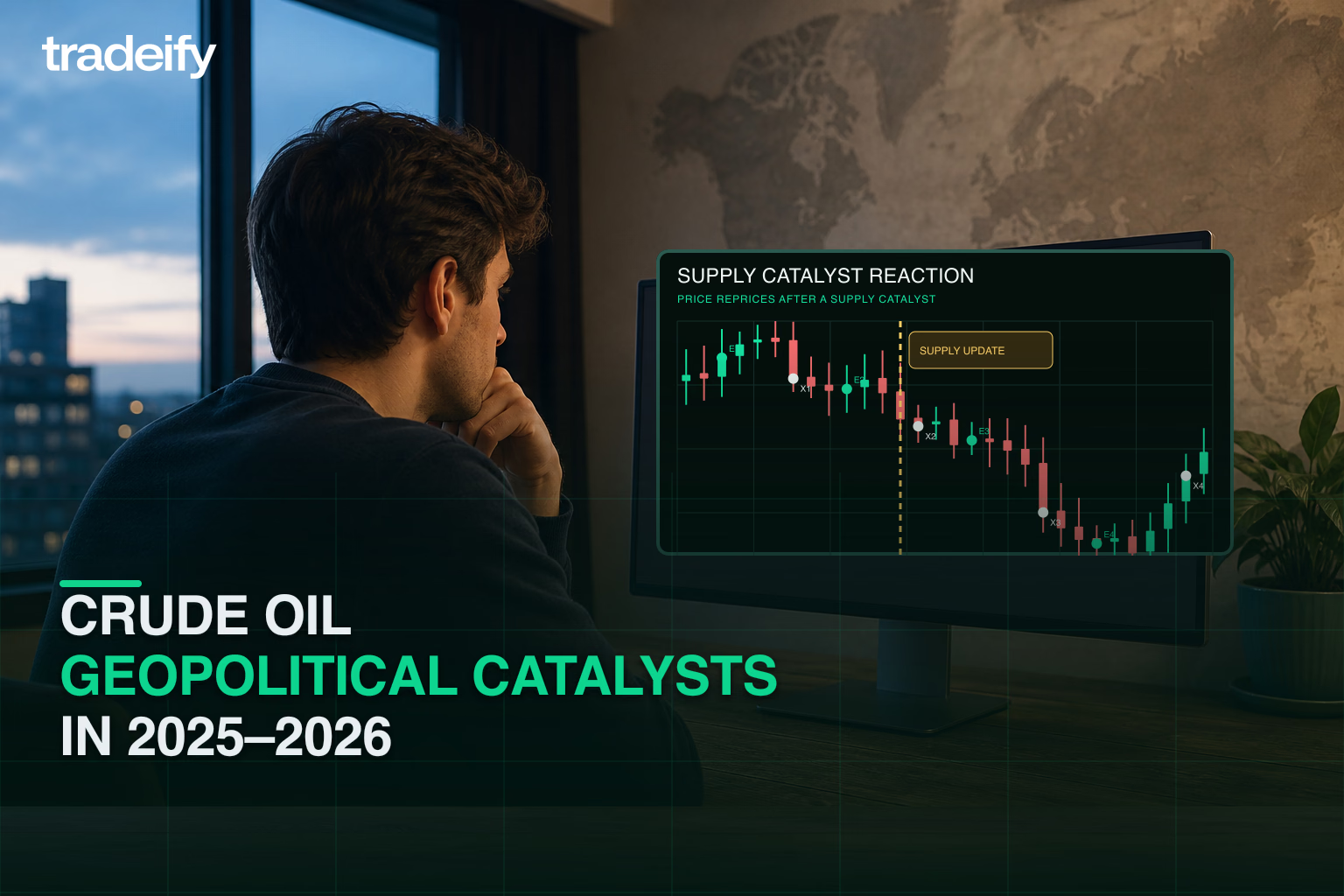
Crude oil is the undisputed heavyweight of commodity geopolitics. For the day trader, the technical chart is only half the story; the other half is written in the bulletins of the IEA, OPEC+, and the shifting alliances of global powers. In early 2026, the market has entered a period of structural supply deficiency, exacerbated by escalating conflicts in the Middle East.
Strait of Hormuz Supply Disruptions and Crude Oil Prices
The International Energy Agency (IEA) has identified the Strait of Hormuz as the world's most critical energy chokepoint, through which nearly twenty million barrels of crude and product exports pass daily. In March 2026, disruptions in this region led to a projected plunge of eight million barrels per day in global supply. This geopolitical risk premium drove benchmark prices from seventy dollars to over ninety-two dollars per barrel in less than thirty days.
For the intraday trader, this "extended to end" conflict scenario creates a "buy the dip" regime, where prices are highly reactive to any rhetoric regarding de-escalation or further disruption. When a major supply chokepoint is threatened, oil becomes uncorrelated with the S&P 500; while stocks may fall on fears of energy-driven inflation, oil prices spike, providing a unique hedging opportunity for the diversified prop trader.
OPEC+ Crude Oil Production and the Managed Market
The eight key nations of OPEC+ (led by Saudi Arabia, Russia, and the UAE) control approximately forty percent of global production, making their ministerial meetings the most significant events on the energy calendar. In early 2026, these nations reaffirmed a decision to pause production increments, a strategic response to seasonal demand shifts and a desire to stabilize prices near the eighty-dollar mark.
| Factor | Bullish (Price Up) | Bearish (Price Down) |
|---|---|---|
| OPEC+ Policy | Voluntary Production Cuts | Unwinding of Cuts/Overproduction |
| US Shale | Production Stagnation | Record Output/Efficiency Gains |
| Inventory (EIA) | Unexpected Drawdown | Massive Stockpile Build |
| Macro Economy | Rate Cuts/Growth Rebound | Recession Fears/High Inflation |
| Geopolitics | Middle East Disruptions | De-escalation Agreements |
The trader must monitor the "sustainable spare capacity" of these nations. When spare capacity is low, the market becomes hyper-sensitive to even minor outages in regions like Libya or Kazakhstan. Conversely, the record-breaking output from the "Americas quintet" (the United States, Canada, Brazil, Guyana, and Argentina) acts as a fundamental dampener on price spikes, preventing the market from entering a runaway inflationary spiral. Understanding this tug-of-war between OPEC+ restraint and Non-OPEC+ expansion is essential for forming a long-term directional bias.
Crude Oil Day Trading Technical Strategies
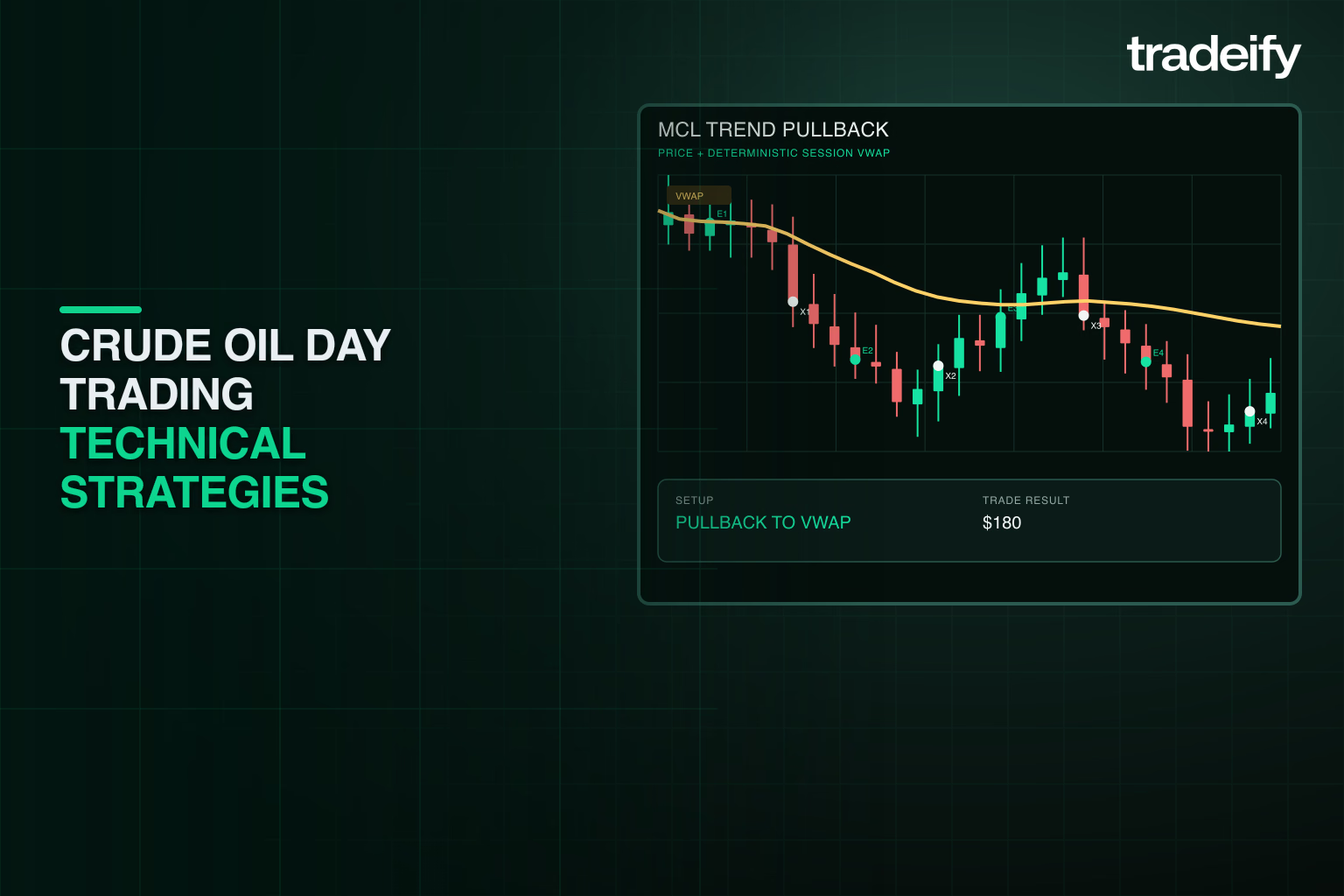
While fundamentals set the stage, technical analysis provides the entry and exit points. For the amateur trader, the goal is not to predict the price of oil in six months, but to identify where institutional orders are clustered for the next six hours.
VWAP and Momentum Strategies for Crude Oil
The Volume-Weighted Average Price (VWAP) is the single most important indicator for the intraday oil trader. It represents the "equilibrium" price where the most volume has traded throughout the session.
In a trending market, the "Trend-Pullback Framework" is the most reliable. The trader waits for a substantial impulsive move, then enters when the price retraces to a key moving average or the VWAP, using the Average True Range (ATR) to set a stop-loss that is outside of the immediate "noise".
Smart Money Concepts and the Crude Oil Liquidity Hunt
Professional energy desks do not trade based on RSI or MACD; they trade based on liquidity. Smart Money Concepts (SMC) allow the retail trader to identify these institutional footprints.
By waiting for a "Change of Character" (CHoCH), the first sign that the trend is reversing after a liquidity sweep, the amateur trader can enter with a very tight stop and a high reward-to-risk ratio, which is essential for passing prop firm evaluations where the drawdown is tight.
How to Trade the Wednesday EIA Crude Oil Report
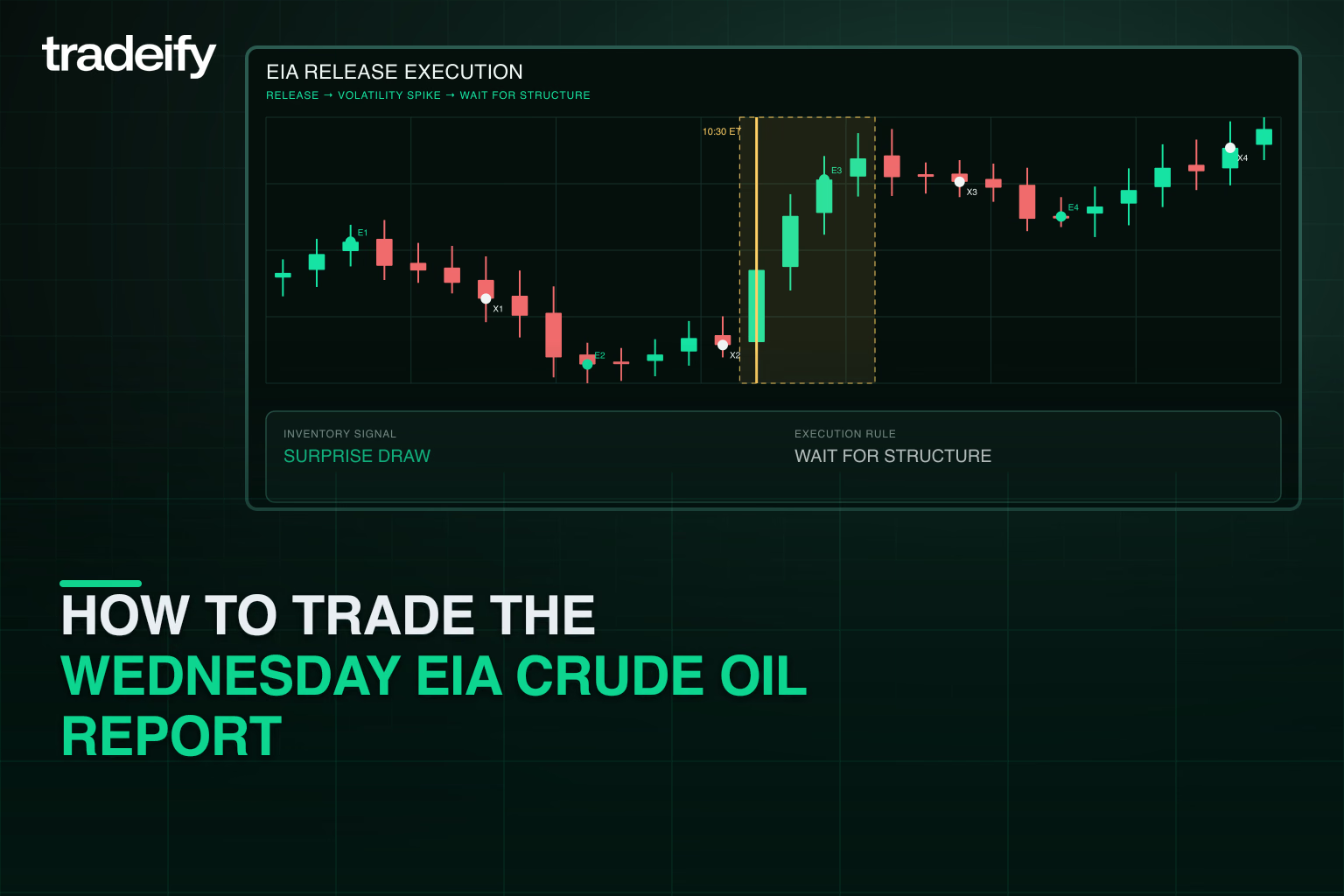
Every Wednesday at 10:30 AM ET, the U.S. Energy Information Administration (EIA) releases the Weekly Petroleum Status Report. This is the most anticipated event in the oil market, often causing prices to move one to four percent in minutes.
Understanding the Crude Oil Inventory Surprise
The price of oil on EIA Wednesday is driven not by the raw number of barrels in storage, but by the "surprise," the difference between the actual inventory and the analysts' consensus forecast.
EIA Report Execution Strategy for Small Crude Oil Accounts
Trading the immediate "spike" at 10:30:00 AM is a low-probability endeavor for small accounts due to extreme slippage and widening spreads. A professional approach involves:
| Metric | Bullish Reaction | Bearish Reaction |
|---|---|---|
| Crude Stocks | Surprise Draw (-3M bbl) | Surprise Build (+5M bbl) |
| Gasoline Demand | Higher than 4-week Avg | Lower than 4-week Avg |
| Refinery Utilization | Increasing (Demand for crude) | Decreasing (Lower crude use) |
| Production | Domestic Drop | Record Highs |
Crude Oil Risk Management for Funded Prop Accounts
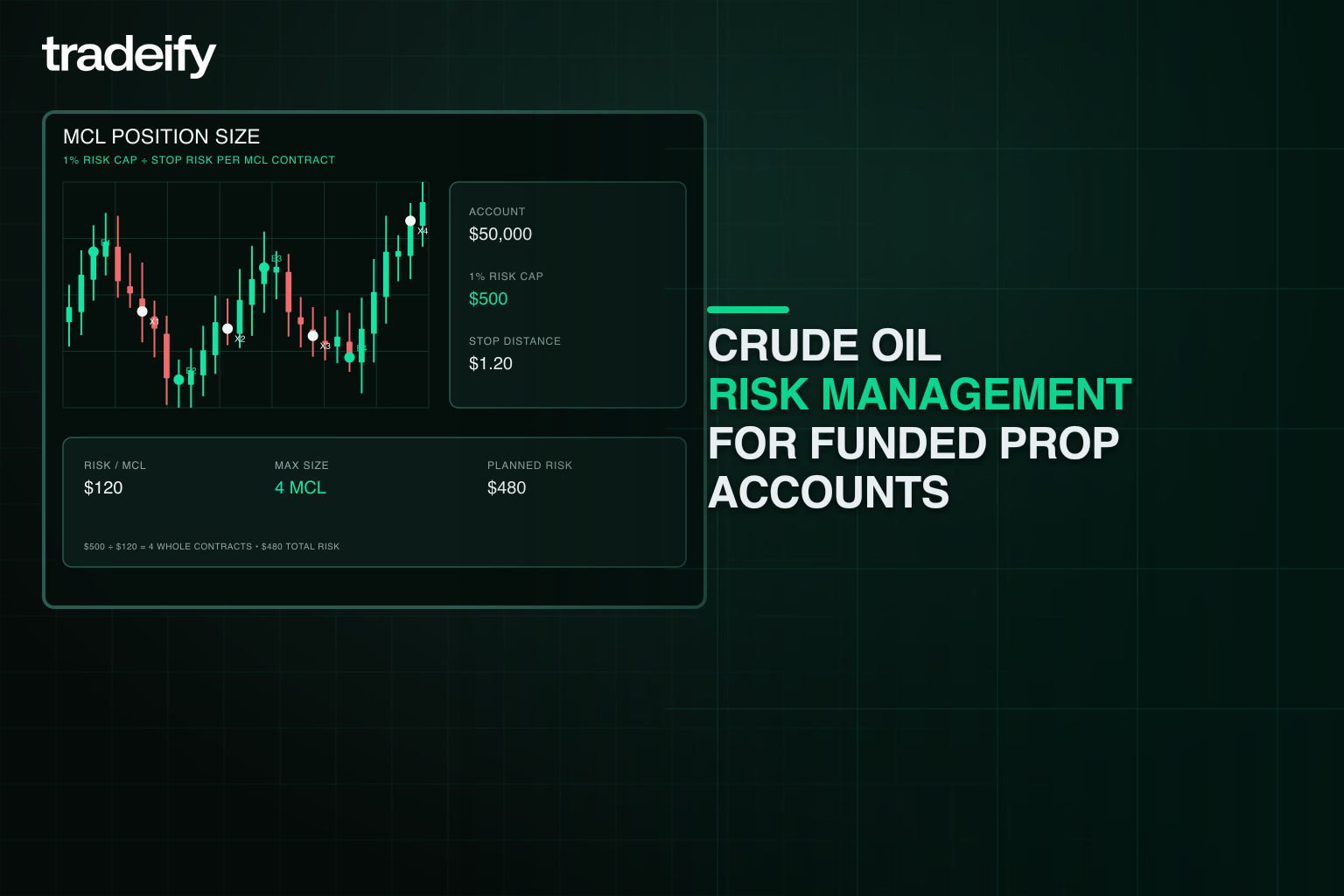
The singular reason traders fail prop firm challenges is not a lack of profit-making ability, but an inability to manage the downside. In crude oil, where the volatility is twice that of the S&P 500, risk management must be automated and emotionless.
The 1% Rule and Crude Oil Position Sizing
Professional traders never risk more than one percent of their total account equity on a single trade. For a fifty-thousand-dollar account, this means a hard risk cap of five hundred dollars per trade.
Why Averaging Down Destroys Crude Oil Prop Accounts
"Averaging into oblivion" is the hallmark of the amateur. When a trade moves against them, the amateur buys more contracts to lower their average entry price, hoping for a "bounce" to breakeven. In a trending oil market, this is a recipe for an immediate daily loss limit breach. The "Champion Mindset" requires accepting a small, controlled loss as the cost of doing business. As Israel Adesanya notes, success comes from "adapting to whatever comes your way," which in trading means acknowledging when your thesis is wrong and exiting immediately.
Crude Oil Trading Psychology and the "Champion Mindset"

Tradeify's "Champion Mindset" campaign, featuring icons like Israel Adesanya and Luke Littler, is not merely branding; it is a curriculum for mental performance. The parallels between elite sports and high-stakes trading are found in the transition from the training environment (the simulation account) to the octagon (the live funded account).
The "Stylebender" Approach to Crude Oil Adaptability
Israel Adesanya's ability to read his opponent and change his fighting style in real-time is the exact trait required for a crude oil trader. The market is not a static entity; it is a shifting battlefield of supply and demand. A trader who is "stubbornly bullish" because they read a news report about a pipeline leak will be liquidated when the market ignores the news and follows the technical trend lower. Adaptability means having no ego and following the price action wherever it leads.
Composure Under Pressure in Crude Oil Evaluations
Prop firm evaluations are designed to trigger the "fight or flight" response by imposing profit targets and time limits. This pressure often leads to "revenge trading," the desperate attempt to win back a loss by taking larger, riskier positions. The "Champion" maintains composure by treating the evaluation like a marathon rather than a sprint. By aiming for small, steady gains of 0.5% to 1% per day, the trader stays within their risk parameters and avoids the emotional volatility that leads to rule breaches.
Why Trade Crude Oil Futures Instead of NQ or ES
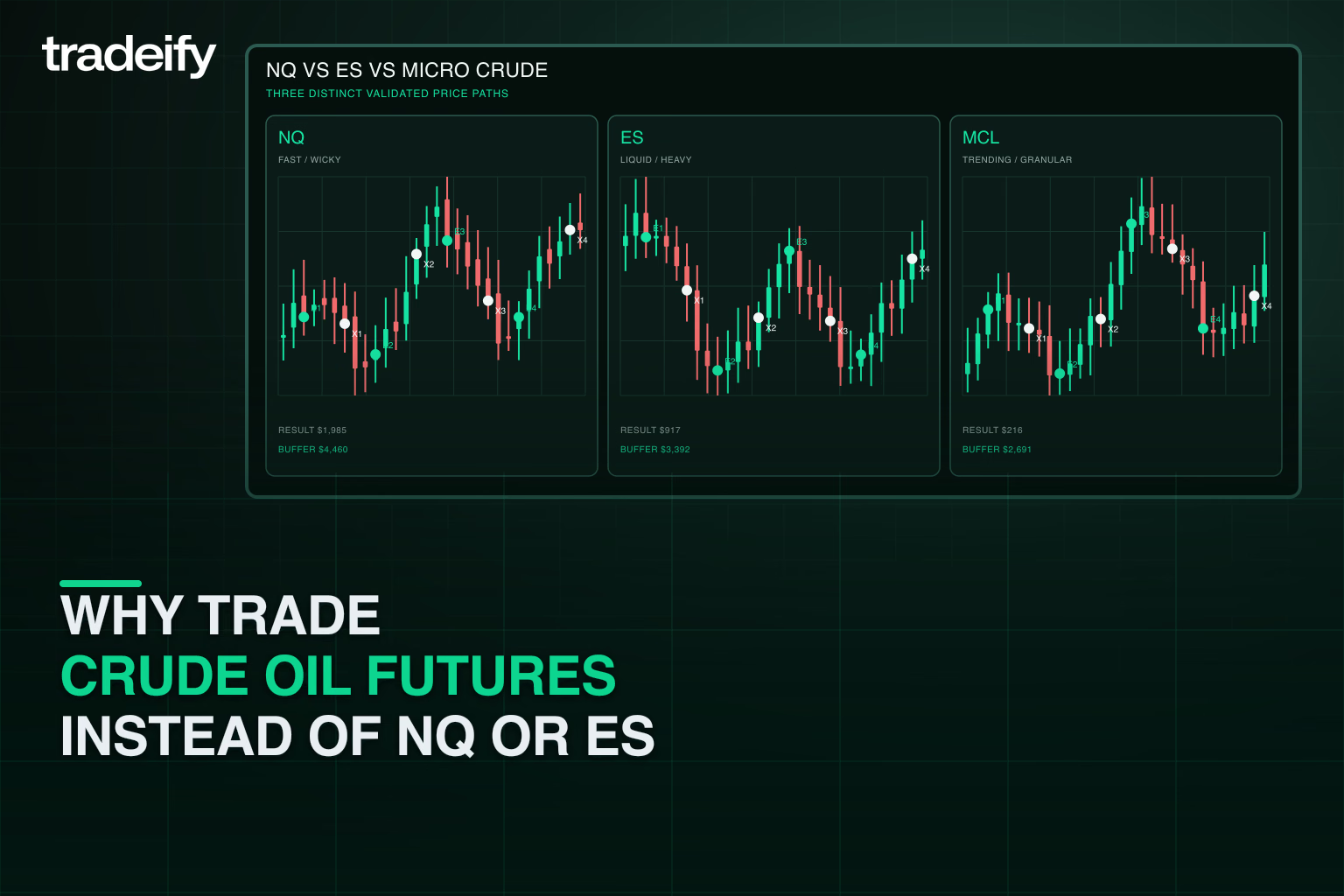
Most prop traders flock to the Nasdaq 100 (NQ) due to its massive volatility and "fast" moves. However, for a small account, crude oil often provides a cleaner, more technical environment.
Crude Oil Liquidity and Order Flow vs Index Futures
The S&P 500 (ES) is highly liquid but often "heavy," moving slowly and requiring significant patience. The Nasdaq (NQ) is "thin" and "wicky," often sweeping through stop-losses with extreme slippage. Crude oil (CL and MCL) sits in the "Goldilocks" zone: it has the liquidity of the ES but the volatility and "trendiness" of the NQ.
| Metric | Nasdaq 100 (NQ) | S&P 500 (ES) | WTI Crude (CL/MCL) |
|---|---|---|---|
| Volatility | Extremely High | Moderate | High |
| Technical Respect | Moderate (Algo driven) | High | High (Supply/Demand) |
| Slippage Risk | High | Low | Moderate |
| Correlation | High with Tech | High with Broad Mkt | Low/Independent |
| Best Trading Window | 9:30 AM – 4:00 PM ET | 9:30 AM – 4:00 PM ET | 9:00 AM – 2:30 PM ET |
How to Build a Funded Crude Oil Trading Career
The path from an amateur day trader to a funded professional at Tradeify is not defined by finding a "secret" indicator, but by the mastery of risk and the adoption of a professional mindset. In the high-stakes world of crude oil futures, the Micro MCL contract is the primary tool for the small account trader, offering the perfect balance of benchmark exposure and risk mitigation.
To succeed in the 2026 market, the trader must remain a student of both the chart and the world. By aligning technical entries with geopolitical narratives, respecting the rigid guardrails of the prop firm model, and maintaining the "Champion Mindset" of adaptability and composure, the amateur can join the elite ten percent of traders who achieve and maintain their funded status. Crude oil is a market that punishes the reckless but rewards the disciplined with unparalleled liquidity and trend-following opportunities. As the global energy map continues to redraw itself, the traders who can work through these conditions with precision and patience will find themselves at the forefront of the next generation of financial professionals.
.svg)
.svg)
.svg)
.svg)







.webp)