.svg)

.svg)
.svg)



TL;DR: Tradeify is a futures prop firm offering Growth, Select, and Lightning accounts, all using end-of-day trailing drawdown. Margin is the performance bond needed to hold futures exposure, while drawdown is the rule that decides how much a prop firm account can lose before it breaches. The rule comparison that matters most before buying a challenge is EOD versus intraday trailing drawdown, because it decides when the loss floor moves and how much room a normal pullback has. Tradeify's accounts are one-time purchases with no activation fees and a 90/10 profit split. Growth Evaluation includes a daily loss limit; Select Evaluation does not. Growth funded accounts apply a 35% consistency rule; Select funded accounts have no consistency rule. Lightning Funded accounts use a progressive consistency structure starting at 20% for the first payout, rising to 25% for the second, and 30% thereafter. Current pricing for all account types is available at tradeify.co.
Margin and Drawdown Mean Different Things
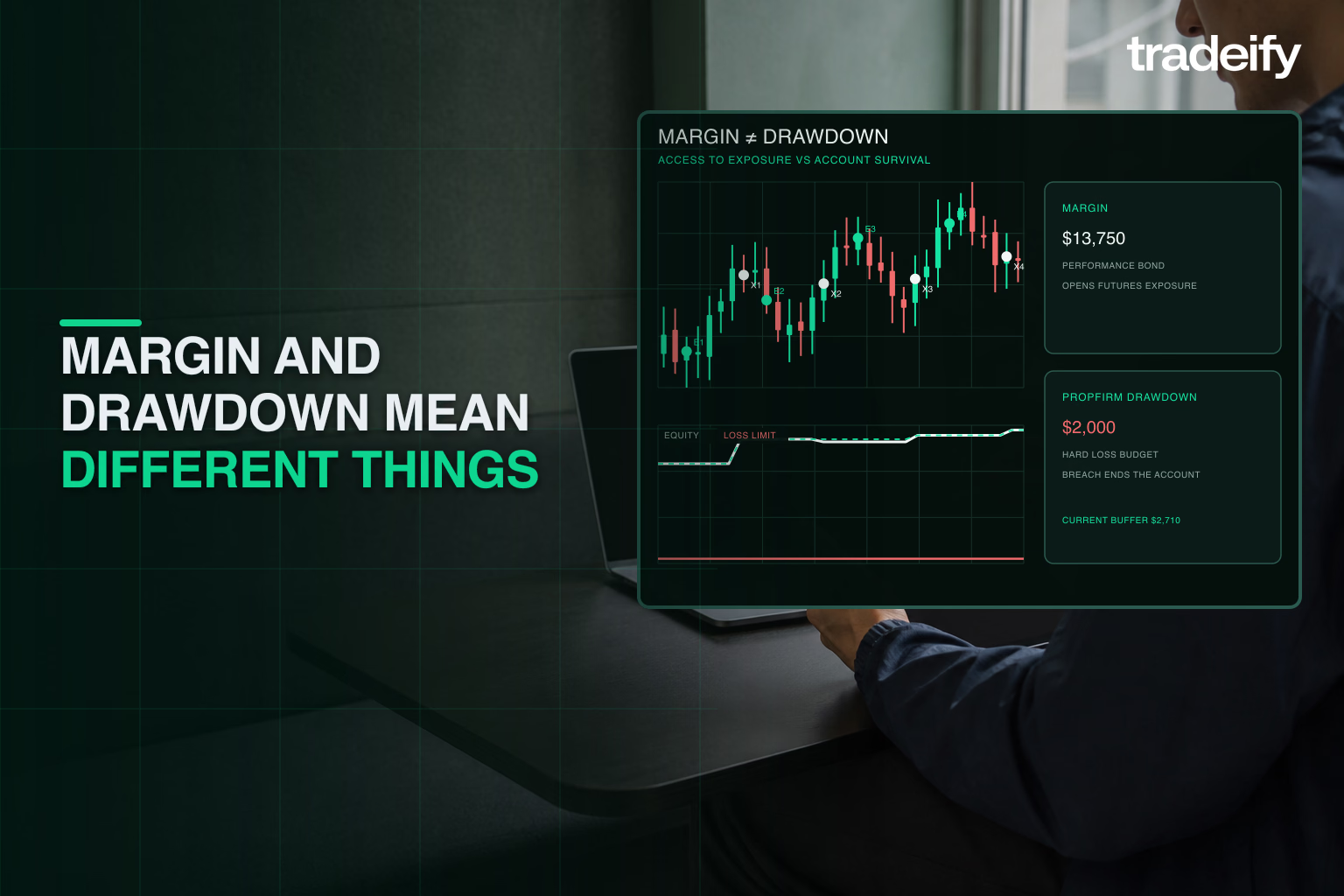
Margin and drawdown are both risk terms, but they answer different questions.
In a traditional futures account, margin is the performance bond required to open and maintain a futures position. It is the collateral that lets a trader hold exposure to a futures contract. If the account falls below the required maintenance level, the trader may have to add funds or reduce the position.
In a prop firm account, the trader is usually not depositing the headline account size as margin. The firm provides the buying power through its evaluation or simulated funded account structure. That means the trader's real operating limit is the drawdown rule.
For prop firm traders, the practical question is not how large the account looks. The practical question is how much room the account has before it breaches.
| Concept | Traditional futures account | Prop firm account | Trader takeaway |
| Margin | Performance bond required to open and maintain futures exposure | Buying power is usually supplied through the firm's account structure | Margin controls access to exposure |
| Drawdown | A measure of account decline | The rule that decides when the account fails or pauses | Drawdown controls survival |
| Main risk question | Can the account meet exchange or broker requirements? | How much can the account lose before a breach? | Size trades from drawdown room |
| Common mistake | Taking too much exposure for available capital | Treating headline account size as real risk capital | Manage the buffer, not the marketing number |
Prop Firm Drawdown Is the Real Risk Budget
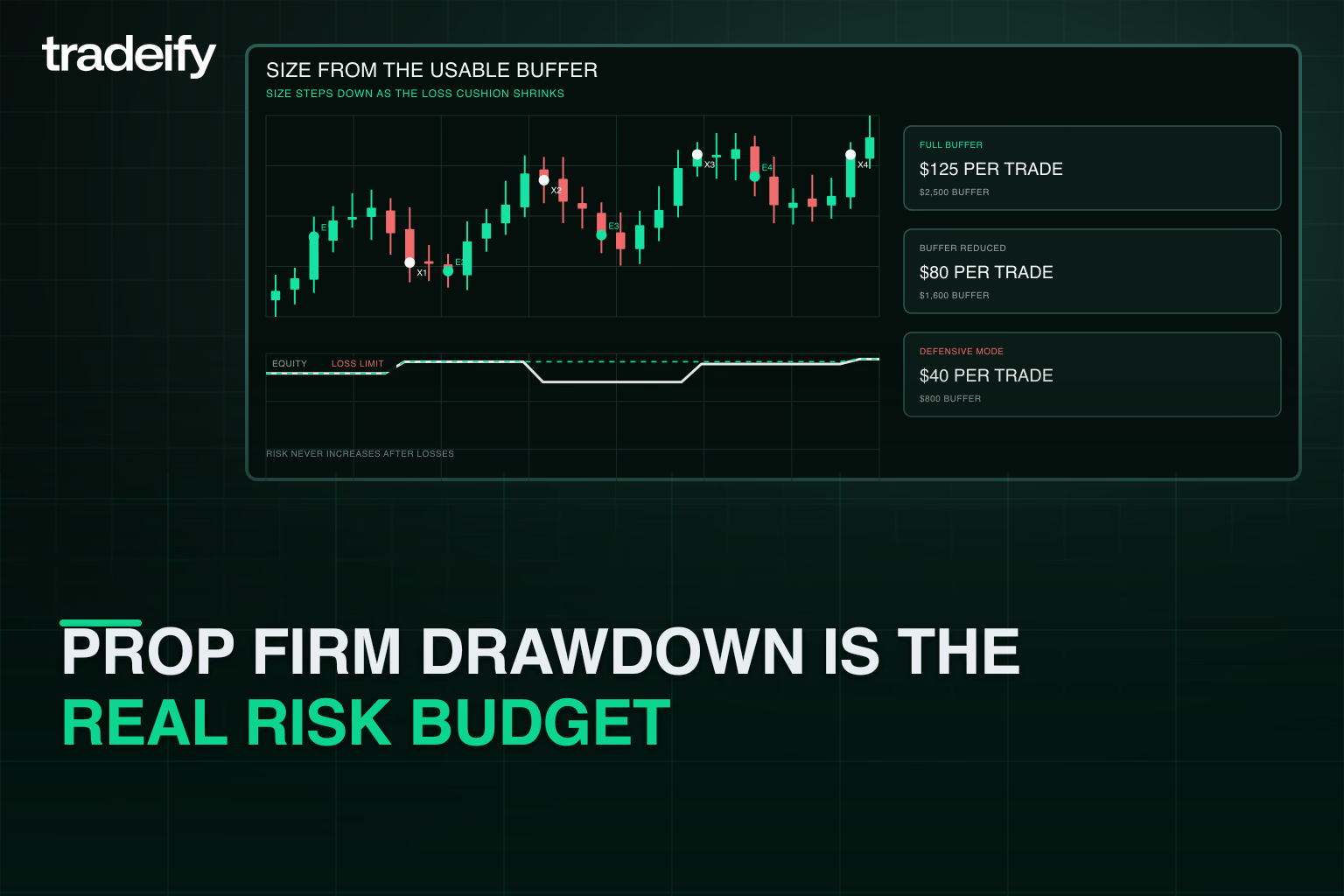
Many newer prop firm traders make a sizing mistake by anchoring risk to the headline account size rather than the drawdown limit.
Risking 1% of a $50,000 account sounds conservative. In dollar terms, that is $500. But if the true drawdown room is $2,000, a $500 trade risks 25% of the usable buffer. Four full losses can end the account.
A better prop firm risk habit is to size trades from the drawdown buffer. If the drawdown is $2,000, then:
- $500 risk per trade equals 25% of the buffer
- $200 risk per trade equals 10% of the buffer
- $100 risk per trade equals 5% of the buffer
- $50 risk per trade equals two and a half percent of the buffer
That is why many newer futures prop traders should start with micro contracts. Micro contracts let traders control loss size more precisely and survive more normal losing sequences.
Drawdown Types Prop Firm Traders Need to Know
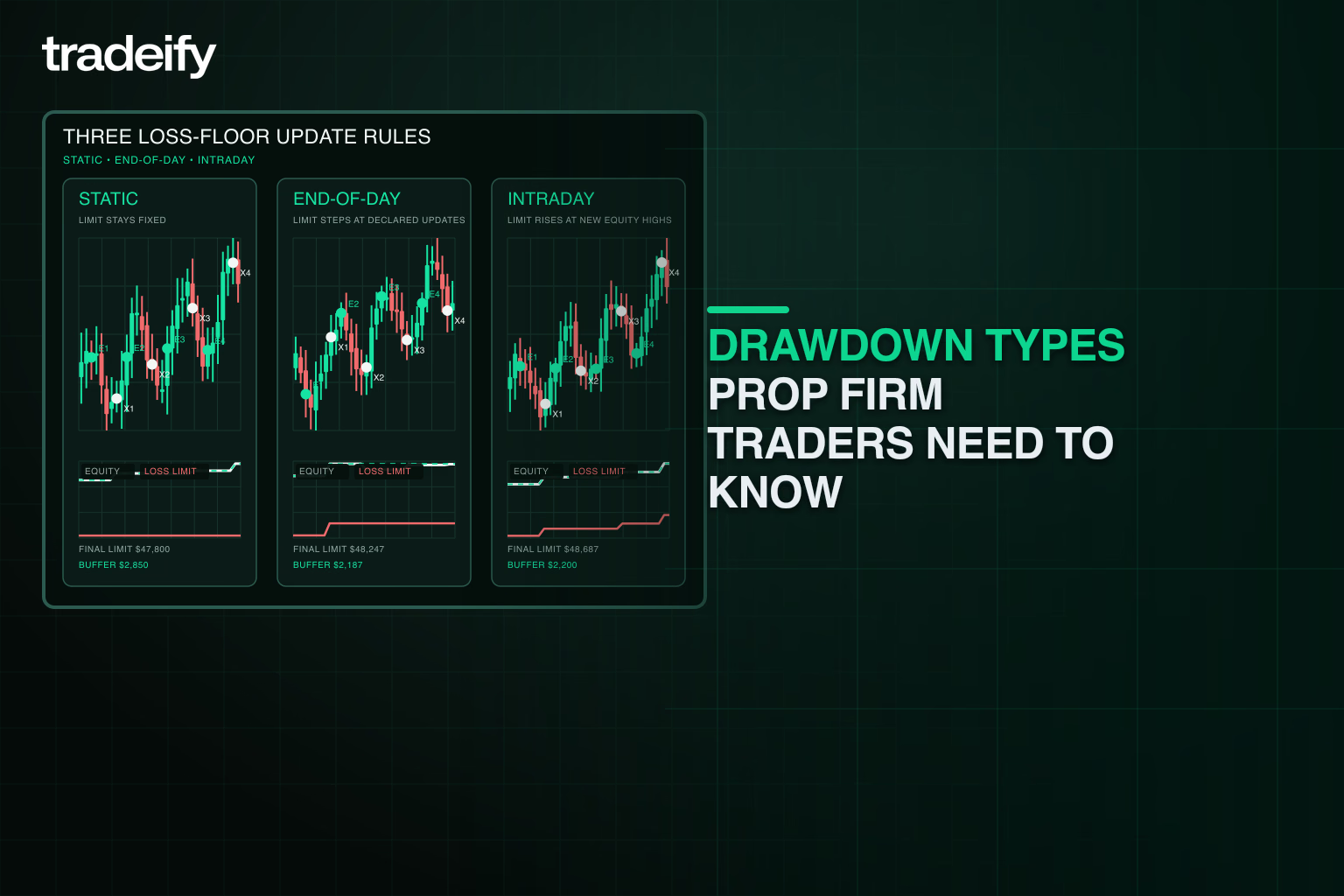
Prop firms use several drawdown methods. The terms can sound similar, but the trading experience can be very different.
| Drawdown type | How it works | Why it matters |
| Daily drawdown | Limits how much the account can lose during one trading day | Can pause or fail an account even if max drawdown remains intact |
| Maximum drawdown | Sets the total loss limit across the life of the account | Usually the main account survival rule |
| Static drawdown | Keeps the breach level tied to the starting balance | Profits can create more room over time |
| Trailing drawdown | Moves the breach level up as the account reaches new highs | Can reduce future room after profitable periods |
| Balance-based drawdown | Uses closed balance for the reference point | Less sensitive to temporary open-trade movement |
| Equity-based drawdown | Includes unrealized profit and loss from open positions | Can breach from floating losses or tighten from floating gains |
| End-of-Day trailing drawdown | Updates after the trading day based on closing balance | More forgiving during normal intraday pullbacks |
| Intraday trailing drawdown | Updates during the session based on live equity or high-water marks | Can punish unrealized gains that later retrace |
The most important question is whether open equity can move the breach level. If unrealized profit can tighten the drawdown during the session, the trader has less room for normal pullbacks.
End-of-Day Drawdown Versus Intraday Drawdown
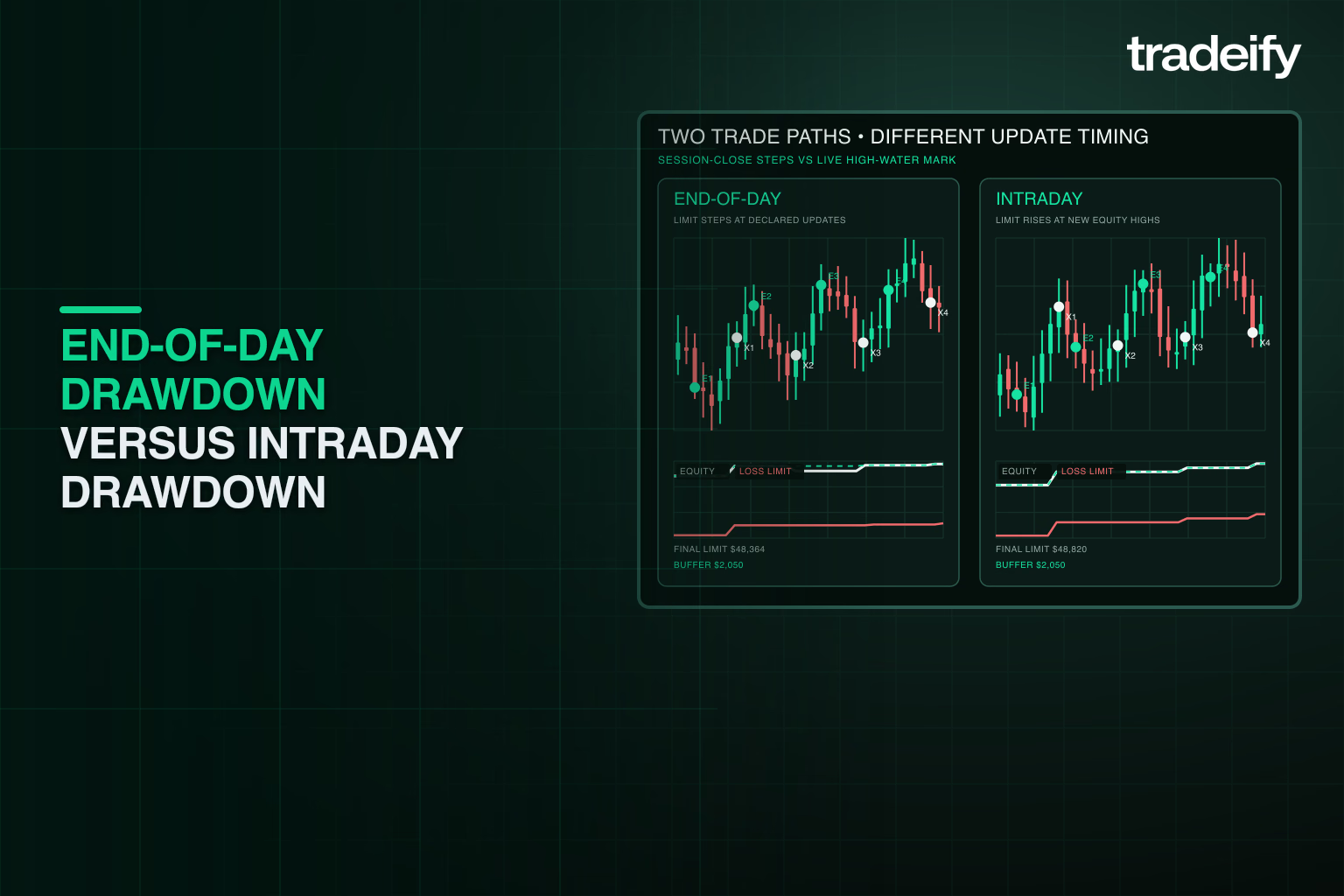
End-of-Day trailing drawdown and intraday trailing drawdown are the two rule types traders should understand before buying a prop firm challenge.
With intraday trailing drawdown, the loss threshold can move up in real time as open equity reaches new highs. Suppose a trader starts with a $50,000 account and a $2,000 trailing drawdown. The initial breach level is $48,000. If an open trade temporarily pushes equity to $51,500, the trailing threshold may rise to $49,500. If the trade pulls back and closes flat, the trader may have made no realized profit but lost most of the original breathing room.
With end-of-day trailing drawdown, the threshold updates after the trading day based on the closing balance. Using the same example, a temporary unrealized gain during the day would not normally tighten the next threshold unless the trader ended the day with realized profit.
| Metric | End-of-Day trailing drawdown | Intraday trailing drawdown |
| When threshold updates | After the trading day closes | During the trading session |
| Usually based on | Highest qualifying closed daily balance | Highest live equity or intraday high-water mark |
| Temporary open profit | Does not normally tighten the next threshold unless profit is realized by the close | Can tighten the threshold before profit is realized |
| Best suited for | Traders who need room for normal intraday movement | Tight scalpers with strict trade management |
| Main risk | The floor can still cause a hard breach if hit | Breathing room can disappear quickly after a normal retracement |
For beginners, EOD drawdown is usually easier to manage because it does not punish every unrealized intraday equity high. It still requires discipline. The breach level can still be enforced in real time, and traders still need stops, position limits, and personal daily loss controls.
The Psychological Impact of Each Drawdown Mode
The starting point is loss aversion: research finds that losses tend to be treated as if they were twice as large as an equivalent gain, so a shrinking drawdown buffer is felt more sharply than the same-sized profit. The drawdown mode decides how often you feel that pressure.
- Under an intraday trailing rule, the floor can move while your trade is open, so a normal pullback starts to feel like it is stealing the account before the setup has proven anything.
- Under an end-of-day rule, the floor holds still during the session, so the account's survival math is the same whether your trade is up, down, or flat intraday.
That difference changes decisions, not just comfort. Under a moving floor, traders tend to manage the equity curve instead of the setup: closing winners early to protect the buffer, hesitating on the next valid entry after a small drawdown, or moving a stop to avoid a mark. If floating pain changes how you trade, the drawdown mode is part of your edge, and so is a plan for handling tilt after a losing streak you commit to before the buffer shrinks.
What Causes a Prop Firm Drawdown Breach
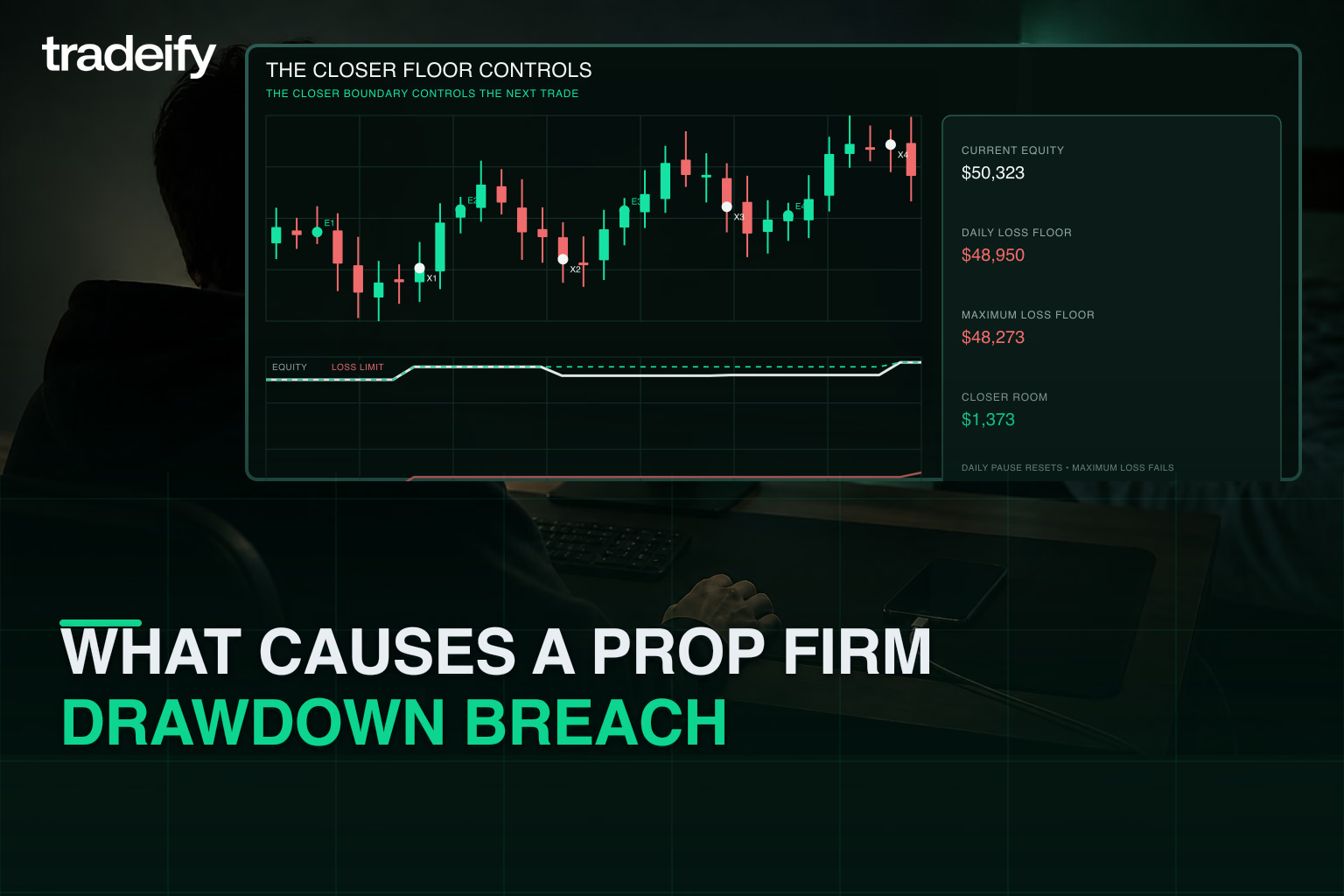
A breach happens when the account crosses a rule boundary. The most common triggers are:
- Max drawdown breach: The account falls below the permitted max loss level.
- Daily loss limit breach: The account loses more than the daily rule allows. This is typically a soft breach that pauses trading for the rest of the day rather than failing the account.
- Open equity breach: Floating losses on open trades push account equity below the permitted level.
- Trailing threshold compression: Prior profit moves the drawdown level up, leaving less room for the next trade.
- Slippage or news volatility: Fast markets fill stops worse than expected and push losses beyond the intended amount.
- Position limit violation: The trader exceeds the maximum contracts allowed by the program.
- End-of-day position violation: The trader fails to close positions before the firm's required cutoff.
A soft breach and a hard breach are not the same thing. A soft breach may pause trading or liquidate positions for the rest of the day without failing the account. A hard breach fails the account permanently. Traders should not assume every rule violation is recoverable.
Track Your Drawdown Buffer in Real Time
Most breaches are visible before they happen; the account just was not being watched closely enough to catch them. If your first warning is the platform flagging the breach itself, the buffer was already gone.
Three habits keep the buffer in front of you:
- Know the exact breach level before the session starts. Remaining balance minus remaining buffer is the number that ends the account, and you should be able to say it without checking a dashboard.
- Recompute the buffer after every closed trade, not at the end of the day. A normal losing streak should never be a surprise you first notice when the day ends.
- Log the remaining buffer each session alongside your risk per trade. A buffer that keeps shrinking by small amounts is telling you something about sizing, not just about luck.
Under an intraday trailing rule, add the session high-water mark on open equity to that checklist, because that mark is what moves the floor in real time. Pair the tracking with sizing discipline: if the math says a normal losing streak would eat more of the account than you can accept, the fix is smaller risk per trade, not tighter monitoring.
Tradeify Drawdown Rules as a Worked Example
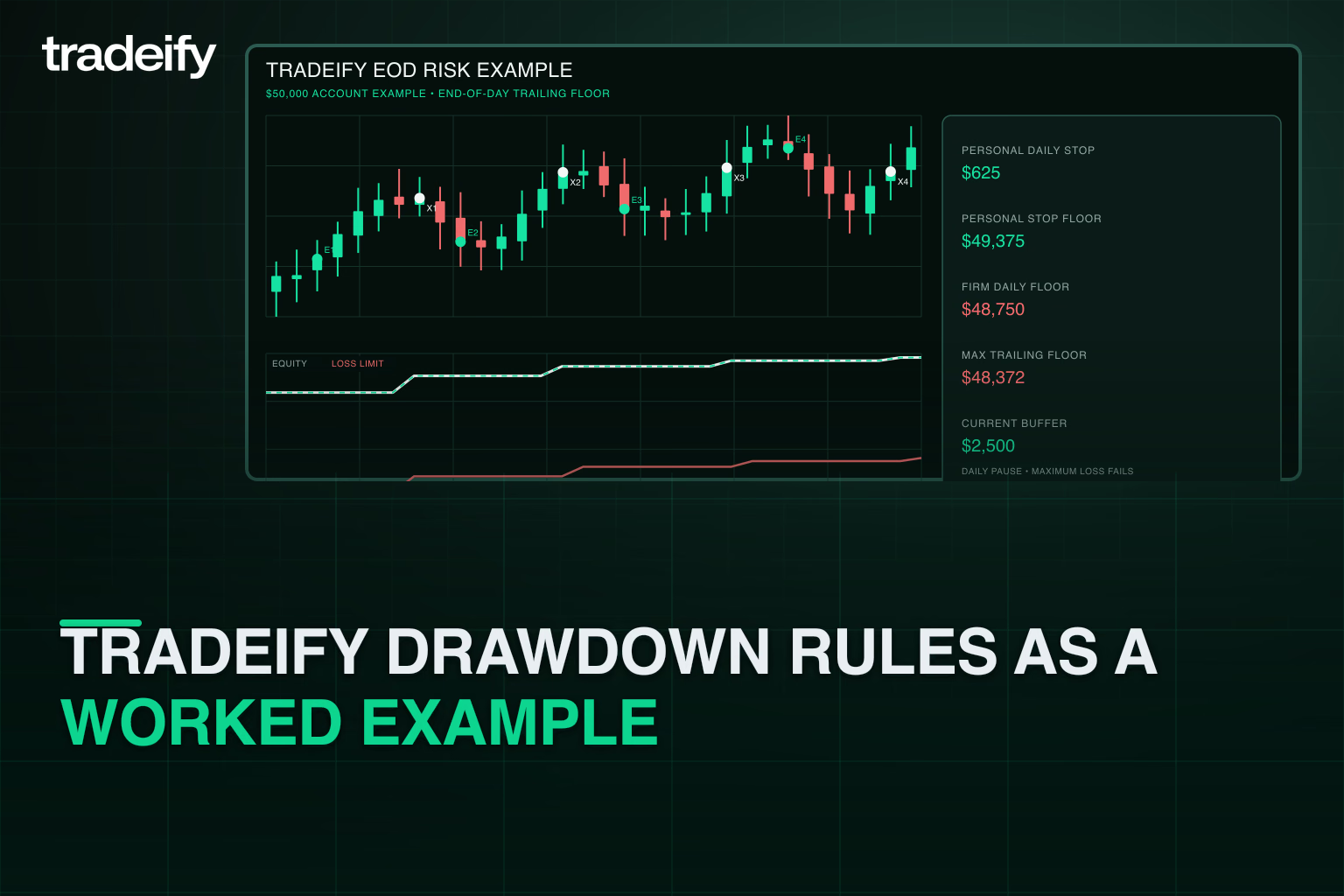
Tradeify uses end-of-day trailing drawdown across its Growth, Select, and Lightning account paths. The drawdown recalculates at market close based on the final daily balance and only locks in improvements when the trader ends the day profitable.
Tradeify currently offers three account types:
Growth Evaluation is a one-time purchase with no activation fee. Traders must pass an evaluation to receive a simulated funded account. Growth Evaluation includes a daily loss limit, which is a soft breach - hitting it pauses trading for the day but does not fail the account. There is no consistency rule during the evaluation phase. The funded phase applies a 35% consistency rule for payout eligibility.
Select Evaluation is also a one-time purchase with no activation fee. Unlike Growth, Select Evaluation carries no daily loss limit - the only hard risk boundary during the evaluation is the end-of-day trailing drawdown. Select requires a minimum of three trading days to pass due to a 40% consistency rule during evaluation. Once funded, that consistency rule is removed entirely, giving traders more flexibility in the funded phase.
Lightning Funded skips the evaluation entirely. One payment provides immediate access to a simulated funded account. Lightning uses end-of-day trailing drawdown with daily loss limits. The consistency requirement for payout eligibility starts at 20% for the first payout, increases to 25% for the second, and rises to 30% for the third payout and beyond.
All three paths use a 90/10 profit split, meaning traders keep 90% of each approved payout. Current pricing for all account sizes is listed on tradeify.co.
Tradeify also requires all positions to be closed before the market closes each day. Regular trading days require positions to be closed by 4:59 PM Eastern Time. The trading day runs from 6:00 PM Eastern to 5:00 PM Eastern the following calendar day.
Tradeify Drawdown Lock
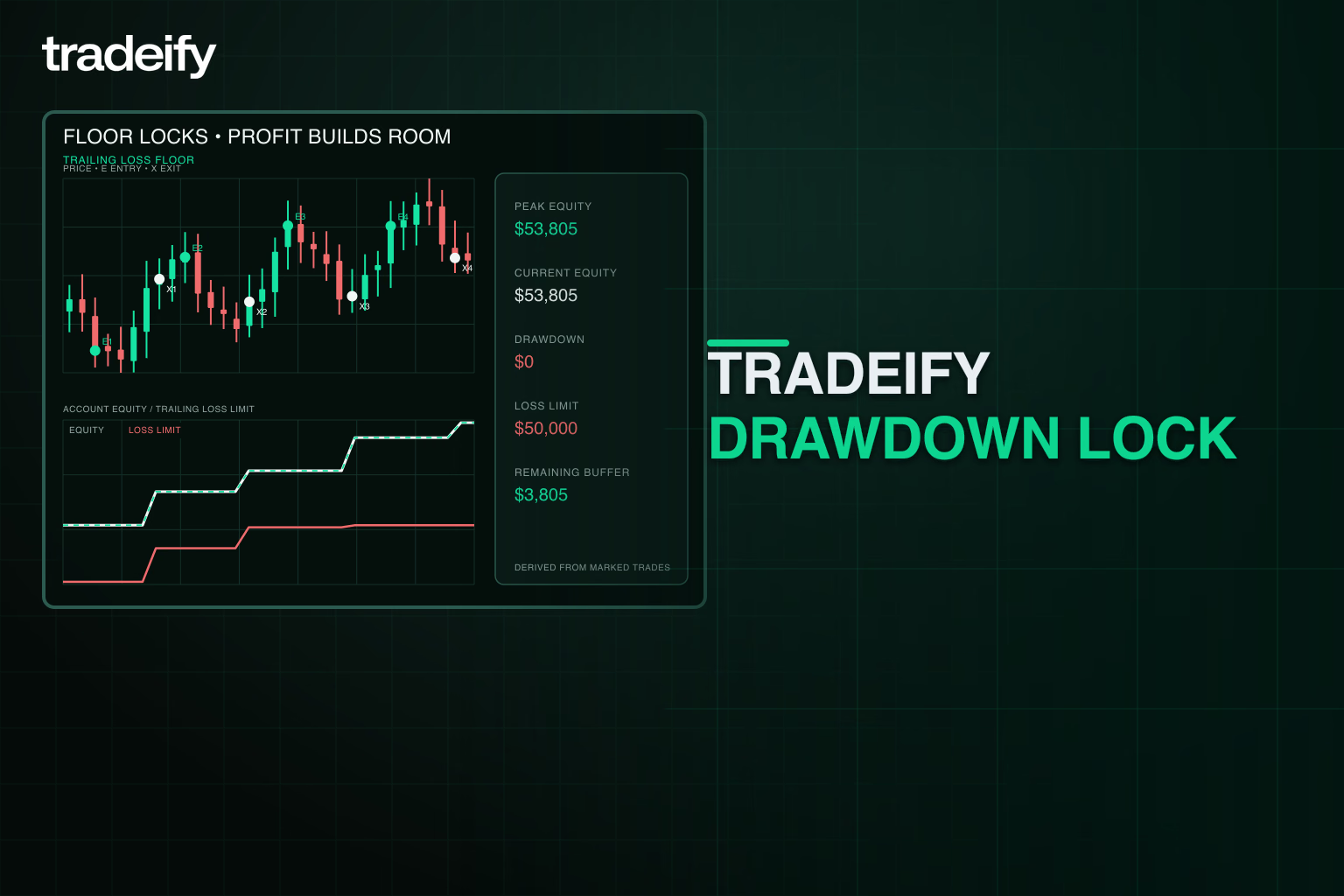
Tradeify's EOD drawdown gives traders more intraday flexibility, but the funded account still operates within a trailing risk framework. The practical goal is to build enough profit that the drawdown stops trailing and locks at a fixed floor.
Once the funded account reaches the required profit buffer, the drawdown floor becomes fixed rather than continuing to trail upward. That lock changes how the account behaves day to day. Before the lock, every decision must protect the remaining drawdown buffer. After the lock, additional profit creates more usable breathing room above the fixed floor. Current lock thresholds by account type and size are available in Tradeify's help center.
How to Compare Prop Firms by Drawdown Rule
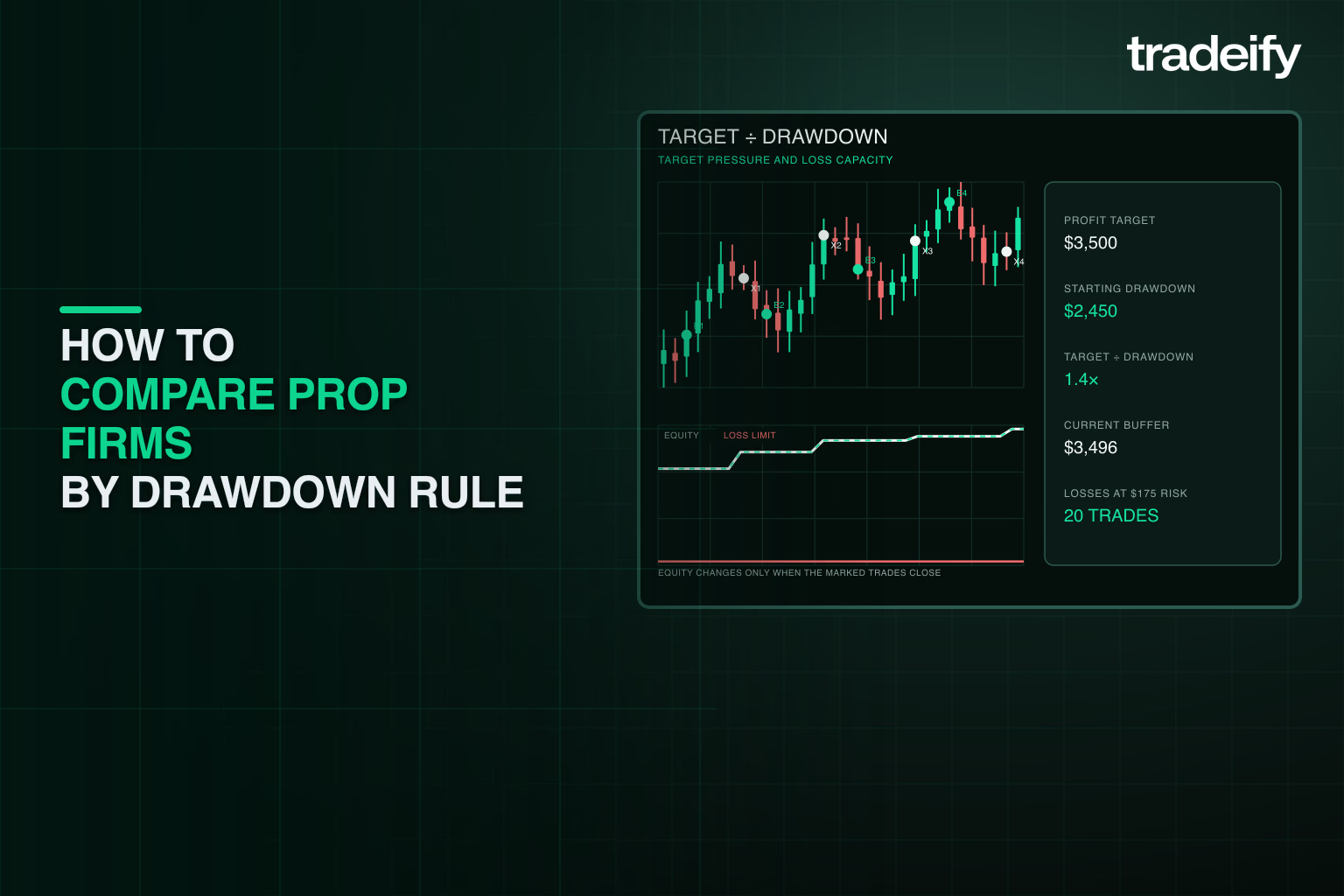
Before choosing a prop firm, compare rules in this order:
- Drawdown calculation: Is it EOD, intraday, static, trailing, balance-based, or equity-based?
- Daily loss limit: Is there a DLL, and is it a soft breach or hard breach?
- Max drawdown size: How much actual risk room do you have in dollars?
- Profit target versus drawdown: Does the target require too much risk relative to the buffer?
- Activation and reset fees: What is the real cost to reach a funded account?
- Payout rules: How many trading days are required, what buffers apply, and are payouts capped?
- Consistency rules: Can one big day block a payout until you add smaller profit days?
- Position limits: How many mini and micro contracts can you trade?
- Trading restrictions: Are there news, end-of-day, copy trading, automation, or prohibited conduct rules?
A trader-friendly account is not just the one with the biggest headline balance or the cheapest evaluation fee. The best account is the one whose drawdown rules fit the trader's strategy, time frame, and discipline level.
Frequently Asked Questions About Margin and Drawdown
Is margin the same as drawdown?
No. Margin is the collateral or performance bond required to carry a futures position. Drawdown is the maximum loss a prop firm allows before the account breaches. In prop trading, the firm provides the buying power, while the trader manages the drawdown limit.
What does a 5 percent drawdown mean?
A 5% drawdown usually means the account cannot fall more than 5% from the relevant reference point. The reference point matters. It may be the starting balance, start-of-day balance, highest closed balance, or highest equity level. On a $100,000 account, 5% equals $5,000, but the breach level depends on the firm's calculation method.
Why do prop firms use trailing drawdown?
Prop firms use trailing drawdown to control risk as traders gain access to larger buying power. A trailing rule can prevent a trader from making profit, increasing exposure, and then giving too much back. The tradeoff is that aggressive trailing rules can tighten the account and make normal pullbacks harder to survive.
Can you recover after hitting your drawdown limit?
It depends on the type of breach. A max drawdown breach is generally a hard breach - the account fails when the limit is hit. Some daily loss limits are soft breaches that pause trading for the day but leave the account intact. Traders should not assume every rule violation is recoverable.
Which drawdown rule is best for beginners?
Beginners usually benefit from rules that are easy to understand and give room for normal intraday movement. End-of-day trailing drawdown is generally easier to manage than intraday equity-based trailing drawdown. The best choice still depends on the trader's strategy, contract size, and discipline.
Should I choose the biggest prop firm account?
Not automatically. Bigger accounts may come with bigger profit targets, higher costs, and rules that still leave limited real drawdown room. Choose the account where the profit target, drawdown, contract limits, and payout rules fit your risk plan.
What is the difference between intraday and end-of-day drawdown modes?
Intraday trailing drawdown can move the loss floor up during the session, often based on your highest live equity, so unrealized profit can shrink your room before it is realized. End-of-day drawdown updates the floor only after the close using your qualifying balance, so a temporary intraday gain does not tighten the threshold unless the profit is realized. EOD gives more room for normal intraday movement, while intraday favors tight trade management.
Do 97% of day traders lose money?
A study of individuals who began day trading in the Brazilian equity futures market found that 97% of those who persisted for more than 300 days lost money, and only 1.1% earned more than the Brazilian minimum wage. That is one market and period rather than a universal rate, but the direction is clear: sustained losses are the norm, and the drawdown rule exists because risk compounds. Sizing and tracking the buffer is the practical response.
Final Thoughts on Margin and Drawdown
Margin gives futures traders access to contract exposure. Drawdown decides how much room a prop firm trader has before the account fails. That is the core difference.
For Tradeify traders, the useful framework is to learn the industry rule types first, then use Tradeify as the worked example. Tradeify's EOD drawdown structure gives more intraday flexibility than intraday trailing models, but it does not remove the need for conservative sizing. The account size is buying power. The drawdown buffer is survival capital.
If you want to last long enough to reach payouts, manage every trade from the drawdown number.
.svg)
.svg)
.svg)
.svg)

.webp)