.svg)

.svg)
.svg)




TL;DR: Funded trader psychology changes because the account adds rules, outside monitoring, payout expectations, and account-loss risk to the same chart decisions you made in sim. The practical answer is not more motivation. Use fixed risk per trade, a hard daily stop, a pre-trade checklist, a post-trade review, and a rule for reducing size after losses. Judge performance in batches of trades, not one setup at a time, so one win, one loss, or one payout request does not control your next decision.

Why funded trader psychology changes
Most traders expect the hard part to be the chart. Then they pass an evaluation and find out the harder part is the pressure around the chart.
A funded account can make ordinary decisions feel bigger because the trade is tied to rules, drawdown limits, payout eligibility, and the fear of losing the account. The market did not change. The consequence attached to each click changed.
That is why a strategy that felt clean in sim can feel heavy in a funded account. You are no longer just asking, "Is this a valid setup?" You may also be thinking about the dashboard, the next payout, the last losing day, and whether one mistake will undo the work it took to get funded.
If you are new to the model, start with the basics of how a proprietary trading firm (prop firm) account works, then connect the account rules to your day-to-day behavior. Funded trader psychology is rule management plus emotion management.
Professional vs amateur funded trader mindset
Funded trader psychology becomes easier to manage when you can tell the difference between a reactive decision and a process-driven decision. Use this table as a quick self-check before and after a trading session.
| Situation | Amateur reaction | Professional funded trader response |
|---|---|---|
| After a losing trade | Tries to win it back quickly. | Stops, checks whether the setup followed the plan, and waits for the next valid trade. |
| After a winning streak | Sizes up because confidence feels high. | Keeps risk fixed unless the written plan says otherwise. |
| Near a drawdown limit | Looks for one large trade to recover. | Cuts size, pauses, or stops for the day before the account is at risk. |
| Before a payout request | Forces trades to hit a personal money goal. | Protects eligibility and follows the account rules first. |
| During slow market conditions | Takes lower-quality trades to stay active. | Accepts that no trade is a valid trading decision. |
This is where funded trader psychology becomes measurable. It is not whether you feel calm every day. It is whether your behavior still matches the plan when you do not feel calm.

How account rules create pressure
A personal account gives you more room to improvise. A funded account usually gives you less. The rules may include drawdown limits, consistency requirements, restricted products, daily loss controls, payout timing, or contract-size rules. Those rules can protect the account, but they also create pressure if you ignore them until you are already in a trade.
The practical fix is simple: treat rules as part of the setup. A trade is not valid just because the chart looks good. It also has to fit your account buffer, your daily stop, your trailing drawdown room, and your payout constraints.
That matters most when you manage accounts or move from evaluation behavior into funded trader behavior. An evaluation can create perceived urgency because the trader is working around goals, rules, or account conditions. That does not make rushed trading useful. Both evaluation and funded phases still require planned, rule-compliant risk.
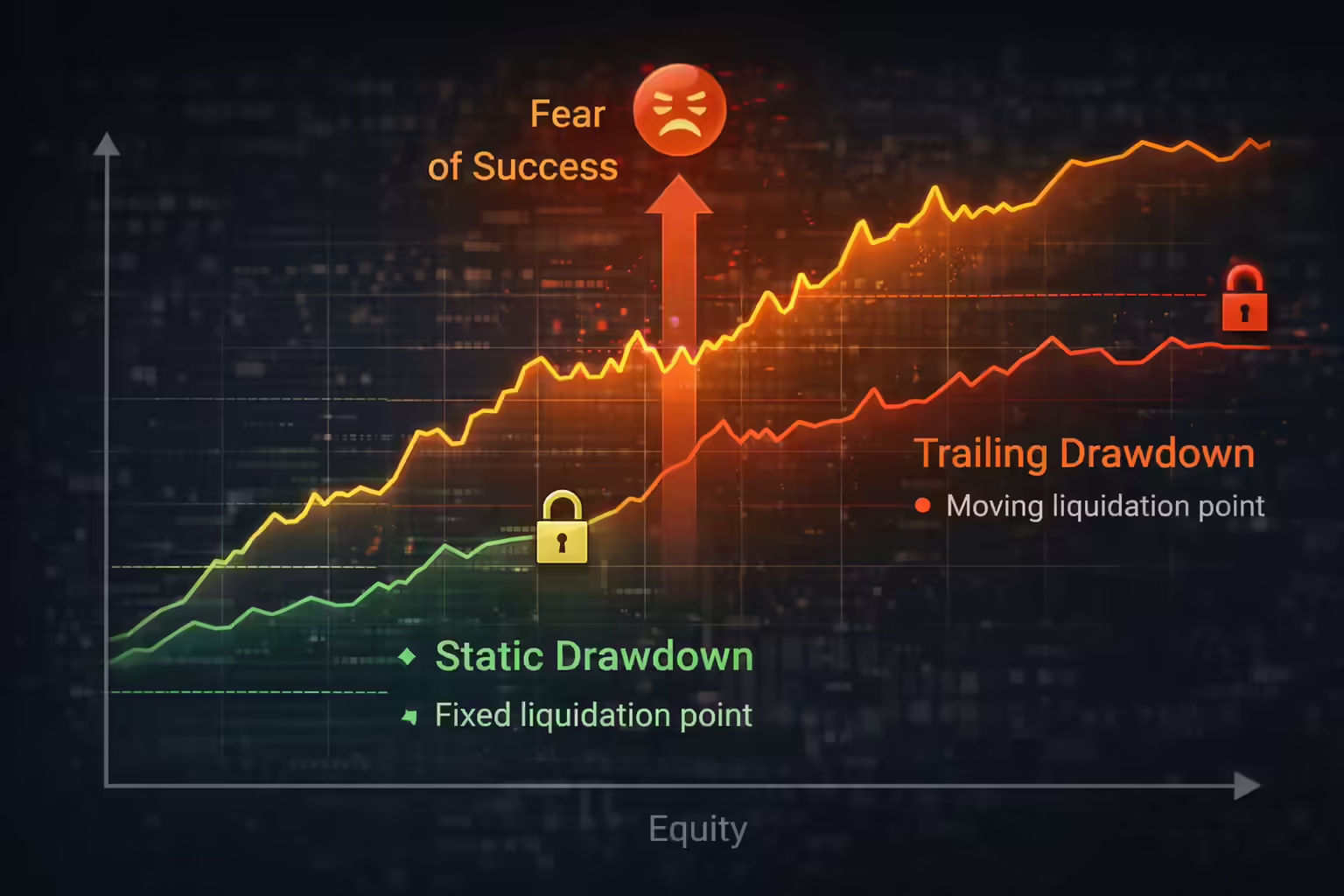
A trailing drawdown can feel especially stressful because new account highs may change how much room you have before a breach. Review the exact rule before you trade. Do not rely on memory, old screenshots, or assumptions from another firm.
Why funded account pressure feels different
Funded account programs are not all the same. Some settings are evaluations, some are simulated funded accounts, and some may involve live funded accounts. The important psychological point is that the trader is operating under external rules and eligibility standards, not just a personal brokerage plan.
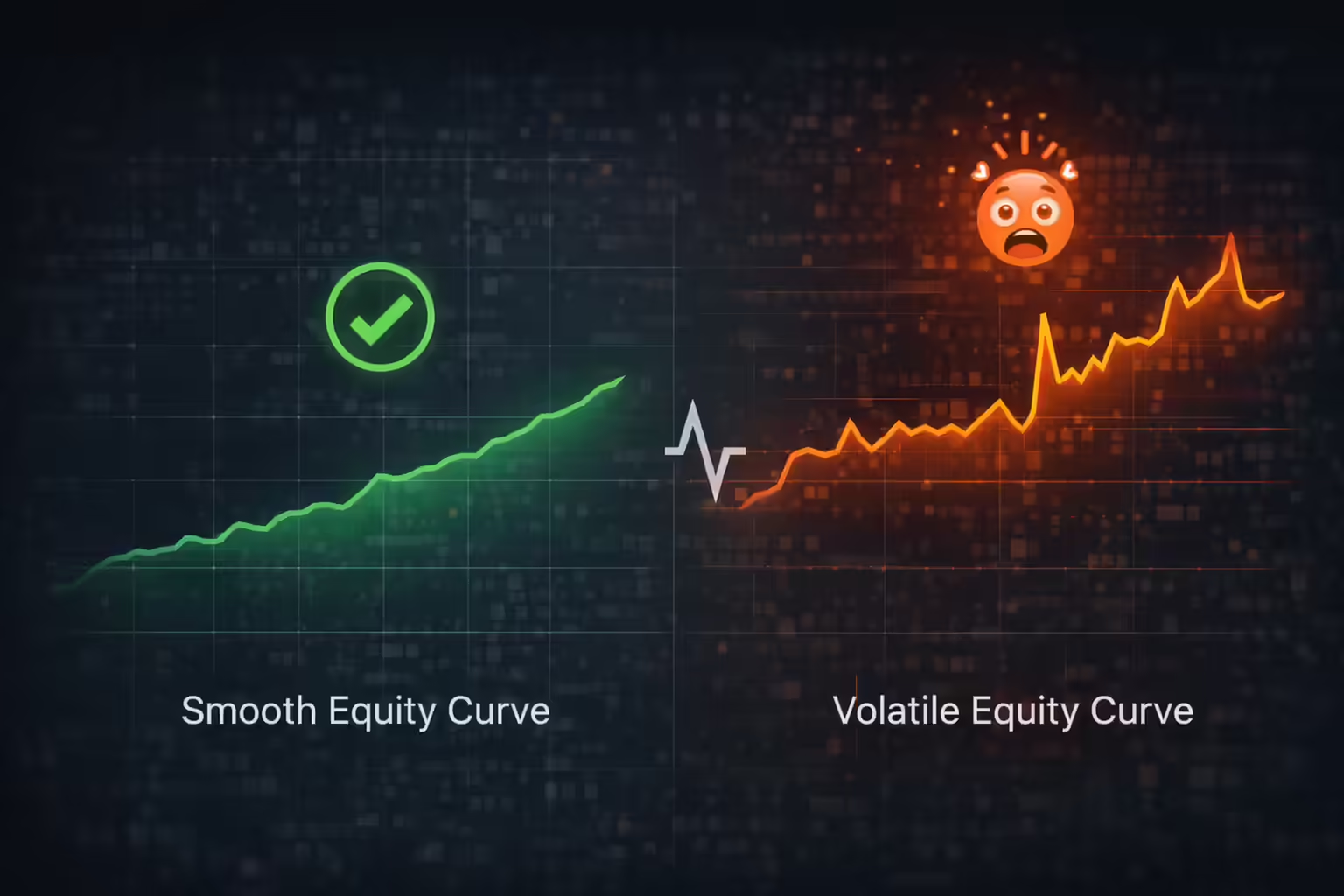
That pressure can still feel real even when the trading setting is simulated. The account can start to feel like proof that you are finally a real trader, which makes every loss feel personal.
Use a cleaner frame: the account is a trading assignment under defined rules. For Tradeify specifically, the contractual relationship covers evaluation programs, simulated funded accounts, and live funded accounts, and points traders to the Help Center for current account rules. Your job is to execute the process, respect the limits, and stay eligible for the next session.
Pre-trade and post-trade checklist
A routine works because it makes the next correct action obvious before the emotional moment arrives. Keep it short enough to use every day.
Pre-trade checklist
- Confirm the setup is in your written plan.
- Check account buffer, daily loss room, and any payout or consistency constraint.
- Set entry, stop, target, and invalidation before clicking.
- Size the trade from the risk limit, not from how confident you feel.
- Ask whether you are calm enough to accept the loss if the setup fails.
Post-trade checklist
- Mark whether the trade followed the plan.
- Record the mistake if you broke a rule.
- Record the lesson if the trade was valid but lost.
- Pause after consecutive losses or any emotional exit.
- Review results in a defined batch of trades, not one trade at a time.
If you are still in the Challenge Phase, this checklist keeps the evaluation from turning into a sprint with no brakes. If you are already funded, it keeps the account from becoming a paycheck you feel forced to chase.

Use risk limits as psychological guardrails
Risk limits are not just math. They are emotional limits.
If one trade can threaten your daily stop, it is too large for the account. If one losing day can force you into revenge trading, the daily plan is too loose. If your size changes every time your confidence changes, your emotions are controlling the account.
Use rules like these as guardrails:
- Set a maximum risk per trade before the session starts.
- Set a maximum number of losing trades for the day.
- Reduce size after a defined drawdown from the session high.
- Stop trading after a rule break, even if the account still has room.
- If your account has one, check the current Consistency Rule mechanics before building toward a payout. Rules and percentages vary by account type.
The goal is not to avoid losses. Losses are part of trading. The goal is to keep a normal loss from turning into an account-ending decision.

Common psychology mistakes
Revenge trading
Revenge trading is the urge to erase pain quickly. It usually shows up after a loss, a missed setup, or a trade that almost worked. The fix is a hard pause rule. Do not negotiate with it in the moment.
Analysis paralysis
Analysis paralysis happens when you demand certainty from a market that never gives it. If the setup meets the plan and the risk fits the account, take it. If it does not, pass. Adding more indicators rarely fixes fear.
Overconfidence after wins
A winning streak can make you feel like the account has become easier. That is when traders start ignoring size, stop placement, and rule checks. Keep the same process after wins that you use after losses.
Paycheck mentality
Paycheck mentality starts when personal bills become the trading plan. The market does not know what you need this week. If you trade to force income, you are more likely to take low-quality setups and break payout discipline.
External blame
Markets can move fast. Platforms can feel imperfect. News can surprise you. Still, your review has to start with what you controlled: entry quality, risk, size, stop discipline, and whether you followed the plan.
How to build a resilient funded trader mindset
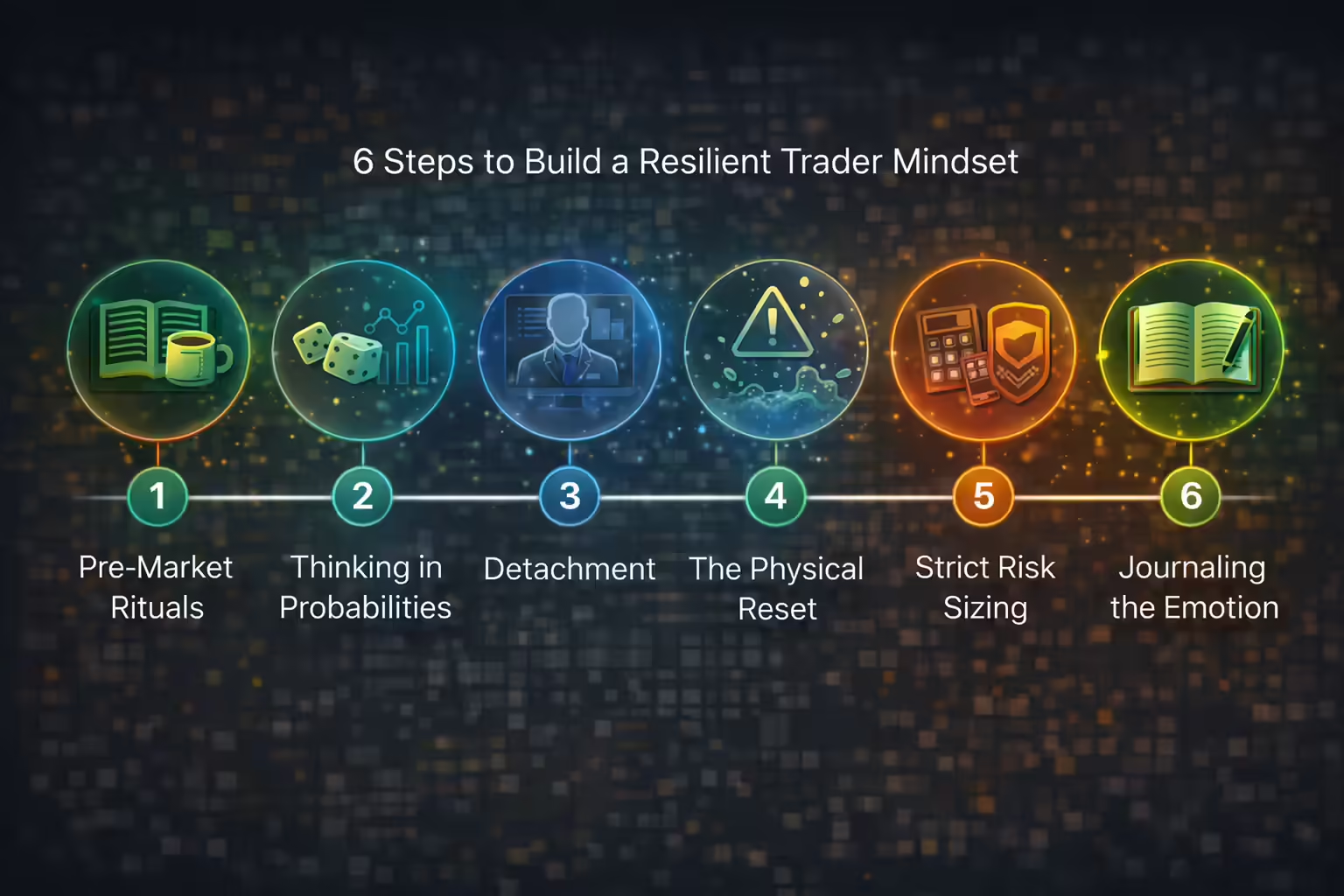
- Write the rules before the session. Account limits, trade limits, and stop rules should be visible before the market opens.
- Review a defined sample of planned setups before judging the strategy; treat 10 or 20 trades as a journaling interval, not proof that the strategy is valid.
- Separate identity from outcome. A losing trade is not proof that you are not a trader. It is one data point.
- Use a reset after losses. Stand up, breathe, walk away from the screen, and return only when the next action is clear.
- Review behavior, not just P&L. Mark whether you followed the plan, not only whether you made money.
- Reduce size when pressure rises. Smaller size gives your brain room to execute.
- Protect eligibility first. Account rules and payout rules matter more than one extra trade.
- Keep learning from the account. The account is feedback. Use it to tighten your process.

How to recover after a blown account
Losing an account is frustrating, but the next decision matters more than the lost account. Do not immediately buy another challenge just to erase the feeling. That usually brings the same behavior into a new account.
Run a simple review first:
- Did the account fail from one oversized day or a slow leak?
- Was the breach caused by strategy, sizing, rule confusion, or emotional trading?
- Which rule would have stopped the damage earlier?
- What will be different before you start again?
If the issue was rule confusion, reread the account rules before restarting. If the issue was behavior, trade smaller in sim until you can follow the same stop and review process without forcing trades.
Funded trader psychology FAQ
Why does psychology shift so much from sim to live?
Sim trading has fewer consequences. A funded account setting adds account rules, outside review, payout expectations, and the possibility of losing access. Those consequences can change how you process the same setup, whether the account is simulated-funded or live-funded.
How do I reduce pressure when trading a funded account?
Lower the importance of any one trade. Use smaller risk, fixed rules, hard stops, and process-based reviews. The goal is to make the next decision boring enough to execute.
Is a consistency rule just a way to stop payouts?
When a firm uses a consistency rule, it usually limits how much of total profit can come from the biggest day before a payout or phase requirement is met. Formulas vary by account, so check the current rule before making a payout request.
How do pros handle drawdowns without spiraling?
They define the response before the drawdown happens. That response can include a pause, lower size, fewer trades, a written review, or stopping for the day.
What is the biggest funded trader psychology mistake?
A particularly damaging mistake is trying to solve emotional pressure with bigger trades. When pressure rises, reduce the decision size and return to the plan.
Final thoughts on funded trader psychology
Funded trader psychology is not about feeling fearless. It is about having rules strong enough to follow when fear, greed, hesitation, or payout pressure shows up.
The trader who survives is usually not the trader with the loudest confidence. It is the trader who knows the account rules, risks small enough to think clearly, stops before tilt takes over, and reviews every session honestly.
.svg)
.svg)
.svg)
.svg)








.webp)