.svg)

.svg)
.svg)



TL;DR: Quadruple witching is the quarterly session when equity index futures, equity index options, single-stock options, and single-stock futures expire together or on closely aligned schedules. It occurs around the third Friday of March, June, September, and December. Expiration-related rolls, exercises, hedge adjustments, and settlement flows can increase trading volume and create fast or uneven price action, but the event does not predict whether the market will rise or fall. Futures traders should confirm the active contract, watch liquidity in both the expiring and next quarterly contract, reduce size when slippage expands, and protect account risk limits instead of treating the date as a trade signal.
Table of Contents
- What quadruple witching means
- When quadruple witching happens
- How expiration affects the market
- Why quadruple witching matters for futures traders
- Build a quadruple-witching execution baseline
- A quadruple witching trading checklist
- A prop-firm risk example
- Quadruple witching questions
The calendar says quadruple witching. Your ES, NQ, MES, or MNQ chart may show heavier volume, sharper rotations, or price action that looks busy without going anywhere.
That is where traders get caught. They see activity and assume direction. They increase size, chase a break, and learn that more orders do not automatically create a cleaner setup.
Quadruple witching is a market-structure event, not a forecast. If you understand what is expiring, where liquidity is moving, and how your contract settles, you can plan the session without turning it into a superstition.
What Quad Witching Means
Quadruple witching is the common name for a quarterly convergence of expirations across four equity-linked derivative families. On or around the same quarterly Friday, traders and institutions may close expiring positions, roll exposure into later contracts, exercise options, receive assignments, or adjust hedges.
Those actions can create a large amount of order flow. Some of it reflects a new market view. Much of it is mechanical position management.
That distinction matters. A burst of buying may come from a hedge adjustment or contract roll rather than fresh bullish conviction. A sell program may reflect an expiring position rather than a new bearish thesis.
The Four Quadruple Witching Contract Families
Contract family | What expires | Why it can affect order flow |
|---|---|---|
Equity index futures | Quarterly futures tied to indexes such as the S&P 500 or Nasdaq-100 | Traders close, roll, or settle positions as the front contract approaches expiration. |
Equity index options | Options tied to a stock index | Exercise, expiration, and dealer hedge adjustments can affect index-related trading. |
Single-stock options | Calls and puts tied to individual stocks | Expiration and assignment can prompt stock transactions and hedge changes. |
Single-stock futures | Futures tied to individual stocks | Expiring contracts can add another source of stock-specific futures and hedge activity. |
Market terminology is not perfectly consistent. Some explainers count options on equity index futures as one of the four, especially during the period when U.S. single-stock futures were absent. Options on futures can add their own quarterly expiration flow, which is another reason to check the exact contract schedule instead of relying only on the event’s nickname.
Why Quadruple and Triple Witching Both Appear
The name needs current context. OneChicago, the U.S. exchange that listed security futures, had its designation vacated by the CFTC in 2020. With no exchange-listed U.S. single-stock futures, the event was literally closer to triple witching even though traders kept using the older quadruple-witching label.
That changed in 2026. The CFTC certified CME single-stock futures, and CME scheduled standard and micro contracts for trading beginning in July. The literal fourth contract family returned to U.S. exchange trading, although its market impact still depends on actual participation and liquidity.
The practical lesson is simple: do not count labels. Check the products you trade and the expiration schedule that applies to them.
When Quadruple Witching Happens
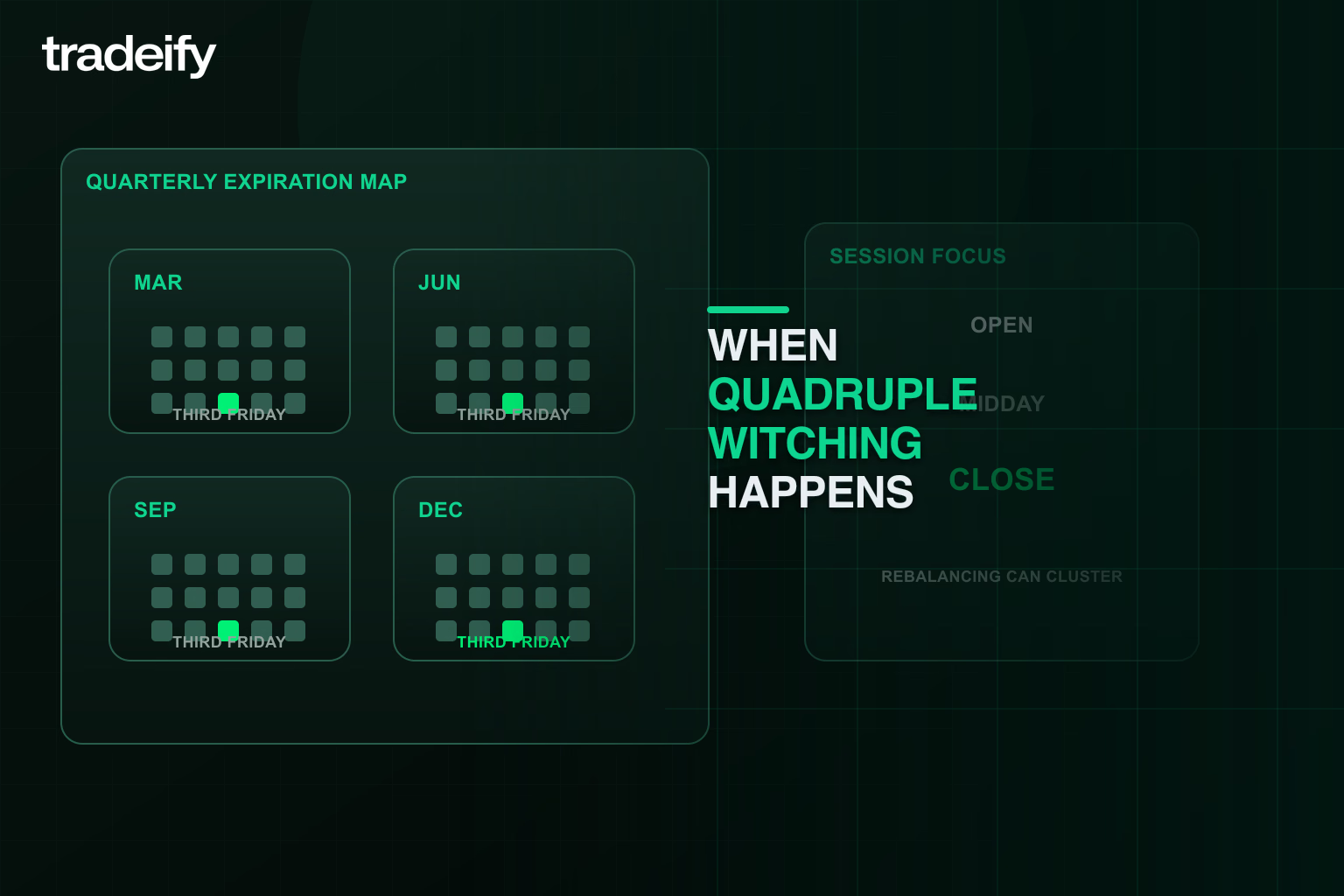
Quadruple witching is associated with the third Friday of March, June, September, and December. These are the quarterly expiration months for major U.S. equity index futures.
The event is often described as a one-day or final-hour phenomenon. That framing is too narrow for a futures trader.
Position management can begin earlier in expiration week. CME identifies the customary equity index roll date as the Monday before the third Friday. After that point, the next quarterly contract commonly becomes the lead month because liquidity shifts away from the expiring contract. Traders can verify the transition on CME Group’s equity index roll calendar.
Expiration effects can therefore appear in phases:
- Traders begin moving from the expiring contract to the next quarterly contract.
- Volume and open interest shift between contract months.
- Expiring futures and options approach their product-specific trading cutoffs and settlement procedures.
- Remaining positions are closed, exercised, assigned, or settled under the applicable contract rules.
The session may feel most active around an opening auction, a settlement calculation, or the cash close, depending on the product. “Witching hour” is useful shorthand, but it is not a universal sixty-minute rule.
How Quadruple Witching Affects the Market
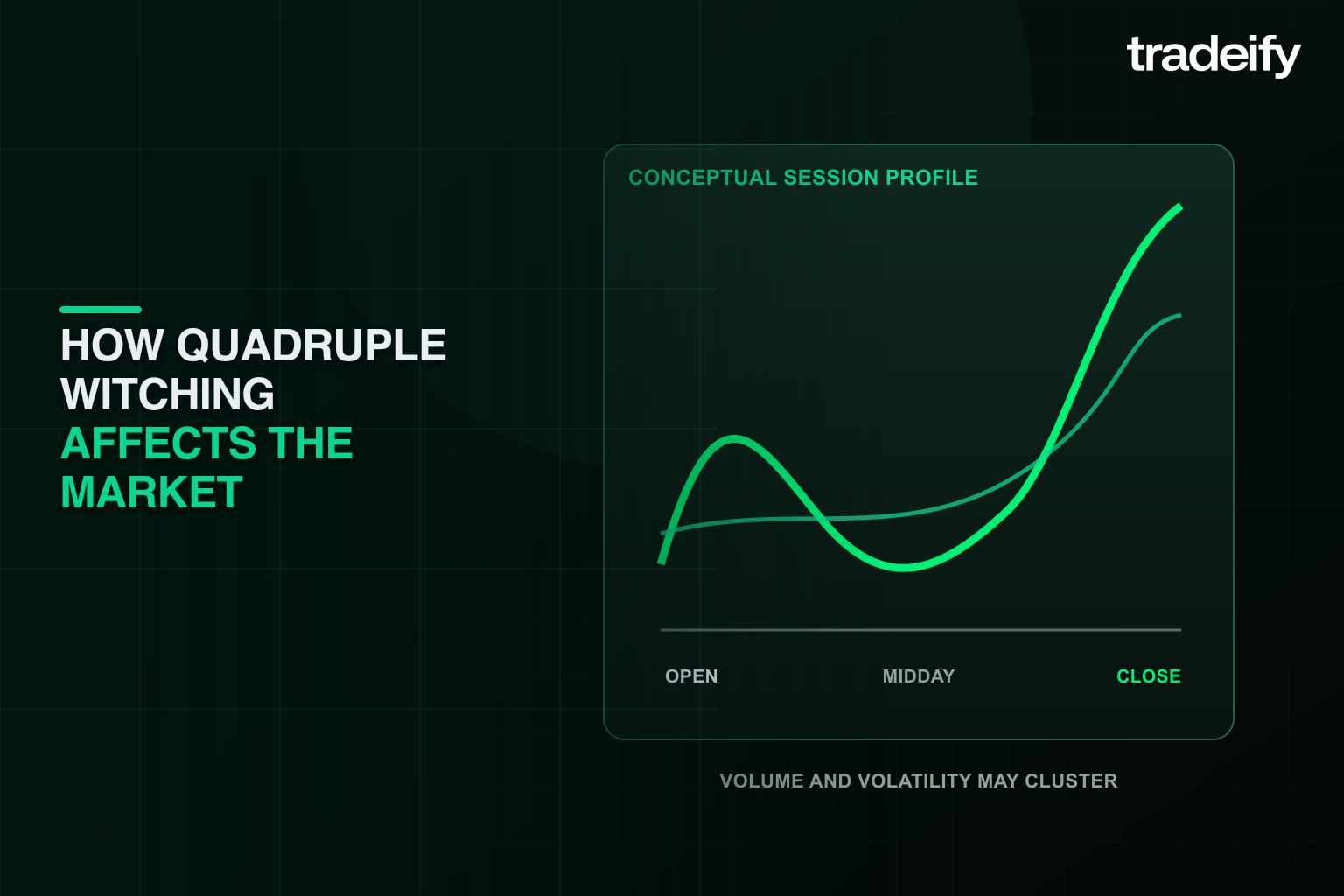
Quadruple witching matters because several mechanical flows can arrive in the same session. Understanding those flows is more useful than trying to predict a dramatic move.
Futures Traders Roll Expiring Contracts
A futures contract has a limited life. A trader who wants to keep the same market exposure must close the expiring contract and open a later contract, often through a calendar spread.
The two contract months can trade at different prices. That difference is normal and reflects the futures curve, not a free profit or a chart error. It also means a trader should not splice two contract months together mentally and assume every apparent gap is a tradable market move.
Options Expire and Hedges Change
Options that finish in the money may be exercised or cash settled, depending on the contract. Options that expire remove exposure from dealer and customer books. Market makers and other participants may buy or sell related stocks, futures, or options as they reduce or replace hedges.
This can concentrate order flow near heavily traded strikes or settlement windows. It does not mean price must stop at a strike, reverse from it, or move in a specific direction.
Index and Basket Activity Can Increase
Index derivatives connect futures and options to baskets of underlying stocks. When index-related positions expire or settle, firms may trade futures, exchange-traded funds, or stock baskets to keep exposures aligned.
Quarter-end portfolio rebalancing can also occur near the same dates. The resulting activity may be large, but not every order expresses a directional opinion.
Volume Can Rise Without a Clean Trend
Higher volume is the most consistent expectation. Volatility is less reliable.
A liquid market can absorb large two-way flows with limited net movement. Another session may produce wider ranges, faster reversals, or brief liquidity gaps. The mix depends on positioning, market news, settlement mechanics, and how balanced the order flow is.
That is why quadruple witching is not bullish or bearish by itself. It can amplify an existing move, interrupt it, or pass with little drama.
Why Quadruple Witching Matters for Futures Traders
For a prop-firm trader, the biggest risk is not the calendar event itself. It is losing control of execution while the market is processing expiration flow.
The Active Futures Contract Can Change
If you keep trading the expiring symbol after liquidity has migrated, you may see a thinner order book, less representative volume, or different price behavior from the new lead contract.
Before the session:
- Compare volume in the expiring and next quarterly contracts.
- Confirm which contract your platform treats as the active month.
- Check whether your chart is a specific contract or a continuous series.
- Confirm the last trading time and settlement method for the exact product.
Do not assume every futures market follows the equity index roll schedule.
Slippage Can Consume More of Your Risk
Fast order flow can turn a planned stop into a larger realized loss. A market order may fill across several price levels. A limit order may not fill while price moves away.
If your account has a daily loss limit or drawdown threshold, the correct risk number is the amount you can lose after realistic slippage, not the distance between your entry and stop on a static chart.
Busy Price Action Can Trigger Overtrading
Quadruple witching can produce exactly the kind of tape that tempts a trader to act too often. There is always another burst of volume, another failed break, or another fast rotation.
The pressure to make something happen is dangerous under account rules. More trades create more chances to pay spread, commission, and slippage while stacking losses.
Your edge still needs a valid setup. The calendar does not replace one.
Build a quadruple-witching execution baseline
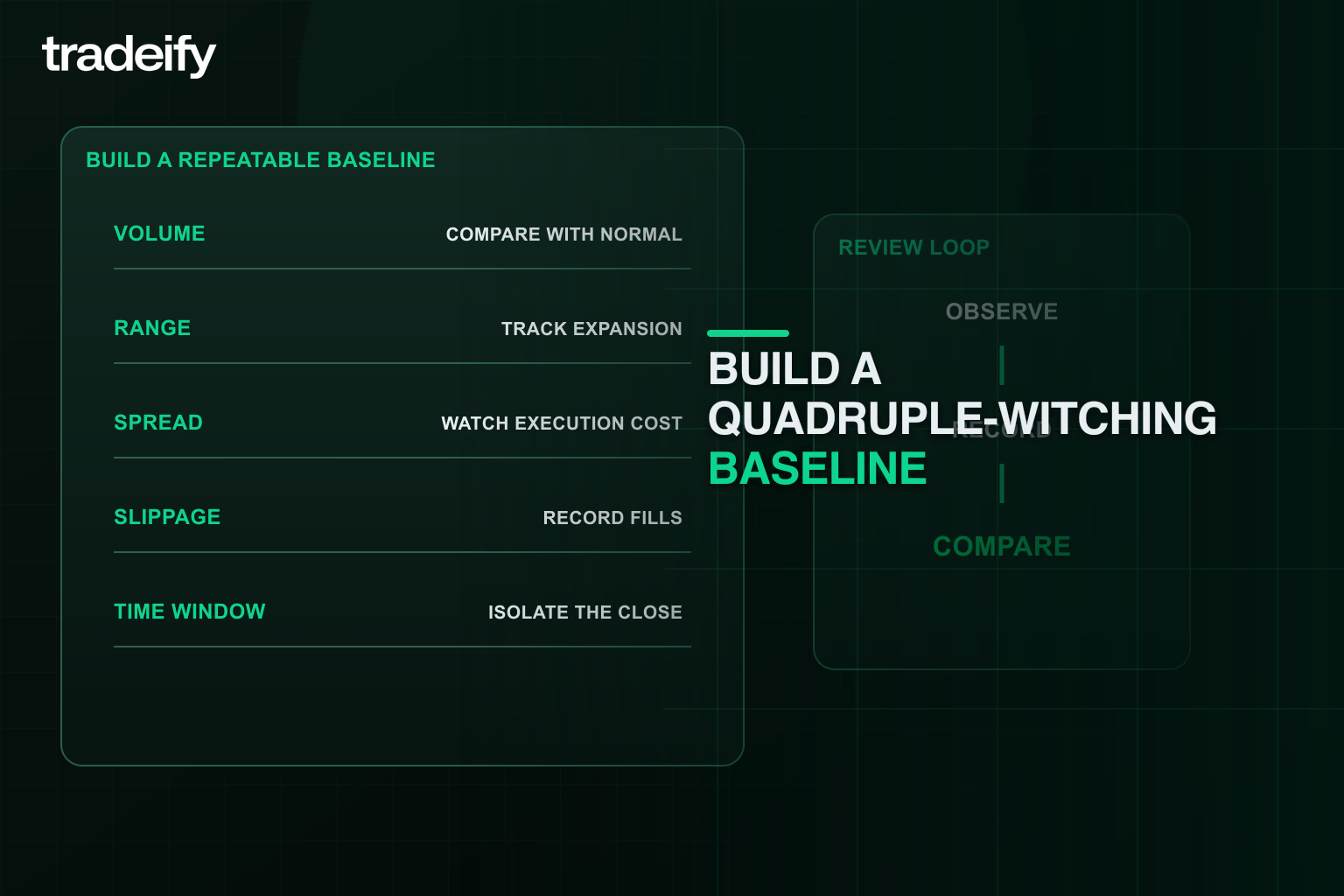
The label can make an ordinary session feel dangerous before the first order trades. Compare the event with your own normal execution instead of assuming that every witching session is unusually volatile.
Start with a baseline from the same contract, session window, order type, and typical position size. Then compare the expiration session with that reference:
Measurement | Normal-session reference | What would justify an adjustment |
|---|---|---|
Bid-ask spread | Typical spread when your setups trigger | The spread is consistently wider, not just one brief quote |
Displayed depth | Normal quantity near the best prices for your trading window | Depth is materially thinner or disappears as orders approach |
Slippage | Expected versus actual fills for the same order type and size | Stops or marketable orders are filling worse than the risk allowance |
Rotation speed | Normal time and distance between intraday swings | Price is reversing faster than the setup can confirm and execute |
Contract migration | Where volume normally sits before and after the roll | Your selected month is losing participation to the next contract |
Use a prewritten response for each break from baseline. Examples include reducing contracts, switching from ES to MES or from NQ to MNQ, requiring a cleaner retest, avoiding a specific window, or ending the session when realized slippage crosses the daily allowance.
Do not compare the entire day with one average. Opening, midday, settlement-related, and closing conditions can behave differently. Match the event observation with the same time window from normal sessions so the comparison is useful.
After the session, separate market conditions from calendar expectations. If execution stayed near normal, record that. If it changed, record when and by how much. Over several quarterly events, the journal can show whether your setup truly needs special witching-day rules or whether the date mostly changes your expectations.
This baseline prevents two opposite errors: trading normal size because the event “usually does nothing,” and cutting every opportunity because the calendar looks dramatic. Let observed execution conditions make the decision.
A Quad Witching Trading Checklist
Use the event as a reason to tighten your process, not loosen it.
Before the Futures Session
- Mark the quarterly expiration and customary roll window on your calendar.
- Verify the lead contract with live volume instead of habit.
- Read the contract specifications for last trade and final settlement.
- Note scheduled economic releases or other news that could mix with expiration flow.
- Set a maximum daily loss and a stop-trading point before volatility picks up.
- Decide whether reduced size or no trade is appropriate.
During Quadruple Witching
- Watch the bid-ask spread and depth before entering.
- Use the smallest position that keeps expected slippage inside your risk plan.
- Avoid chasing a move only because volume surges.
- Recalculate risk if your stop must move farther away to fit market structure.
- Stop trading after the loss level or trade count you set in advance.
- Treat an unfilled limit order as information, not a reason to replace it with an emotional market order.
After the Futures Session
- Separate setup quality from execution quality in your review.
- Record whether slippage, spread, or a contract-month mistake changed the result.
- Check whether you traded the event or traded your plan.
- Carry forward a specific rule, such as reducing size during the next roll window, only if the data supports it.
A Prop-Firm Quadruple Witching Risk Example
Suppose a trader normally takes one or two ES setups during the U.S. session. The account is close enough to its drawdown limit that one badly slipped stop would create real pressure.
On a quadruple-witching session, the trader sees fast rotations and a wider spread around a planned entry. Instead of keeping normal size, the trader switches to MES, defines the maximum acceptable slippage, and limits the session to one qualified setup.
The first entry never fills at the planned price. The trader lets it go.
That decision does not guarantee a profitable day. It does protect the process:
- No chase entry
- No unplanned size increase
- No attempt to win back a missed move
- No account-rule breach caused by a calendar event
This is where discipline shows up. The goal is not to prove you can trade every kind of session. The goal is to keep one unusual session from damaging the account.
Quad Witching Questions
Is Quadruple Witching Bullish or Bearish
Neither. The event describes overlapping expirations, not market direction. Expiration flows can support, oppose, or have little effect on the day’s broader move.
How Long Does Quadruple Witching Last
The named event is tied to the quarterly expiration session, but related futures rolls and hedge changes can begin earlier in the week. The most relevant window depends on the product’s last trade, exercise, auction, and settlement procedures.
Is Quadruple Witching the Same as Triple Witching
The terms overlap. Triple witching usually refers to three concurrent derivative categories. Quadruple witching adds single-stock futures. U.S. traders continued using “quadruple witching” during the period when no U.S. exchange listed single-stock futures, so both names appeared for essentially the same quarterly event. CME’s 2026 single-stock futures launch restored a literal fourth category.
Should Futures Traders Avoid Quadruple Witching
Not automatically. Some traders may find acceptable conditions, while others may choose smaller size or no trade. The decision should come from live liquidity, your tested setup, and the amount of execution risk your account can absorb.
Trade Quadruple Witching With a Process
Quadruple witching can bring heavier volume, contract rollover, hedge adjustments, and uneven execution. It cannot tell you which way the market will move.
Confirm the active contract. Know the settlement rules. Size for slippage. Keep your daily loss limit intact.
If the tape does not fit your setup, wait for a better spot. Protect capital first.
Futures trading involves substantial risk and is not suitable for every trader. This article is educational and does not provide personalized financial advice.
.svg)
.svg)
.svg)
.svg)







.webp)