The financial markets serve as a vast, decentralized mechanism for the continuous processing of information, but more profoundly, they function as a real-time record of collective human psychology. While technical analysis focuses on the historical trajectory of price and fundamental analysis attempts to calculate intrinsic value through economic data, market sentiment analysis provides a lens into the immediate emotional state of market participants. For the day trader operating within a proprietary trading environment such as Tradeify, understanding these emotional undercurrents is not merely a supplementary skill but a foundational requirement for trading high-margin futures markets. Sentiment analysis captures the tone and mood of the market, allowing the observer to identify whether the prevailing trend is supported by conviction or is reaching a point of speculative exhaustion.
How Sentiment Analysis Fits with Technical and Fundamental Trading
In the contemporary trading field, a rigid adherence to a single school of thought often leaves the practitioner vulnerable to market dynamics that fall outside that specific paradigm. The integration of fundamental, technical, and sentiment analysis creates a comprehensive framework for decision-making. Fundamental analysis provides the "why" behind long-term movements, utilizing data such as Gross Domestic Product (GDP), inflation rates, and labor market reports to measure an asset's value. Technical analysis offers the "when," using price charts, candlestick patterns, and historical trends to optimize entry and exit points. Sentiment analysis, however, addresses the "who" and the "how," focusing on the psychological and emotional attitudes of investors that can cause prices to deviate significantly from their perceived fundamental value.
For day traders on platforms like Tradeify, who often trade highly liquid futures contracts such as E-mini S&P 500 (ES) or E-mini Nasdaq 100 (NQ), sentiment acts as a leading indicator of momentum shifts. In these fast-paced environments, price action is frequently driven by sudden surges in optimism (greed) or contractions in confidence (fear). Understanding these shifts allows a trader to align their strategies with the market's mood, thereby increasing the probability of success in evaluation and funded account stages.
Comparative Framework of Market Sentiment Analysis Schools
- Fundamental, Primary Data Source, Economic data, earnings, interest rates; Core Philosophy, Price will eventually align with intrinsic value.; Primary Time Horizon, Long-term investment..
- Technical, Primary Data Source, Historical price charts, volume indicators; Core Philosophy, All known information is reflected in the price.; Primary Time Horizon, Short to medium-term trading..
- Sentiment, Primary Data Source, Options positioning, social chatter, internals; Core Philosophy, Crowds are driven by emotional extremes and irrationality.; Primary Time Horizon, Intraday to short-term..
- Statistical, Primary Data Source, Quantitative models, probability distributions; Core Philosophy, Market moves are probabilistic and follow mathematical laws.; Primary Time Horizon, Variable..
Macro Sentiment Indicators and Global Risk Assessment for Day Traders
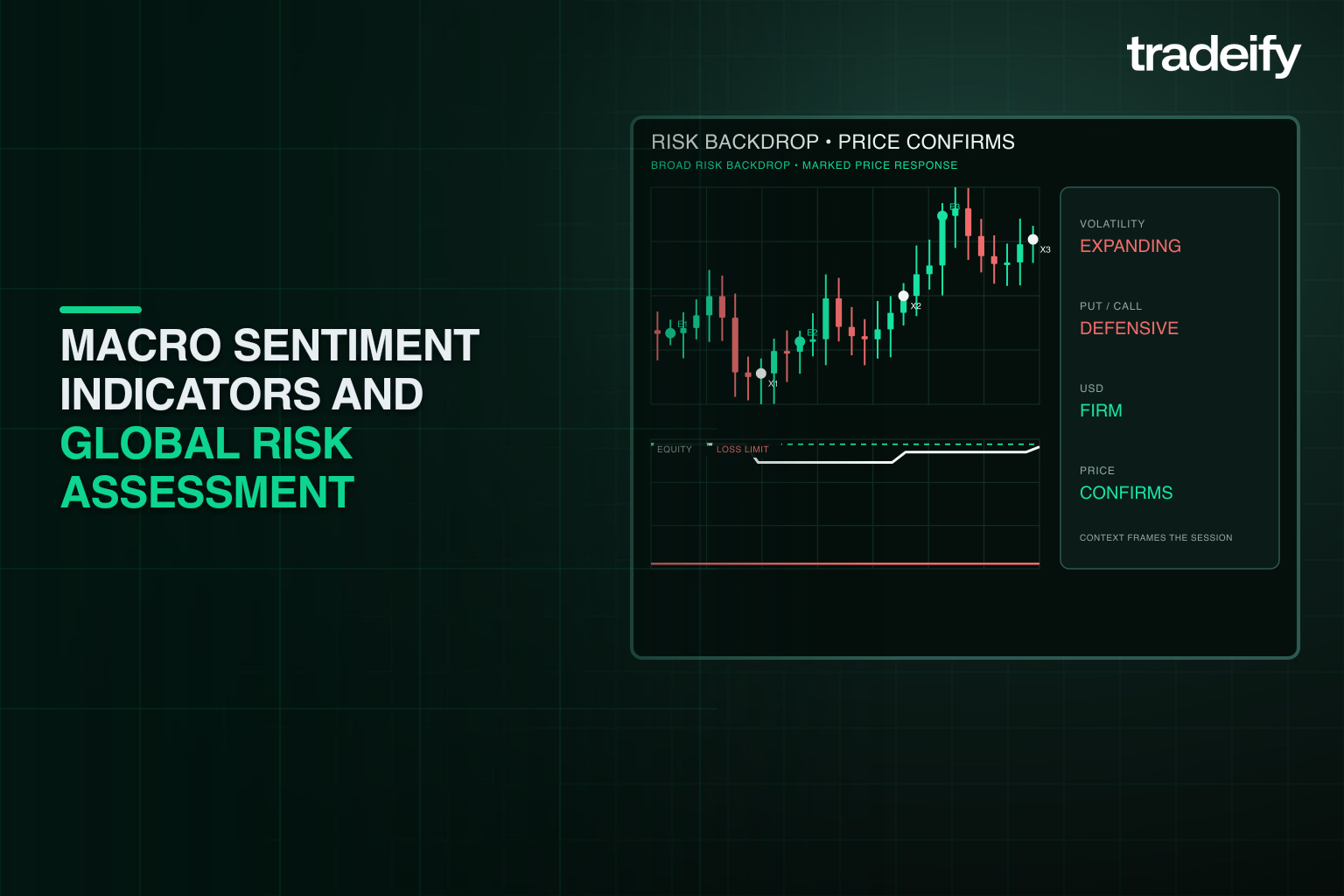
To establish a daily directional bias, the trader must first evaluate the broad macro sentiment. This involves monitoring indicators that aggregate the risk appetite of the entire market. These tools provide a "top-down" view, signaling whether the environment is conducive to aggressive trend-following or if defensive mean-reversion is more appropriate.
The VIX as a Sentiment Fear Gauge
The Market Volatility Index, commonly known as the VIX, serves as the primary "fear gauge" for the financial markets. It measures the expected market volatility over the next 30 days based on the pricing of S&P 500 index options. High VIX readings indicate that investors are paying a premium for downside protection, suggesting a high degree of fear or uncertainty. Conversely, a low VIX reflects a calm market and strong investor confidence.
The utility of the VIX for a futures trader lies in its inverse relationship with the equity markets. A sudden spike in the VIX often precedes or accompanies a sharp decline in index futures. Traders often monitor the VIX's relationship with its moving averages; for example, if the VIX is stretched 5% or more above its 10-day moving average for several days, the market may be reaching an extreme of fear that often precedes a bullish reversal.
The Put/Call Ratio and Contrarian Sentiment Extremes
The Put/Call Ratio is a direct measurement of market positioning, comparing the volume of put options (bearish bets or hedges) against call options (bullish bets). This ratio serves as a powerful sentiment indicator because it reflects what market participants are actually doing with their capital rather than what they are saying in surveys.
When the Put/Call Ratio is elevated, it indicates bearish sentiment as traders favor protection or speculative shorts. When the ratio is low, bullish sentiment prevails. However, for the sophisticated day trader, this indicator is most effective when used as a contrarian tool. At extreme highs, the Put/Call Ratio often signals that the majority of bearish participants are already positioned, suggesting that selling pressure may be exhausted and a market bottom is near.
The Fear & Greed Index for Day Trader Sentiment
Aggregating several market factors into a single score from 0 to 100, the Fear & Greed Index provides a simplified view of broader market psychology.
- Extreme Fear (0-25): Indicates panic selling and potential buying opportunities.
- Extreme Greed (75-100): Suggests that the market is becoming overbought and may be due for a correction.
For a Tradeify trader, these macro indicators are essential for determining the "market regime". Entering any Tradeify account, regardless of size or plan type, requires an understanding of whether the day's price action is likely to be a high-volatility expansion or a low-volatility rotation, as this influences position sizing and drawdown management.

Institutional Sentiment via the Commitment of Traders Report
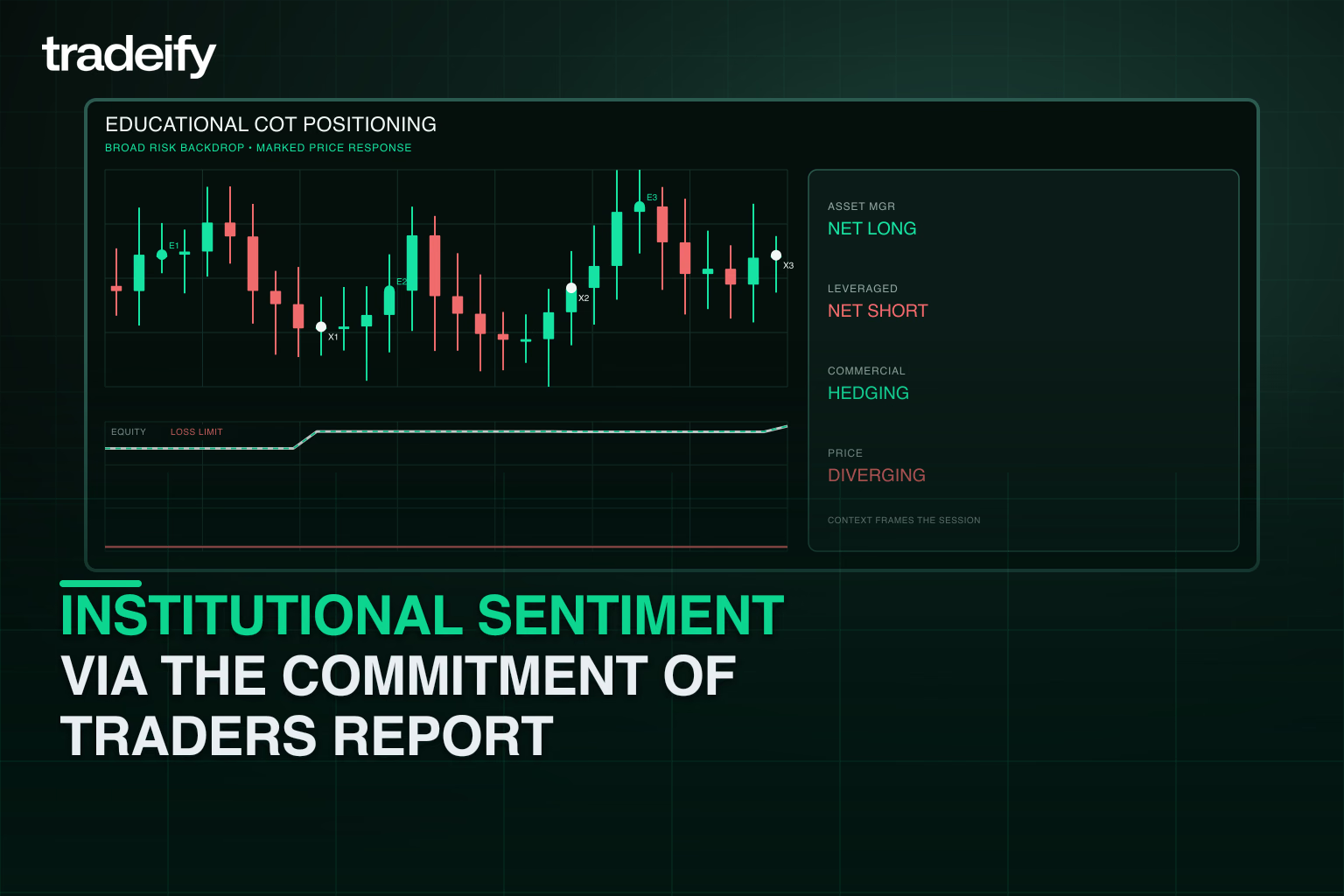
While intraday indicators are vital for execution, understanding the positioning of large institutions provides the necessary context for sustainable trends. The Commitment of Traders (COT) report, published weekly by the Commodity Futures Trading Commission (CFTC), offers rare insight into the positions held by the "Smart Money".
How the COT Report Classifies Sentiment by Player Type
The COT report categorizes open interest into distinct groups, allowing retail traders to see where hedge funds and commercial hedgers are placing their bets.
- Commercial Traders, Characteristics and Motivations, Producers and merchants (e.g., oil refiners, grain millers) hedging against price risk.; Sentiment Role, "Smart Money" that often trades against the trend; their extremes signal cycle tops or bottoms..
- Non-Commercial Traders, Characteristics and Motivations, Large speculators (hedge funds, asset managers) trading for profit.; Sentiment Role, Trend-followers; their net positioning often confirms the strength of a prevailing move..
- Non-Reportable Positions, Characteristics and Motivations, Small speculators and retail traders whose positions are not large enough to require individual reporting.; Sentiment Role, Often poorly positioned at major market turning points; can be used as a contrarian signal..
Translating Weekly COT Sentiment Data into Daily Bias
Because the COT report is based on data from each Tuesday and released on Friday, it is not a tool for precision timing. Instead, it is used to build a "weekly narrative". If the COT shows that large speculators are at an extreme net-long position in E-mini Nasdaq futures, a day trader may look for intraday bullish setups with higher conviction.
Strategic application involves watching for crossovers and extremes. If commercial hedgers and large speculators disagree sharply on direction, significant price movements often follow as the imbalance resolves. Combining COT data with technical tools like the Relative Strength Index (RSI) on a daily chart helps identify where price is diverging from institutional positioning, signaling an approaching trend change.
Intraday Market Internals and Real-Time Sentiment
For the day trader, the most actionable sentiment information is found in market internals. These indices measure the "breadth" of the market, showing whether a price move in an index is supported by the majority of its constituent stocks or is merely a result of a few large-cap movers.
The $TICK Index as a Sentiment Pressure Gauge
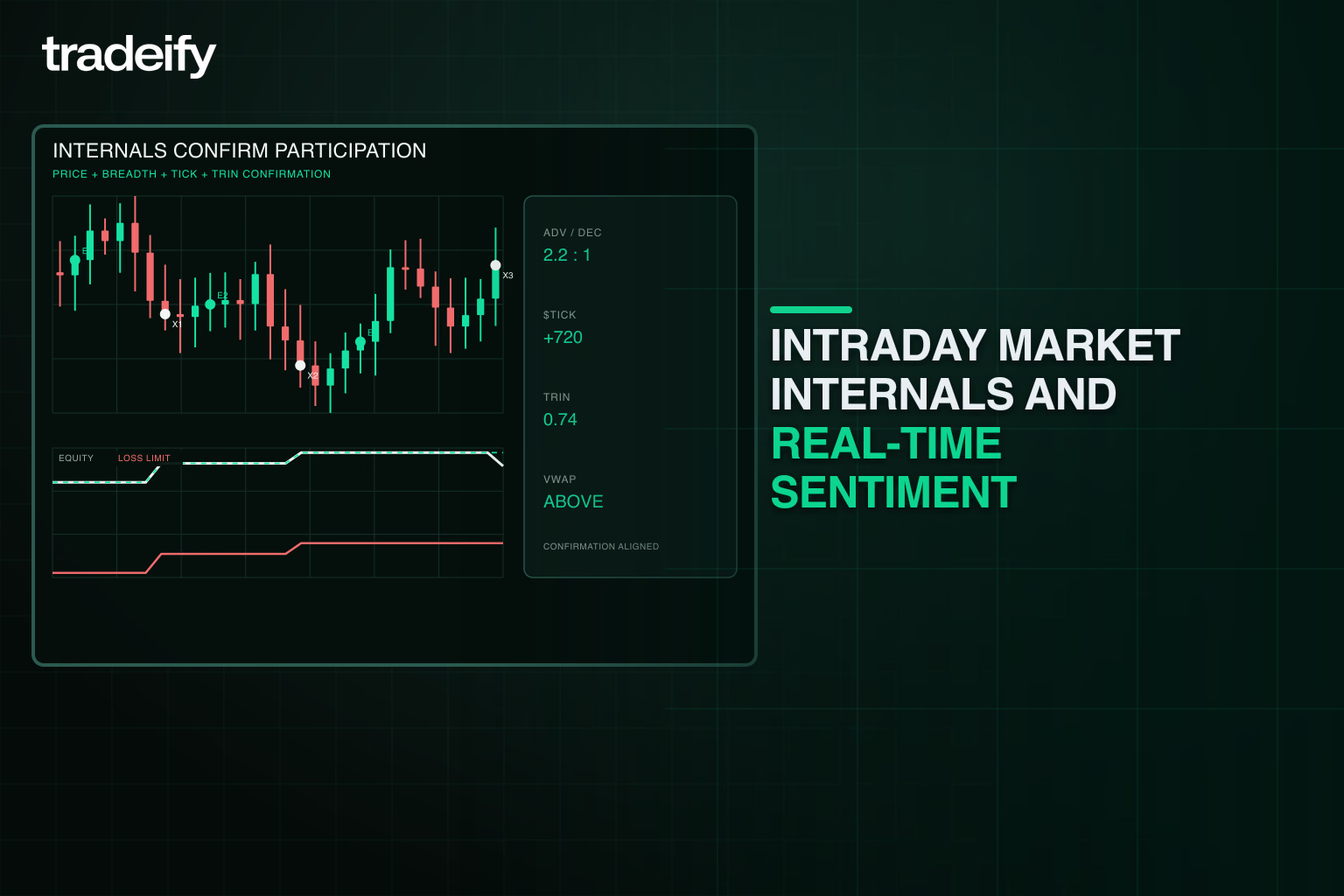
The $TICK index measures the number of stocks trading on an uptick minus those trading on a downtick on the New York Stock Exchange (NYSE). It provides an instantaneous reading of buying and selling pressure.
- High Positive TICK (+600 to +1000): Indicates broad buying interest; readings over +1000 often suggest an overbought extreme where a short-term pullback is likely.
- High Negative TICK (-600 to -1000): Indicates broad selling pressure; readings under -1000 often suggest a short-term oversold condition.
Traders use $TICK to identify "divergence". For example, if the S&P 500 futures reach a new high but the $TICK fails to reach a new high, it indicates that the rally is losing broad-market support. This is a critical insight for a Tradeify trader attempting to avoid false breakouts in a $50,000 Select account.
The TRIN (ARMS Index) and Volume Breadth Sentiment
The TRIN (Trader's Index) calculates the relationship between advancing and declining issues and their respective volume.
- TRIN < 1.0: Bullish; more volume is flowing into stocks that are rising in price.
- TRIN > 1.0: Bearish; volume is concentrated in declining stocks.
By observing the $TICK and $TRIN together, a trader can determine if the market is in a "trend day" or a "range day". On a trend day, the $TICK will remain consistently above or below zero, while the $TRIN will hold an extreme reading (e.g., below 0.8 for a bullish trend).

Structural Sentiment via VWAP and Market Profile
Sentiment is also embedded in the structural development of price throughout a session. Volume-Weighted Average Price (VWAP) and Market Profile are tools rooted in Auction Market Theory, which views the market as a mechanism to find the price level that facilitates the most trading activity.
VWAP and Institutional Fair Value Sentiment
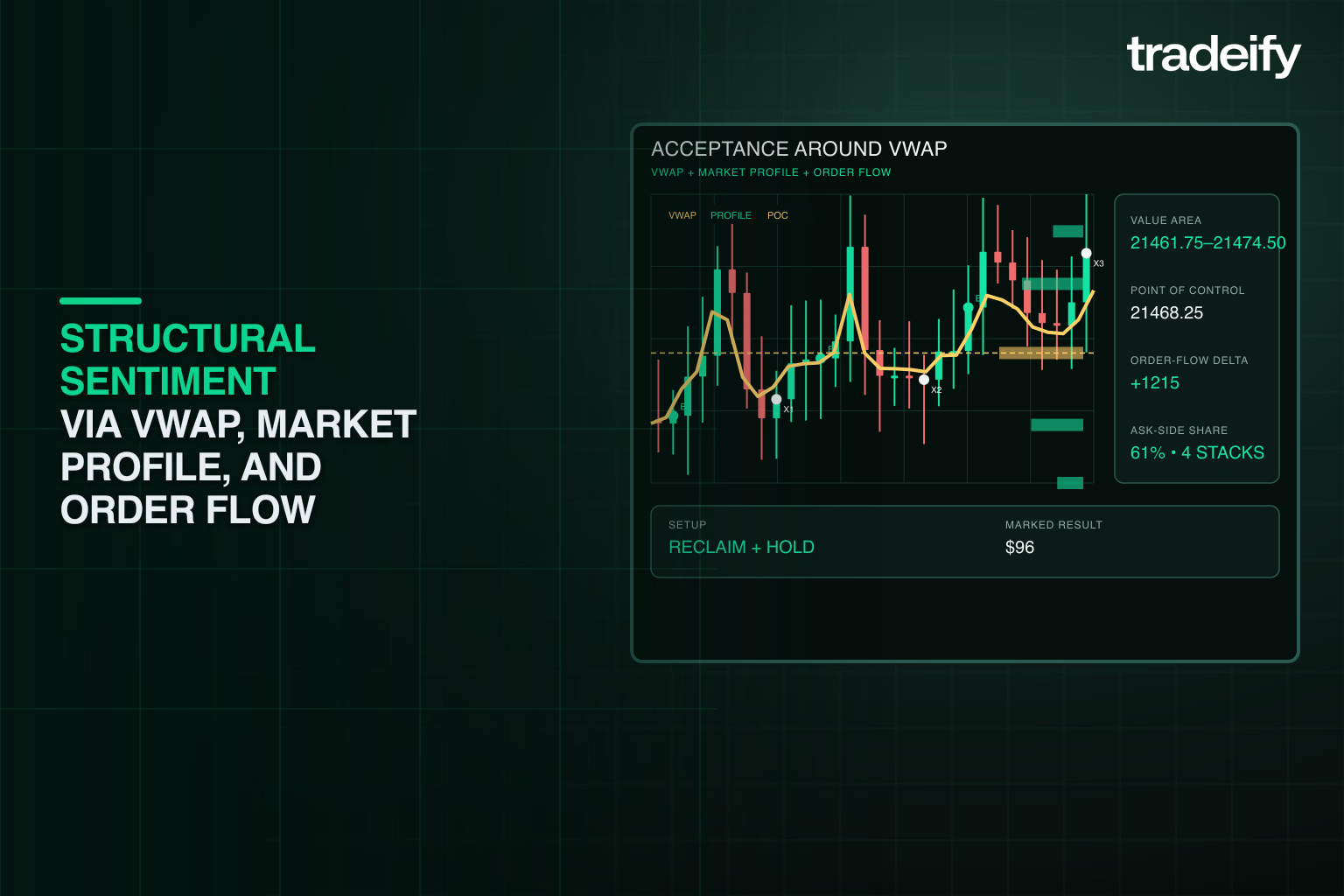
VWAP is the average price at which a security has traded throughout the day, weighted by volume. Unlike simple moving averages, it gives more importance to price levels where more volume occurred, making it a highly accurate representation of "fair value" for the session.
- Price Above VWAP: Bullish sentiment; the market is willing to pay more than the average session price.
- Price Below VWAP: Bearish sentiment.
Large institutional traders use VWAP as a benchmark for execution quality. Consequently, when price pulls back to the VWAP line during a trend, it often encounters institutional support or resistance as they adjust their positions to maintain their session averages. For the day trader, entries near VWAP offer a higher reward-to-risk ratio than "chasing" price at session extremes.
Market Profile and Visualizing Sentiment Value Areas
Market Profile organizes price data into a distribution that reveals where the market "accepted" or "rejected" price over time.
- Value Area (VA): The price range where 70% of the session's volume occurred.
- Point of Control (POC): The price level with the single highest amount of trading activity.
The location of the POC within the Value Area serves as a sentiment indicator. A POC positioned near the upper end of the VA suggests bullish sentiment, while a POC near the lower end indicates bearish pressure. Traders also watch for "single prints" or gaps in the profile, which represent areas of high conviction where the market moved too quickly to establish value, often acting as support or resistance on a retest.
Gamma Exposure and How It Drives Day Trading Sentiment
In modern markets, the positioning of options dealers has a profound impact on futures price action. Gamma Exposure (GEX) is a metric that estimates the net hedging requirements of market makers as price moves. This mechanical hedging often creates "gravity" or "acceleration" zones that can overshadow other sentiment indicators.
Positive vs. Negative Gamma Sentiment Regimes
The market behaves in fundamentally different ways depending on whether the net gamma is positive or negative.
- Positive Gamma, Dealer Behavior, Dealers buy weakness and sell strength to maintain delta neutrality.; Impact on Volatility, Volatility is dampened.; Market "Feel", Mean-reverting, range-bound, "stable"..
- Negative Gamma, Dealer Behavior, Dealers must sell into weakness and buy into strength to re-hedge.; Impact on Volatility, Volatility is amplified.; Market "Feel", Directional, explosive, "fragile"..
The Gamma Flip and Sentiment Price Walls
The "Gamma Flip" or "Zero Gamma" level is the inflection point where the market transitions between these two regimes.
- Above Zero Gamma: Dips are often bought as dealer hedging absorbs selling pressure.
- Below Zero Gamma: Price moves can become parabolic as dealer hedging reinforces the direction of the move.
"Call Walls" and "Put Walls" represent strikes with heavy gamma concentration that act as structural magnets or barriers. For a futures trader, identifying these levels provides a "map" of where price is likely to stall (a wall) or where it might accelerate into a "volatility expansion" zone.
Order Flow Sentiment Analysis in Real Time
While indicators like the VIX or COT provide the "broad weather report," order flow analysis provides a tick-by-tick view of the "rain." This involves observing executed trades (the tape) and the depth of the order book (the DOM) to see who is truly in control of the price.
Footprint Charts and Cumulative Delta Sentiment
Footprint charts decompose each price bar into volume traded at the bid versus the ask, revealing the "aggressiveness" of buyers and sellers.
- Aggressive Participation: When buyers are willing to "hit the ask" or sellers "hit the bid" to enter a position immediately.
- Cumulative Delta: The running total of the difference between bid and ask volume.
If the price is rising but Cumulative Delta is falling, it indicates "exhaustion" or "absorption" (where passive sellers are absorbing the aggressive buying), often leading to a reversal. This granular sentiment is invaluable for scalpers on the Tradeify platform who must manage tight stop-losses.
The Depth of Market (DOM) and Sentiment Shifts
The DOM shows the limit orders waiting at each price level. Sentiment is revealed by how quickly these orders are filled or cancelled (spoofing) as price approaches. A sudden "thinning" of the DOM above price, combined with aggressive buying on the footprint, signals a sentiment shift that can lead to rapid price expansion.
Social Media Sentiment and the Behavioral "Crowd"
In the digital era, the emotional state of the retail "crowd" is expressed through platforms like Stocktwits, Reddit, and X. While often noisy, these platforms can provide a complementary source of real-time sentiment, particularly when they reach extreme levels.
Tracking Social Media Sentiment "Buzz"
Quantitative tools and scrapers can track the volume and sentiment score of posts related to specific symbols.
- Bullish/Bearish Tagging: Stocktwits allows users to self-label posts, providing a direct sentiment reading.
- Trending Tickers: High "chatter" volume often precedes increased volatility as a symbol gains social attention.
The most effective use of social sentiment is identifying "Sentiment Divergence" (where price continues to rise but social media bullishness is declining, or vice-versa). This often precedes a trend reversal as the "hype" that fueled the move begins to fade.
How to Use Sentiment Analysis within Tradeify Rule Sets
Successfully operating within a Tradeify funded account requires more than just identifying sentiment; it requires executing within a specific regulatory framework designed to foster long-term professional success.
Drawdown Management and Sentiment-Based Consistency Rules
Tradeify's End-of-Day (EOD) trailing drawdown is a trader-friendly mechanic that recalculates only at the close of the market. This provides the intraday flexibility to hold through sentiment-driven pullbacks, provided the trader remains within their maximum loss limits. Where daily loss limits apply, they function as soft locks, hitting one ends the trading session for the day but does not fail the account, and the trader can resume at the start of the next session.
- Consistency Rule: In the Select Evaluation, no single day's profit should exceed 40% of total accumulated profits. The rule applies during the evaluation stage only, there is no consistency requirement once the Select account becomes funded. Sentiment analysis helps maintain this consistency by preventing "revenge trading" after a loss or "gambling" for a single large windfall during an emotional market extreme.
Microscalping and Sentiment-Based Holding Requirements
To ensure that trading strategies are replicable for institutional copying, Tradeify requires that more than 50% of account profits come from positions held for longer than 10 seconds. Sentiment tools like Market Profile and the COT report naturally align with this requirement, as they help the trader identify "higher-timeframe" moves that persist beyond the noise of high-frequency fluctuations.
Tradeify Account Tier Comparison for Sentiment Traders
- Daily Loss Limit, Select Evaluation, None during evaluation; soft DLL applies once funded ($1,000 for 50K; $1,250 for 100K; $1,750 for 150K).; Growth Evaluation, Soft DLL ($1,250 for 50K; $2,500 for 100K; $3,750 for 150K).; Lightning Funded, Soft DLL ($1,250 for 50K; $2,500 for 100K; $3,750 for 150K)..
- Consistency Rule, Select Evaluation, 40% in eval; none once funded.; Growth Evaluation, None in eval; 35% once funded.; Lightning Funded, 20%/25%/30% (escalating per payout)..
- Drawdown Type, Select Evaluation, EOD Trailing.; Growth Evaluation, EOD Trailing.; Lightning Funded, EOD Trailing..
- Activation Fee, Select Evaluation, None.; Growth Evaluation, None.; Lightning Funded, None..
- Payout Policy, Select Evaluation, Daily or Flex (5-day), permanent choice after passing.; Growth Evaluation, 5 winning days.; Lightning Funded, 5-day payouts; profit goals reset each payout..
Behavioral Finance and Common Sentiment Analysis Mistakes
Even with the best tools, a trader's own psychology can be their greatest adversary. Recognizing common behavioral biases is the final step in mastering sentiment analysis.
The Trap of Loss Aversion and Hope for Day Traders
Loss aversion is the tendency for humans to feel the pain of a loss more intensely than the joy of an equivalent gain. This leads many amateur traders to "hold and hope" in a losing trade, believing that the sentiment must turn back in their favor. In a prop firm environment, this stubbornness is the leading cause of account liquidation. A professional trader accepts that sentiment is fluid; if a structural level like VWAP or a Gamma Wall is breached, the "story" of the trade has changed, and they must exit regardless of their emotional bias.
Hindsight Bias and the Gambler's Fallacy in Sentiment Trading
Hindsight bias is the tendency to see past market moves as more predictable than they actually were. This creates overconfidence, leading traders to take larger risks on future setups that "look" similar. Similarly, the "Gambler's Fallacy" is the belief that a string of losses makes a win "due". In the futures market, every tick is an independent event; sentiment can remain extreme for much longer than a trader's capital can sustain a counter-trend position.
Overtrading and Emotional Fatigue from Misreading Sentiment
The desire to be "productive" often leads to overtrading, which increases transaction costs and emotional fatigue. Effective sentiment analysis should act as a filter, not just a signal generator. A trader might analyze the market and determine that sentiment is "choppy" or "unclear," which is an objective signal to stay on the sidelines.
Synthesizing Sentiment Analysis for Consistent Day Trading Profitability
Market sentiment analysis is the art and science of measuring the market's pulse. For the day trader at Tradeify, it provides the necessary context to handle the complexities of futures markets with confidence. By combining macro indicators like the VIX and Put/Call ratio with institutional data from the COT report and real-time internals like the $TICK and VWAP, a trader can develop a comprehensive understanding of the forces driving price action.
The path to funded status and consistent payouts is not found in a "magic" indicator, but in the disciplined integration of these techniques within a robust risk management framework. Understanding the "regime" (whether the market is in a stabilizing Positive Gamma or an amplifying Negative Gamma environment) allows for the adjustment of position sizes and strategy selection. Furthermore, by recognizing their own behavioral biases, such as loss aversion and hindsight bias, traders can maintain the objectivity required to survive and thrive in the long run.
Ultimately, sentiment analysis allows the trader to step outside the crowd and view the market as an ongoing auction between fear and greed. In this environment, the trader who can read the emotional tape and align their execution with institutional value is the one who will achieve long-term success in the professional trading world. Tradeify provides the capital and the platform; sentiment analysis provides the insight to turn that opportunity into a sustainable career.
Disclaimer: The materials and content provided by Tradeify Holdings, Corp. (“Tradeify”), whether on our website, through distributed documents, or other communications, including this blog post (“Article”), are intended solely for educational and general informational purposes. This Article should not be viewed as an offer or solicitation to buy or sell futures, futures-related products/derivatives, or any futures products of any kind, or otherwise constitute any type of trading or investment advice, recommendation or strategy, or an endorsement of any financial instruments, companies, or funds.
Engaging in futures and other financial trading involves significant risk and is not appropriate for all readers. Certain investment products (e.g., securities futures, forex futures, and virtual currency derivatives and products) present heightened risks which are described in the Risk Disclosure section of the Tradeify website. It is possible to lose the entire amount of your investment, or even more. Only use risk capital—money you can afford to lose without impacting your financial security or lifestyle. Trading should only be undertaken by individuals who have the necessary risk capital and fully understand the risks involved. Past trading results do not guarantee future performance. Tradeify does not warrant the accuracy or completeness of the information provided and is not responsible for any losses or damages resulting from reliance on this information.
Readers are encouraged to do their own research and consult with a qualified financial adviser before making any financial decisions. This Article does not consider your personal financial situation, risk tolerance, or investment goals.
The authors’ (together with guest writers, analysts, and/or other contributors, collectively “Contributors”) views expressed in the Article are based on information the authors and Contributors believe to be accurate at the time of publication but are not guaranteed to be complete or up to date. The authors of this Article may be employees of Tradeify and receive compensation as such. In addition, the authors and/or Contributors may receive compensation (including, for example, referral fees) for soliciting and/or referring individuals to open accounts with Tradeify, both through this Article, as well as through outside activities. Because any testimonials or endorsements herein may be provided by individuals who have or may receive compensation, there is potential for bias in their statements. Such statements may not be representative of the experience of other clients and are not indicative of, or a guarantee of, future performance or success. No representation is being made that any Tradeify account will or is likely to achieve profits or losses similar to those discussed herein.
Get up to $750k instant sim funding
- Start earning payouts instantly
- Super fast automated payouts
- Free journal to improve


.webp)