.svg)

.svg)
.svg)




TL;DR: Prop firm risk management starts with the amount between your current equity and the account's hard drawdown floor, not the advertised account size. Define one unit of risk, size every position from the stop, cap the trading day at two or three losses, count correlated positions as one combined idea, and reduce size when the remaining drawdown shrinks. Treat the firm's daily loss and drawdown limits as emergency boundaries rather than targets. Your personal limits should sit well inside them so one bad session does not end the account.
Table of contents
- Why risk management is different at a prop firm
- Know the prop firm rules before you trade
- Build risk management around usable drawdown
- Set risk for every prop firm trade
- Control daily risk before the firm does
- Manage risk across correlated trades
- Cut prop firm risk after losses
- Use a Tradeify risk management example
- Avoid common prop firm risk mistakes
- Follow a prop firm risk checklist
- Prop firm risk management questions
Most prop firm accounts are not lost because a trader never finds a valid setup. They are lost when one routine loss turns into three, size increases to make the money back, or a trader discovers too late that the firm's drawdown works differently than expected.
The mistake is not always the first losing trade. It is what happens next.
Good risk management gives you a decision process before the pressure arrives. You know how much you can lose, where you must stop, and when your size needs to come down. That protects the account and gives your edge enough trades to show up.
Why risk management is different at a prop firm
A personal trading account and a prop firm account can show the same starting balance while carrying very different risk.
If a prop firm dashboard says $100,000, that does not mean you have $100,000 available to lose. Your real room may be a few thousand dollars between the current equity and the maximum drawdown floor. That smaller number is the risk budget that matters.
Prop firm traders also have to manage several rule layers at once:
- Maximum or trailing drawdown
- Daily loss limits
- Profit targets
- Consistency requirements
- Contract limits
- Permitted trading times
- News and position-holding rules
A strategy can be profitable over a large sample and still be a poor fit for an account with a tight trailing drawdown. A normal losing streak may break the account before the strategy has time to recover.
Your risk plan must fit both your trading method and the firm's rules.
Know the prop firm rules before you trade
Read the rules for the exact evaluation or funded account you own. Do not assume that a rule from another plan, firm, or older account still applies.
Start with these questions:
- What balance or equity figure controls the drawdown?
- Does the drawdown update intraday or at the end of the day?
- Is the limit enforced in real time?
- Does the drawdown eventually lock at a fixed level?
- Is the daily loss limit a soft pause or a hard failure?
- When does the trading day reset?
- Are open profits included in the drawdown calculation?
- Are there consistency, scaling, news, or holding restrictions?
The wording matters. An end-of-day trailing drawdown may update only after the session closes but still be enforced against your account in real time. A daily loss limit may pause trading without failing the account, while the maximum drawdown may end the account immediately.
If you cannot explain each limit in one sentence, slow down and read the current rule page again.
Build risk management around usable drawdown
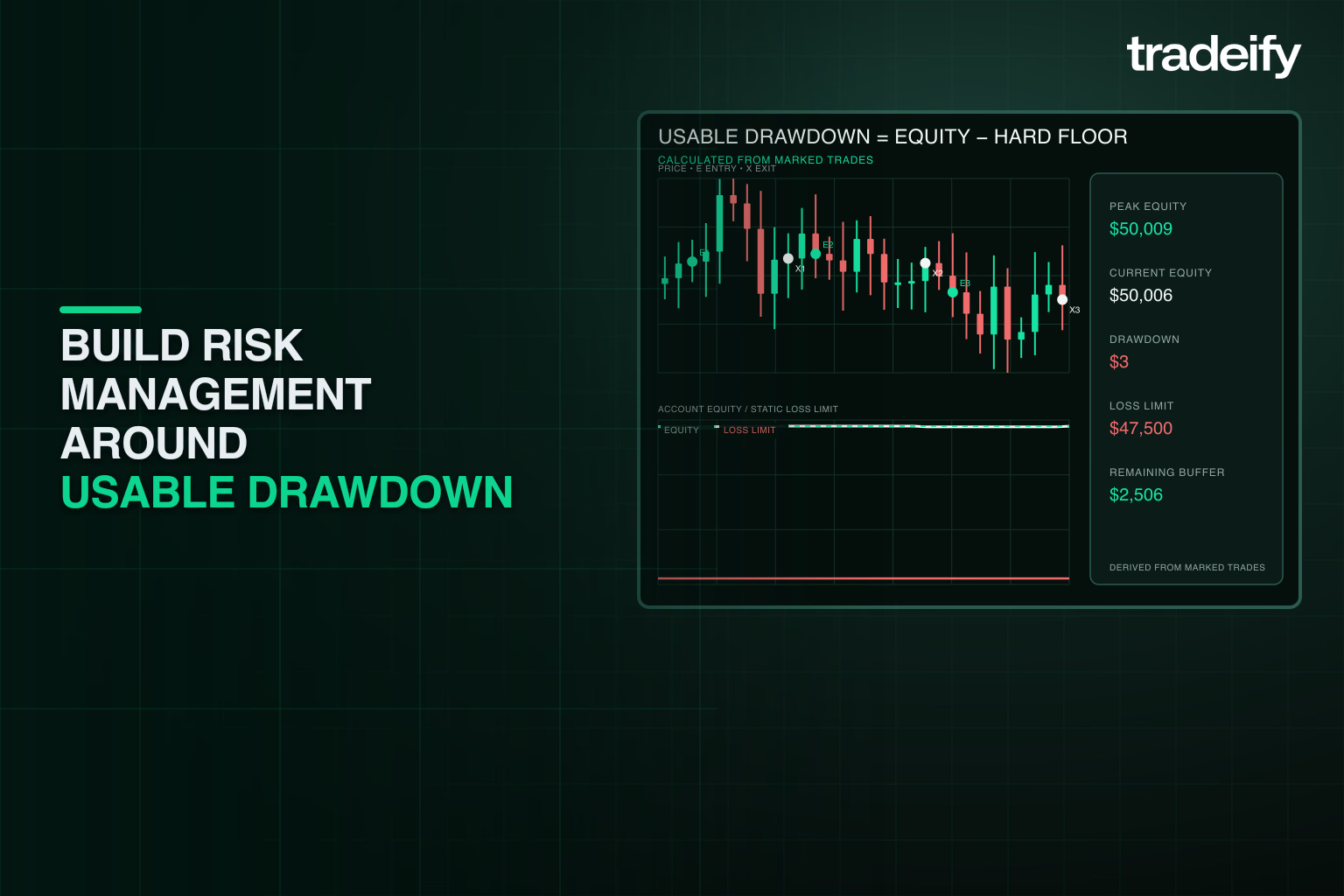
The advertised account balance is a label. Usable drawdown is your working capital.
Use this simple calculation before the session:
Usable drawdown = current account equity − current hard drawdown floor
Suppose an account has $102,000 in equity and a hard drawdown floor at $99,500. The usable drawdown is $2,500. Position size should be based on that $2,500 cushion, not the $102,000 headline balance.
Now define one unit of risk, often called 1R. One practical method is to choose a small fraction of usable drawdown for 1R. The right fraction depends on your strategy's win rate, normal losing streak, trade frequency, and slippage.
For example, setting 1R at 5% of a $2,500 usable drawdown creates a $125 risk limit per trade. Twenty full 1R losses would consume the cushion before fees and slippage. That is not a target or a promise of survival. It is a way to see whether your size gives the strategy enough room.
Run the same test against your own trade history. If your strategy has produced eight consecutive losses before, a plan that can survive only six is too aggressive.
Set risk for every prop firm trade
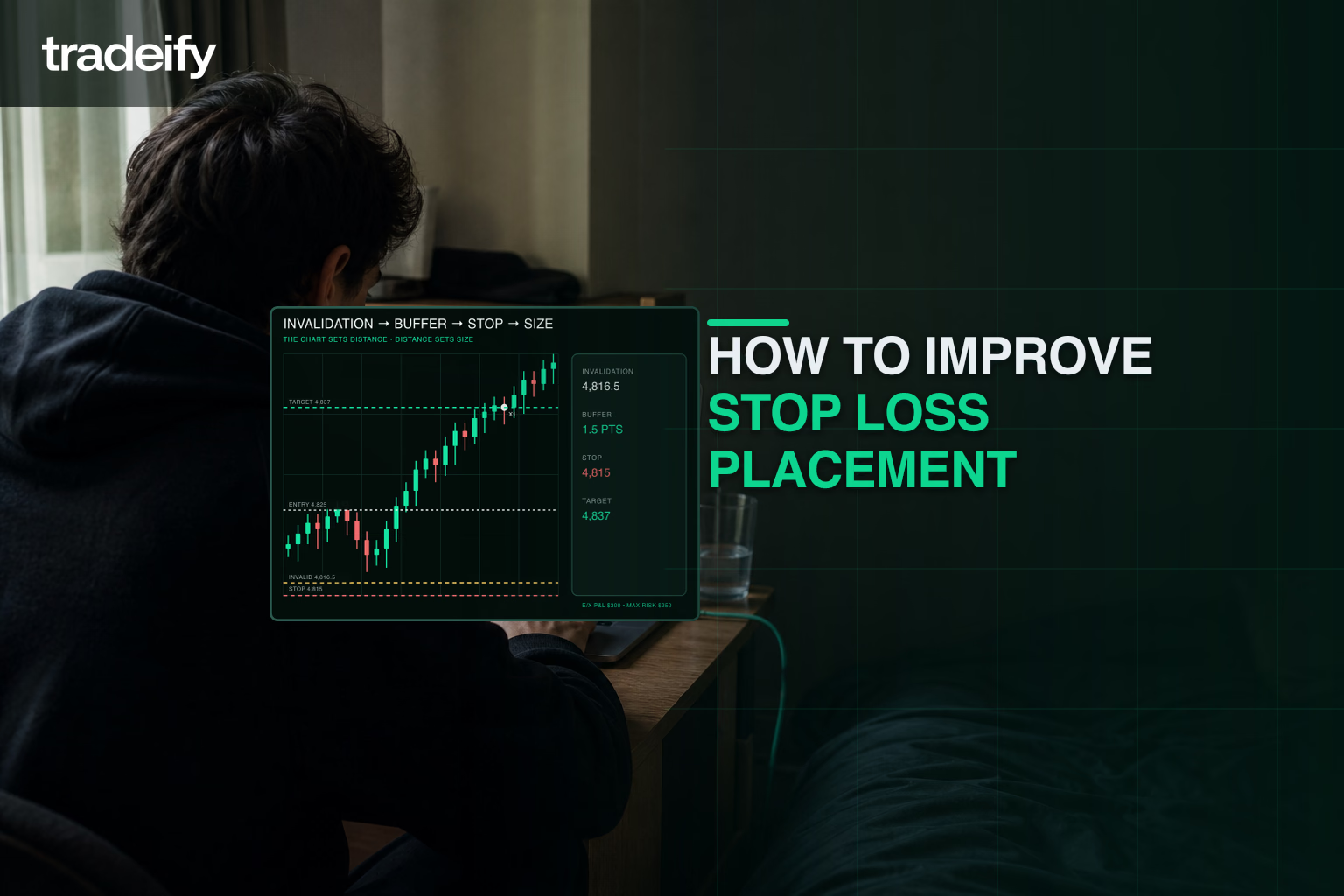
Choose the stop first. Calculate size second.
The basic position-sizing formula is:
Position size = maximum dollar risk ÷ dollar risk per contract or share at the stop
If your maximum risk is $150 and one contract would lose $60 at the planned stop, two contracts risk $120. Three contracts risk $180 and exceed the limit. Round down.
Add a buffer for commissions and possible slippage. A stop order controls the exit instruction, but it does not guarantee the exact fill price in a fast market.
Keep the same risk logic across setups:
- A wider stop requires smaller size.
- A tighter stop may allow larger size, but only if the stop still matches the trade idea.
- Adding to a position increases total idea risk.
- Moving a stop farther away requires a new risk calculation and usually breaks the original plan.
Do not start with the number of contracts you want to trade and then squeeze the stop until the math fits. That turns position size into the strategy.
Control daily risk before the firm does
The firm's daily loss limit is an emergency boundary, not your trading plan.
Set a personal daily stop well inside the official limit. Many traders express that stop in R so it stays connected to position size. A 3R daily stop means three full-risk losses end the session. A more conservative plan may stop at 2R or after two consecutive losses.
A personal daily stop can include both money and behavior rules:
- Stop after the fixed dollar or R limit is reached.
- Pause after two consecutive losses.
- Stop after a rule-breaking trade, even if it wins.
- Stop when volatility makes planned stops unreliable.
- Stop when you begin changing size to recover losses.
The point is to prevent one bad session from becoming an account problem.
Your platform may offer loss-limit controls, bracket orders, or position limits. Use them when they support the plan, but do not depend on an account-level liquidation feature as your stop loss. Fast markets and slippage can carry a loss beyond the expected threshold.
Manage risk across correlated trades
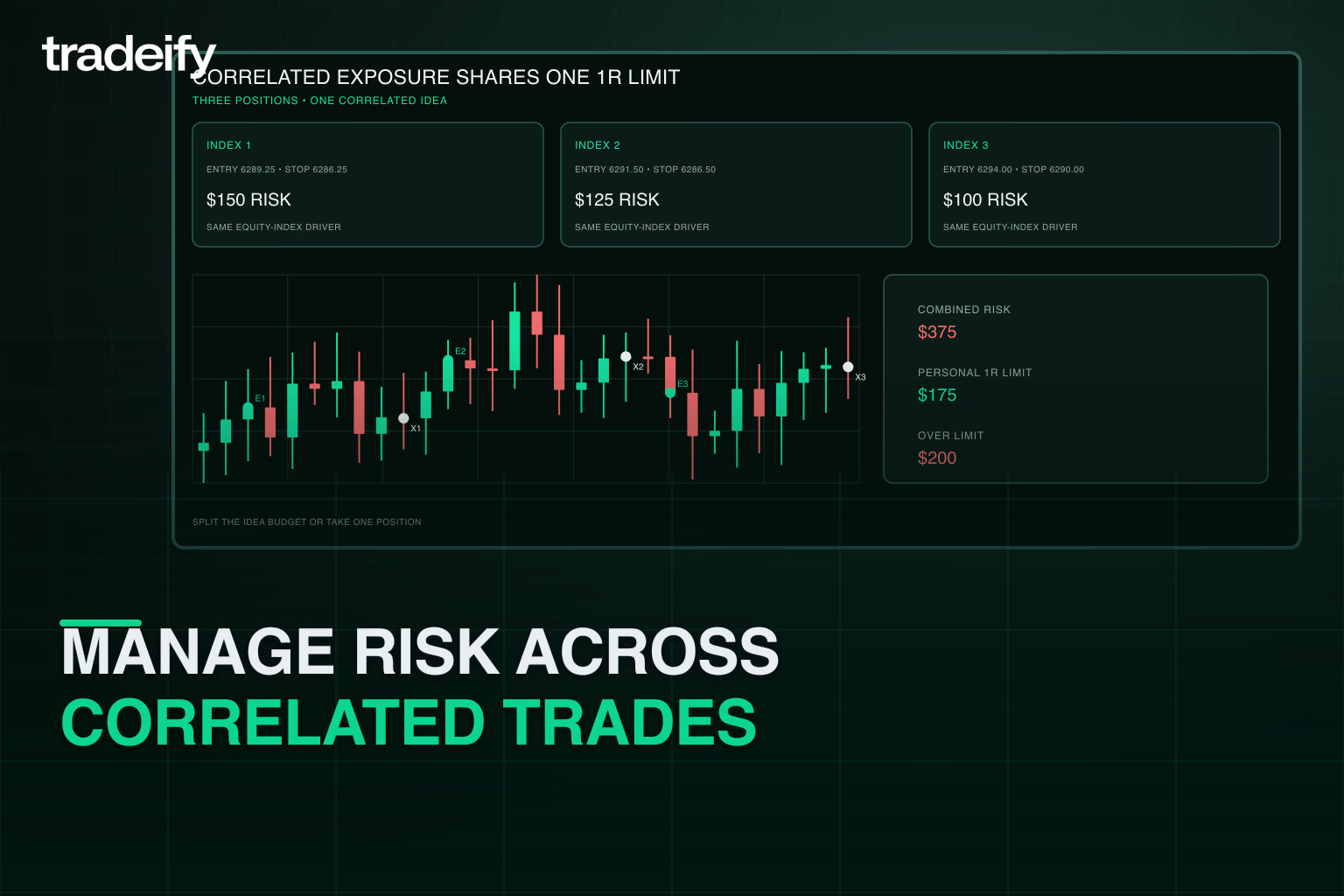
Three open positions do not always represent three separate ideas.
If you are long several equity index futures at the same time, each position may react to the same market move. The same can happen across currencies, rates, commodities, or any group driven by one macro event.
Count correlated exposure as combined risk.
If your normal limit is 1R per idea, two highly correlated positions should usually share that 1R budget instead of receiving 1R each. You could split the risk evenly, assign more risk to the stronger setup, or take only one position.
Also check scheduled events before the session. Inflation reports, central bank decisions, employment data, and unexpected headlines can increase slippage and correlation. Trading around news may be allowed, but permission does not remove the risk.
Cut prop firm risk after losses
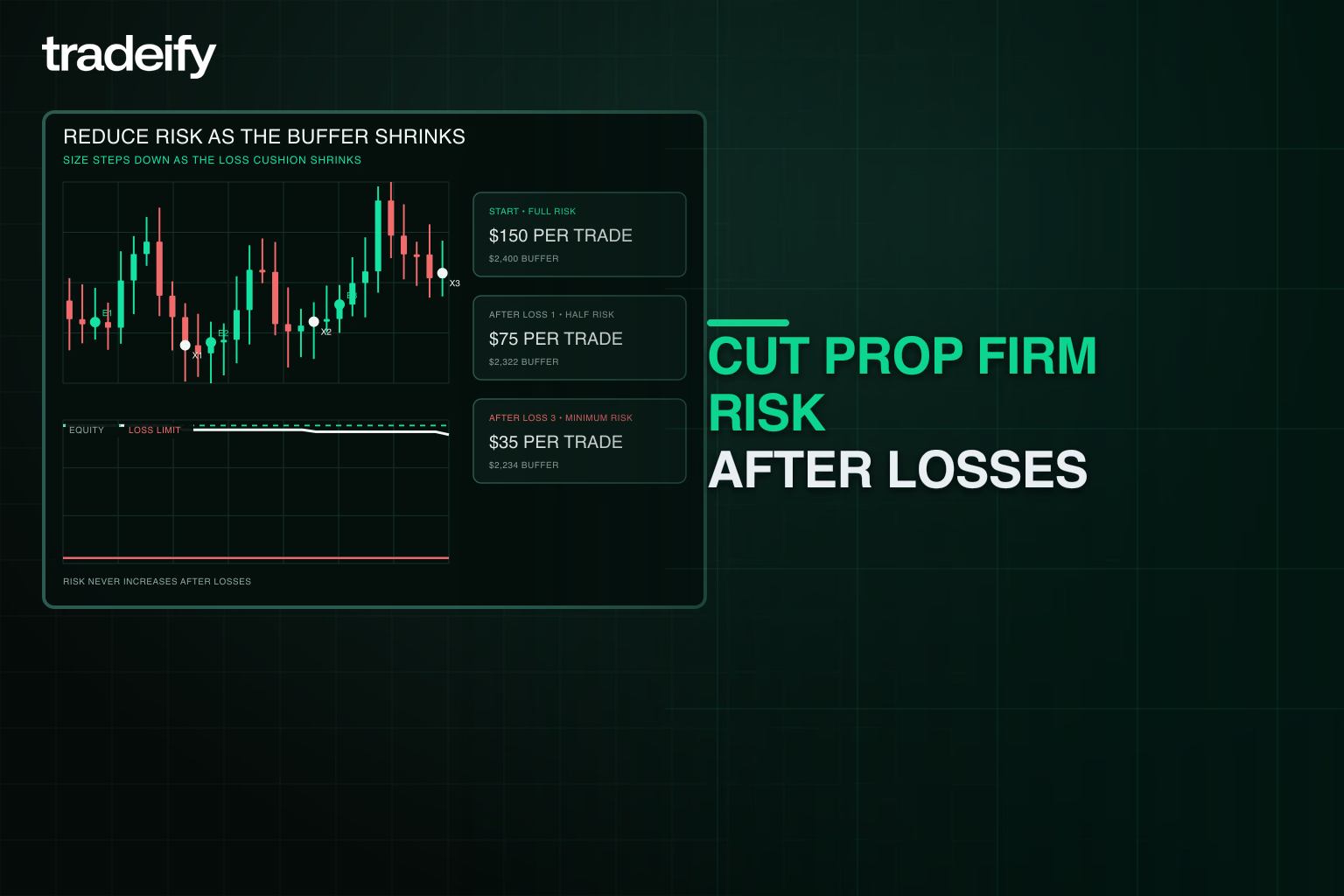
Drawdown changes the amount of room you have. Your size should respond.
One simple risk ladder looks like this:
- Full risk while the account is near its planned baseline
- Half risk after a set drawdown threshold or losing streak
- Minimum size when the account approaches the final recovery zone
- No trading when the remaining cushion cannot support the strategy's normal stop
Suppose 1R begins at $150. After the account loses $750, your plan might cut 1R to $75. That slows the drawdown and gives you time to check whether the issue is normal variance, poor execution, or a market condition that does not fit the strategy.
Do not double risk to recover faster. Recovery math already works against you. A 20% loss requires a 25% gain on the remaining amount to get back to the starting point. More size may shorten the recovery, but it also increases the chance of reaching the hard floor first.
The goal in drawdown is not to get even today. It is to protect the right to trade the next clean setup.
Use a Tradeify risk management example
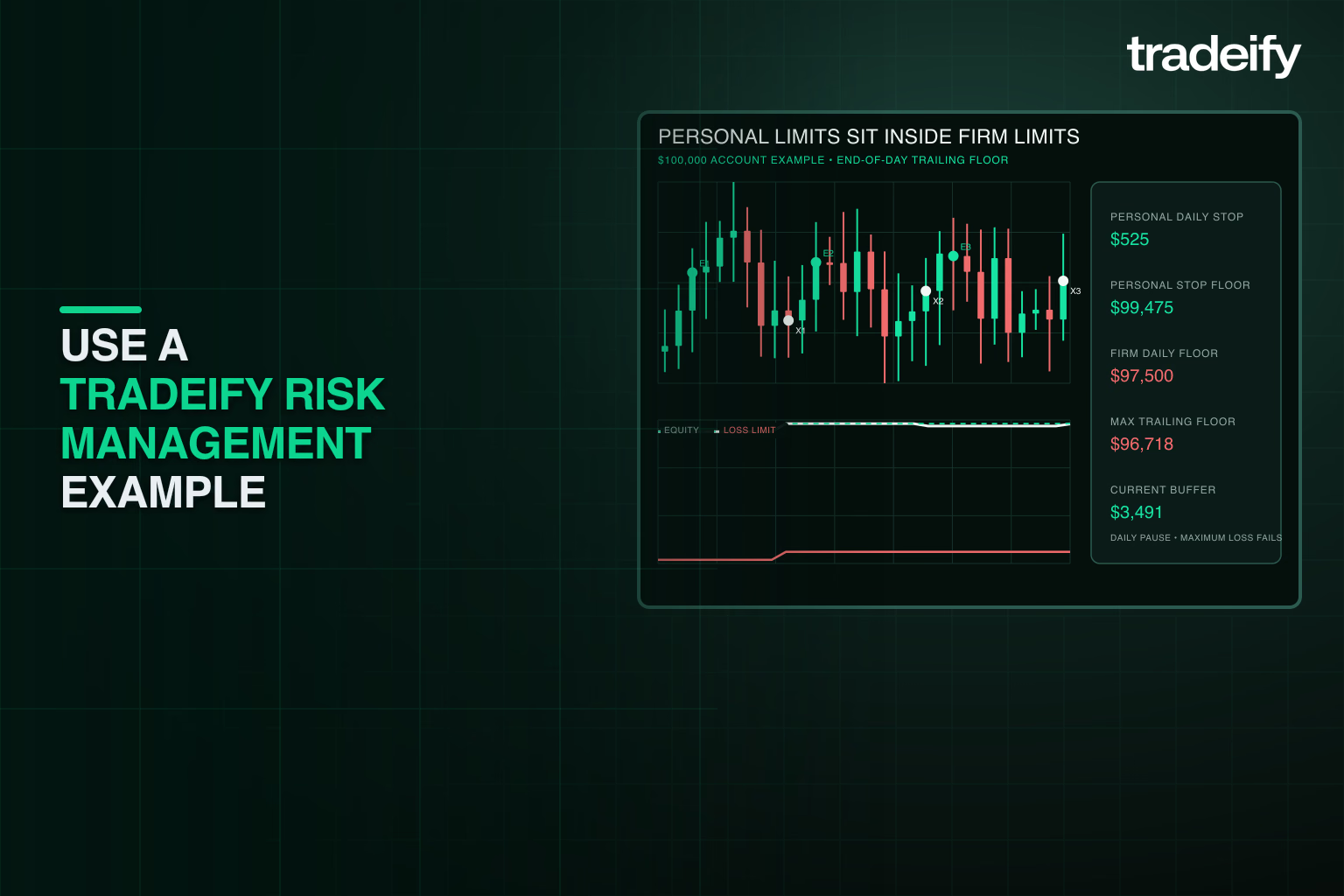
Tradeify's current rules show why a personal risk plan must sit inside the firm's boundaries.
Take a 100K Growth account. It has a $2,500 Daily Loss Limit and a $3,500 maximum trailing drawdown measured from the account's high water mark. The trailing drawdown uses an end-of-day calculation, so the limit only moves after the session closes, but it is still enforced against the account in real time during the day.
The Daily Loss Limit is a soft breach. Reaching it pauses trading for the day, and trading resumes the next session. The maximum trailing drawdown is a hard breach. Reaching it fails the account.
A sample personal plan for that account could look like this:
Risk control | Sample personal limit |
|---|---|
Starting 1R | $175 |
Maximum risk on one idea | $175 |
Two correlated positions | $175 combined |
Daily stop | $525 or 3R |
Consecutive-loss pause | Two losses |
Reduced-risk trigger | Cut to $85 after a $700 drawdown |
Hard personal stop | Stop before the remaining cushion is too small for one planned trade |
These are examples, not Tradeify requirements or trading advice. The important relationship is the gap between the personal $525 daily stop and the firm's larger account limits. The trader is not trying to use every dollar the rules allow.
Tradeify account types have different daily loss, drawdown, consistency, and payout rules. Confirm the current figures for your specific account type in the Tradeify help center and on your dashboard before trading, because account rules can change.
Avoid common prop firm risk mistakes
Risking from the account balance
Using 1% of a $100,000 headline balance would mean $1,000 at risk. If the account's actual maximum drawdown is only a few thousand dollars, a short losing streak can end the account.
Base risk on usable drawdown and the strategy's loss history.
Treating the daily limit as a stop
An account-level limit is the last boundary. It may trigger after slippage, and another hard limit may be closer.
Use trade-level stops and a smaller personal daily stop.
Increasing prop firm risk after a loss
Revenge trading often looks reasonable in the moment. The next setup appears better, the target looks close, and larger size seems like a fast reset.
It is still unplanned risk. Keep size stable or reduce it.
Ignoring open prop firm risk
A trader may calculate risk on each entry but forget the total across all open positions. Add the worst-case loss for every position and account for correlation.
Forcing the prop firm profit target
The target can create deadline pressure even when the account has no time limit. Traders take weak setups, hold past the original exit, or increase size because they are close.
The profit target does not improve the setup. Trade the plan, not the distance to the target.
Changing risk after a winning streak
A few strong sessions do not prove that normal variance is gone. Sudden size increases can return several days of progress in one trade and may create consistency problems.
Scale only through a written rule that was set before the streak.
Follow a prop firm risk checklist
Before the session:
- Record current equity and the hard drawdown floor.
- Calculate usable drawdown.
- Confirm 1R, the daily stop, and contract limits.
- Review scheduled market events.
- Check the firm's current trading and news rules.
- Mark the setups you are willing to take.
Before each trade:
- Define the entry, invalidation point, and stop.
- Calculate dollar risk at the stop.
- Round position size down.
- Add open and correlated exposure.
- Confirm the trade keeps total risk within the plan.
After the session:
- Record planned risk and actual loss for each trade.
- Note slippage, commissions, and execution errors.
- Separate valid losses from rule-breaking losses.
- Update the next session's usable drawdown and risk tier.
Risk management becomes more reliable when it is a routine calculation, not a decision made while a position is moving.
Prop firm risk management questions
How much should a prop firm trader risk per trade?
There is no percentage that fits every trader or account. Start with usable drawdown, then test the risk amount against your strategy's historical losing streak, trade frequency, and likely slippage. The amount should leave enough room for normal variance without approaching the hard account limit.
Should prop firm traders use a fixed percentage?
A fixed percentage can create consistency, but the reference amount matters. A percentage of advertised account size may be too large. A percentage of usable drawdown is more connected to the actual account constraint. Recalculate when the drawdown floor or equity changes.
What is the difference between daily loss and drawdown?
A daily loss limit controls how much can be lost during one trading session. A maximum drawdown controls the account's total permitted decline according to the firm's calculation method. Either limit may be soft or hard depending on the account rules, so verify the exact definitions.
Should prop firm risk change after funding?
It may need to change because funded accounts can have different drawdown, scaling, payout, and consistency rules. Rebuild the plan for the funded account instead of carrying evaluation size forward automatically.
What should a prop firm trader do after two losses?
Follow the rule written before the session. That may mean a timed pause, reduced size, or stopping for the day. Do not decide based on how close you are to the target or how strongly you want the loss back.
Risk management protects the next trade
Passing an evaluation or keeping a funded account is not about avoiding every loss. Losses are part of trading. The job is to keep one loss from changing your behavior and one session from ending the account.
Know the hard floor. Define 1R. Size from the stop. Cap the day. Reduce risk when the cushion shrinks.
Slow down. Trade cleaner. Protect capital first.
Trading futures involves substantial risk and is not suitable for every trader. Prop firm programs, simulated funded accounts, payouts, and rule sets vary. This article is for educational purposes only and does not provide financial or trading advice.
.svg)
.svg)
.svg)
.svg)







.webp)