.svg)

.svg)
.svg)

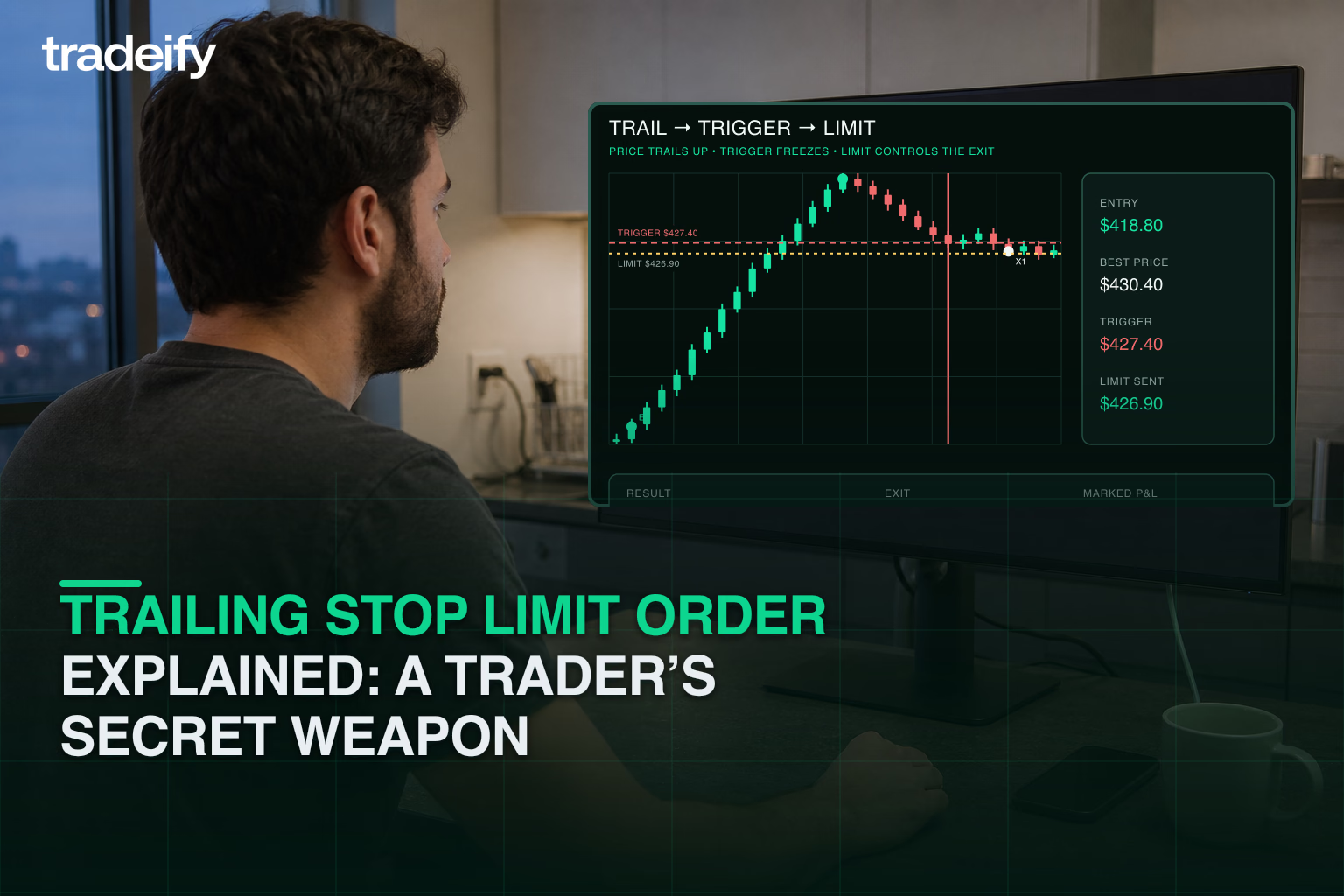


A trailing stop limit order is a trailing stop that submits a limit order after the stop is triggered. The trailing amount follows price only while the trade moves in your favor. When price reverses by the trail amount, the stop triggers and the platform sends a limit order, which gives you price control but does not guarantee execution.
That tradeoff matters. The SEC's Investor Bulletin on stop, stop-limit, and trailing stop orders explains that a trailing stop can be based on a dollar or percentage offset and that a stop-limit order becomes a limit order at the specified price or better. Schwab's trailing stop guidance adds the practical caveat: a trailing stop limit can trigger and still go unfilled if liquidity is thin, other orders are ahead of yours, or price moves through the limit too quickly.
What a Trailing Stop Limit Order Actually Does
- Tracks favorable price movement: the stop level moves only while price moves in your favor.
- Freezes on reversal: once price turns against you, the trailing stop stops moving.
- Triggers a limit order: when the stop is hit, the order becomes a live limit order rather than a market order.
- Can miss the fill: if the market trades through your limit or there is not enough liquidity, the order may remain open and unexecuted.
How the Trigger and Limit Offset Work
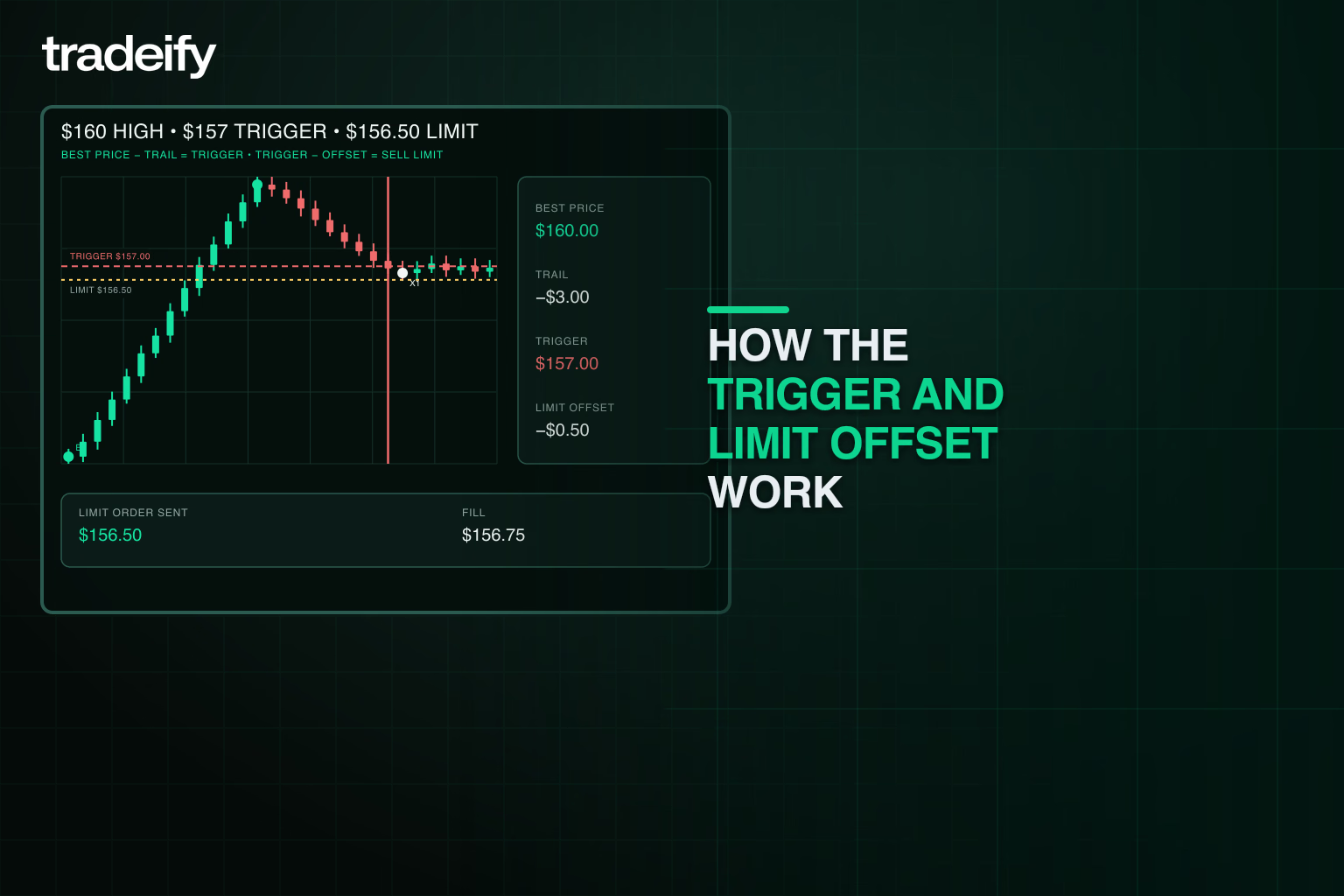
- Choose the trail amount. This is the distance between the best market price reached and the stop trigger.
- Choose the limit offset. This is the extra distance between the stop trigger and the limit price that will be posted after the trigger fires.
- Let the market move. If the position moves in your favor, the stop updates with it. If the move stalls or reverses, the stop stays where it was last set.
- Wait for the trigger. Once price reaches the stop level, your platform sends a limit order. From that point on, you no longer have a trailing stop; you have a limit order waiting for an executable price.
When the Order Can Trigger but Not Fill
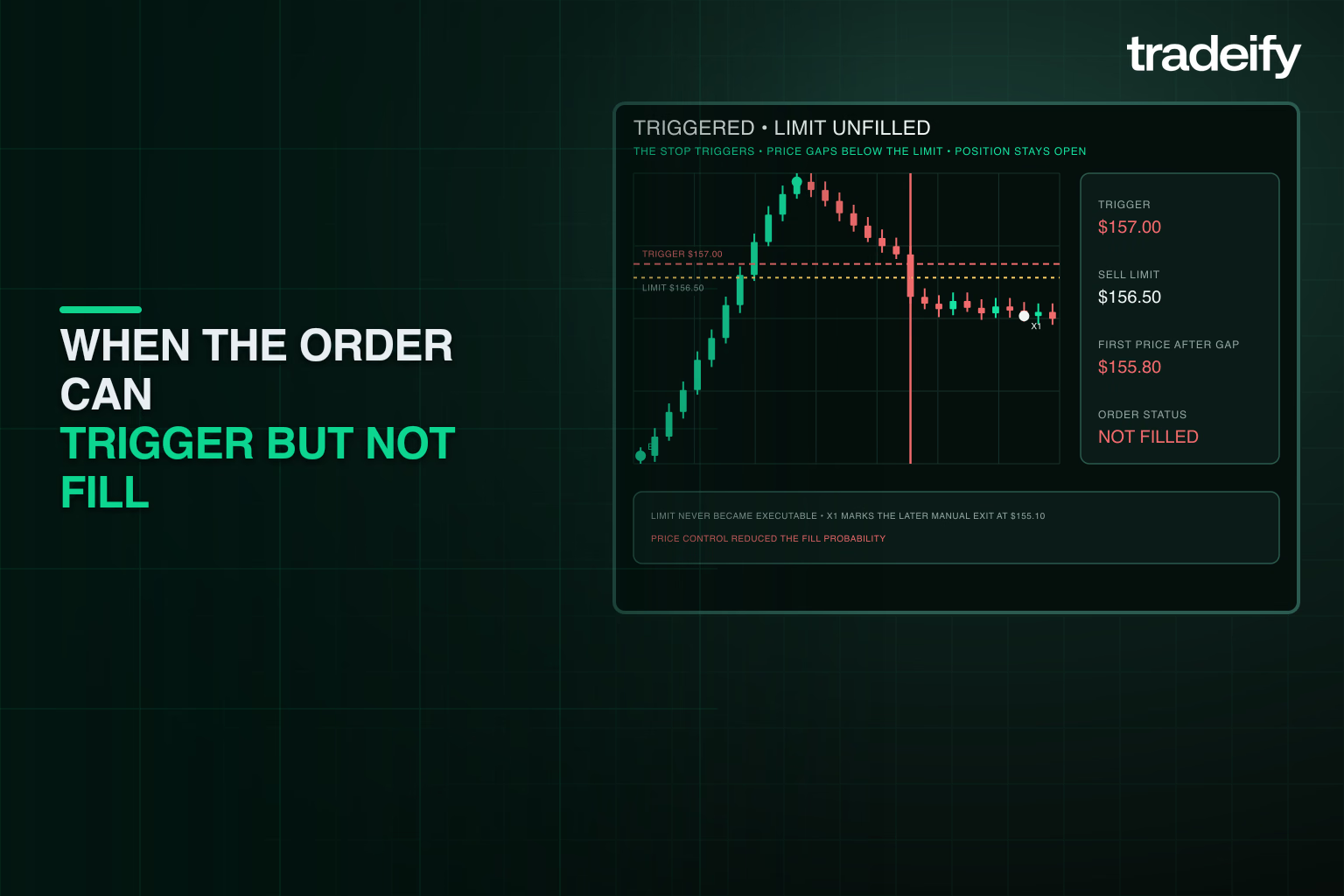
This is the part many retail explainers understate. A trailing stop limit order protects the execution price better than a trailing stop market order, but it does that by accepting fill risk. If price gaps through the limit, trades briefly at the trigger and then falls away, or there is not enough size at your limit, the order can stay open without closing the position. The SEC also notes that firms and venues do not all use the same trigger standard, so you should confirm whether your broker uses last-sale prices, quote prices, or another trigger method before relying on the order in a fast market.
Trailing Stop Limit vs. Trailing Stop Market
Both order types trail a favorable move. The difference appears only after the trigger is hit.
| Order Type | What Happens at Trigger | Main Advantage | Main Risk |
|---|---|---|---|
| Trailing Stop | Becomes a market order | Higher probability of getting out quickly | Execution price may be worse than expected in a fast market |
| Trailing Stop Limit | Becomes a limit order | More control over the worst acceptable price | May not execute at all after the trigger |
Mirrored Buy and Sell Examples
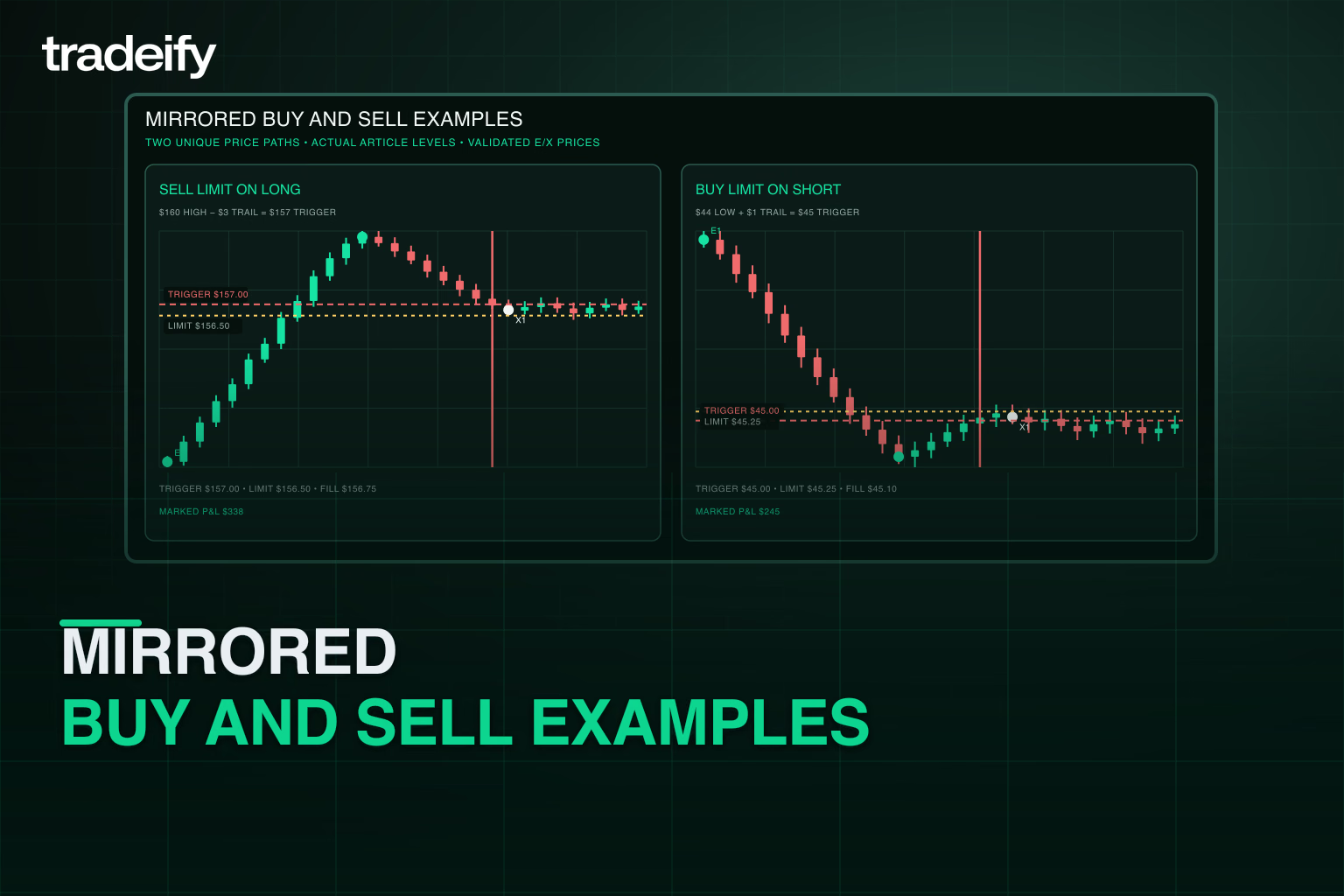
The mechanics are easier to understand when the trigger and limit offset are shown side by side.
| Scenario | Best Price Reached | Trail Amount | Trigger Price | Limit Offset | Limit Price Sent |
|---|---|---|---|---|---|
| Sell trailing stop limit on a long position | $160.00 | $3.00 below the high | $157.00 | $0.50 below the stop | Sell limit at $156.50 |
| Buy trailing stop limit on a short position | $44.00 | $1.00 above the low | $45.00 | $0.25 above the stop | Buy limit at $45.25 |
Sell example: You buy at $150. The market rises to $160. With a $3 trail, the stop rises to $157. If you set a $0.50 limit offset, the trigger sends a sell limit at $156.50. If bids remain at or above $156.50, you can exit. If the market gaps from $157 to $155.80, the order can trigger but remain unfilled.
Buy example: You short at $50. The market falls to $44. With a $1 trail, the stop falls to $45. If you set a $0.25 limit offset, the trigger sends a buy limit at $45.25. That caps the price you are willing to pay to cover, but it also means a sharp rebound through $45.25 can leave the order resting rather than closing the short.
How to Choose the Trail and Offset
- Tighter trail: gives back less open profit but is easier to trigger on routine noise.
- Wider trail: survives normal volatility better but leaves more room between peak price and exit trigger.
- Tighter limit offset: gives stronger price control but increases non-execution risk.
- Wider limit offset: improves fill odds but accepts more slippage after the stop is triggered.
Execution Risks You Need to Understand
- Regular-session handling can differ by broker: the SEC notes that brokers and venues may use different trigger standards, and Schwab's order-type guidance notes that only limit orders are accepted in its extended-hours stock sessions. In practice, you should confirm exactly how your broker handles trailing stops and trailing stop limits outside normal trading hours.
- Gap risk is real: if price gaps through your stop and through your limit, the order can trigger and still leave you in the position.
- Fast markets change queue priority fast: once the stop triggers, you are competing for liquidity like any other limit order in the book.
- Thin liquidity increases non-fill risk: wider spreads and shallow order books make trailing stop limit orders harder to execute cleanly.
Best Practices Before You Place One
- Use the order on instruments with reliable liquidity and tighter spreads.
- Decide the trail amount from market structure or volatility, not from emotion.
- Set the limit offset wide enough to reflect realistic trading conditions for that instrument.
- Know whether your broker triggers stops from last sale, bid/ask, or another price source.
- Test the behavior in simulation or with small size before relying on it in a fast market.
Maximize Your Strategy with Tradeify
Tools like the trailing stop limit order reward traders who think in terms of process, not impulse. They work best when the entry, risk, trigger logic, and exit conditions are all defined in advance.
Join Tradeify today and get:
- Access to institutional-grade trading tools
- Risk-free funding accounts
- Community insights from seasoned traders
- Deep-dive tutorials on advanced order types
- Real-time strategy analysis from top-performing prop traders
Final Thoughts
A trailing stop limit order is not just a profit-protection tool. It is a trade management instruction with a very specific tradeoff: better price control in exchange for possible non-execution. If you understand how the trigger, limit offset, volatility, and liquidity interact, you can use it with much more precision than traders who treat it like an automatic exit button.
Use it when price control matters more than guaranteed execution, and avoid it when the market is so thin or so fast that a missed fill would create a bigger problem than a rough market exit.
.svg)
.svg)
.svg)
.svg)






.webp)