.svg)

.svg)
.svg)



TL;DR: A gamma squeeze is a fast, self-reinforcing price move that can develop when heavy call buying leaves options dealers with exposure they hedge by buying the underlying market as it rises. Gamma measures how quickly an option's delta changes, so the hedge can grow rapidly near at-the-money strikes and close to expiration. High call volume, open interest, or a popular ticker does not prove a squeeze because public totals do not reveal the dealer community's net position. For futures traders, the practical connection is strongest in equity index markets, where options hedging may be executed through index futures. Treat suspected gamma conditions as a volatility warning, not a trade signal: reduce size when price speed expands, define invalidation before entry, expect slippage and reversal risk, and protect evaluation or funded-account drawdown limits. The same short-gamma hedging can accelerate declines as well as rallies, so treat the condition as a two-sided volatility warning rather than a bullish signal.
Why gamma squeeze headlines catch traders off guard
You see a market rip through resistance, volume jumps, and every pullback gets bought. The move looks like clean momentum, so the temptation is to chase it before it gets away.
That is exactly where traders can get caught.
A suspected gamma squeeze can add mechanical buying to an already-rising market. The same feedback that accelerates the move can fade quickly when option exposure changes, expiration passes, or the underlying moves away from the strikes creating the most sensitivity. A vertical rally can turn into a sharp reversal before a late entry has room to work.
The useful question is not, “Can I find the next squeeze?” It is, “What mechanics could be affecting price, and how should that change my execution and risk?”
What a gamma squeeze means
A gamma squeeze is an upward price feedback loop tied to options hedging. It can form when customers buy calls, dealers take the other side of enough of that flow to become net short gamma, and the underlying price rises toward important option strikes.
As the market rises, the calls' delta can increase. A dealer with net short call exposure may buy more of the underlying to keep directional risk controlled. That buying can push price higher, which can increase the required hedge again.
The loop looks like this:
- Traders buy calls because they expect the underlying price to rise.
- Dealers sell some of those calls and manage the resulting net exposure.
- The underlying starts moving higher.
- Call delta rises, especially near at-the-money strikes.
- Dealers who are net short gamma may buy more underlying shares or futures.
- That hedge buying adds demand and can accelerate the rally.
- The higher price can trigger another hedge adjustment.
The word “can” matters. Market makers manage books containing calls, puts, multiple strikes, and multiple expirations. They may be long gamma, short gamma, or close to balanced in aggregate. A large amount of call trading does not automatically leave dealers with a large short-gamma position.
How gamma changes a dealer hedge

Delta estimates how much an option's price changes when the underlying moves. Gamma estimates how much that delta changes as the underlying moves.
CME Group's options-on-futures lesson describes gamma as the change in delta. It is often easiest to think of delta as speed and gamma as acceleration.
Suppose a call has a 40 delta and gamma adds about 5 delta points for a one-unit rise in the underlying. The call's delta would increase to about 45, with other inputs held constant. The seller's directional exposure has changed, so a delta hedge that was sufficient before the move may no longer be sufficient.
Why at-the-money options matter to gamma
Gamma is generally highest when an option is near the money. That is where a relatively small move in the underlying can cause the option's delta to change most quickly.
If a market is approaching a strike with heavy open interest, the options near that strike may become more sensitive. That still does not prove the dealer community is short those options. It only identifies an area where hedge requirements could change quickly if the positioning and order flow line up.
Why expiration can increase gamma sensitivity
Near expiration, an at-the-money option has less time left to finish in or out of the money. Its delta can shift quickly as price moves around the strike.
That is why short-dated options receive so much attention in gamma discussions. It is also why a move can become unstable around expiration. The hedge requirement may expand quickly, then shrink or disappear when contracts expire or move decisively away from the strike.
What can amplify a gamma squeeze
A gamma squeeze needs more than a chart moving up. Several conditions can make the feedback stronger.
How call buying can fuel a gamma squeeze
Calls near the money can carry high gamma. If customer buying leaves dealers net short a large amount of that gamma, a rising underlying can require repeated hedge purchases.
Far out-of-the-money call volume may look dramatic on a scanner, but it may have limited immediate hedge impact if the options carry low delta and the underlying never approaches those strikes.
How open interest shapes gamma squeeze risk
Open interest measures outstanding option contracts. A large concentration at nearby strikes can identify where option sensitivity may matter, especially as expiration approaches.
Open interest is not a dealer-position report. It does not show which side opened each position, whether dealers offset the risk elsewhere, or how much exposure remains after intraday adjustments.
Why a gamma squeeze still needs price movement
The hedge loop normally needs an initial move. News, earnings, a macro event, a technical breakout, or ordinary buying pressure may start the rally.
Gamma does not explain why the first buyer acted. It describes how options hedging may reinforce a move that is already underway.
How liquidity affects a gamma squeeze
The same hedge order has more price impact in a market with fewer shares available or less depth near the current price. That is one reason gamma squeezes are often associated with lower-float stocks.
Deep, liquid index markets can still experience gamma-related hedging, but the flow must be considered relative to available liquidity. A large notional number by itself can sound more important than it is.
Dealers positioned short gamma
This is the condition traders skip most often.
When dealers are net short gamma, they may need to buy as the market rises and sell as it falls. That hedge flow moves with price and can amplify volatility.
When dealers are net long gamma, the hedge direction can be the opposite. They may sell into a rally and buy into a decline, which can dampen price movement. The sign and size of net exposure matter more than a headline about total options volume.
The downside version of a gamma squeeze
A gamma squeeze is usually described on the way up, but short-gamma hedging runs in both directions. Dealers who are net short gamma buy as the market rises and sell as it falls, so a fast decline can carry the same mechanical fuel as a fast rally. If heavy put buying leaves dealers short gamma below the market, their hedge selling can accelerate a drop as price falls through sensitive strikes, and the loop can feed on itself exactly like the upside version.
Research by Amaya, Garcia-Ares, Pearson, and Vasquez, using Cboe-provided trade records, measured S&P 500 index options market maker positions directly, including the zero-day contracts at the center of most gamma discussion, and estimated how much their aggregate gamma moves index volatility. Two findings matter for traders. Volatility is elevated when market maker gamma is negative, so the mechanism is real. But the estimated maximum impact was to raise annualized daily volatility by about 3.3 percentage points, which the authors describe as well within the range of ordinary day-to-day changes, and market maker gamma was typically positive in their sample. Negative-gamma feedback is a condition worth respecting, not a hidden engine behind every down day.
For futures traders the lesson is symmetry. Much of that hedging runs through index futures, so a fast decline in an equity index can carry the same mechanical selling that a fast rally carries mechanical buying. Treat a downside acceleration the same way you treat an upside one: reduce size when price speed expands, define invalidation before entry, and expect sharp reversals when the hedge flow fades. A downside squeeze is not a free ride for shorts, either, because the mechanical selling unwinds just as mechanically when options expire or price moves away from the sensitive strikes.
Use a gamma squeeze evidence ladder
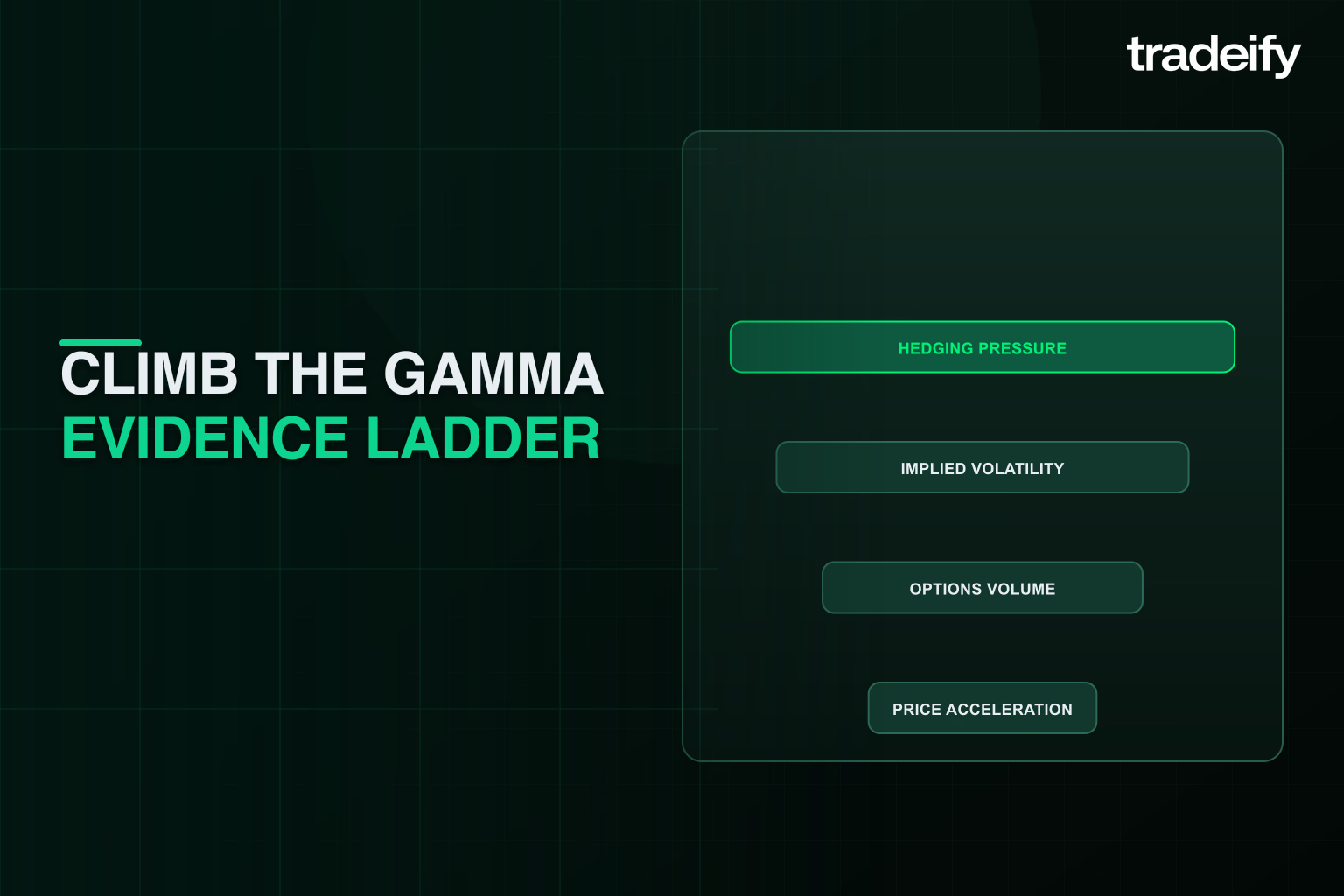
Gamma analysis gets weaker when an observation is quietly promoted into a fact about dealer positioning. Keep each claim on the rung its evidence can support.
Evidence rung | What is available | What it supports | What it does not prove |
|---|---|---|---|
1. Live market behavior | Price speed, range expansion, futures volume, spread, depth, and fill quality | Volatility and execution conditions have changed | Options hedging caused the move |
2. Published options data | Option volume, open interest, strikes, expirations, and implied volatility | Activity or sensitivity may be concentrated in specific areas | Dealers are net short those options |
3. Positioning estimate | A model that assigns likely dealer exposure | A conditional scenario for how hedging could react | The model has reconstructed every participant's book |
4. Causal story | A claim that dealer hedging created the rally | A hypothesis to compare with price and positioning evidence | A tradable entry by itself |
The trading response should become more conservative as the claim moves down the ladder. Live price and liquidity can justify changing size or waiting for cleaner execution. Options data can define areas to watch. A positioning estimate can frame a scenario. None of them removes the need for a price-based setup and invalidation.
Write the rung beside the thesis. If the only support is a causal story after price has already gone vertical, do not let the label justify a late entry or larger size.
What gamma squeeze signals can and cannot tell you
You cannot confirm a gamma squeeze from one public data point. You can only build a case from several pieces of evidence and remain open to other explanations.
Useful gamma squeeze context
Watch for:
- unusual call activity relative to the underlying's normal options trading;
- open interest concentrated near the current price and near expiration;
- price moving toward or through those strikes on expanding underlying volume;
- repeated acceleration with shallow pullbacks;
- a catalyst or breakout that can start the underlying move;
- liquidity thin enough for hedge orders to affect price.
These conditions describe possibility, not certainty.
Weak gamma squeeze conclusions
Be skeptical when the entire thesis is:
- “Call volume is high.”
- “There is a large strike above price.”
- “The stock has high short interest.”
- “Zero-day options volume is huge.”
- “A gamma model shows one important level.”
Each observation may matter, but none reveals the complete dealer book.
Cboe's analysis of SPX zero-day options makes this limitation concrete. Gross volume can be enormous while customer buying and selling remain balanced, leaving market makers with far less net gamma risk than the headline notional suggests.
Price still has to confirm the gamma thesis
If price cannot hold above the breakout or the high-interest strike, the squeeze thesis is weak no matter how exciting the options data looks.
Start with price, liquidity, and execution. Use options positioning as context. Do not turn an estimated hedge level into a guarantee that someone must buy.
Gamma squeeze versus short squeeze
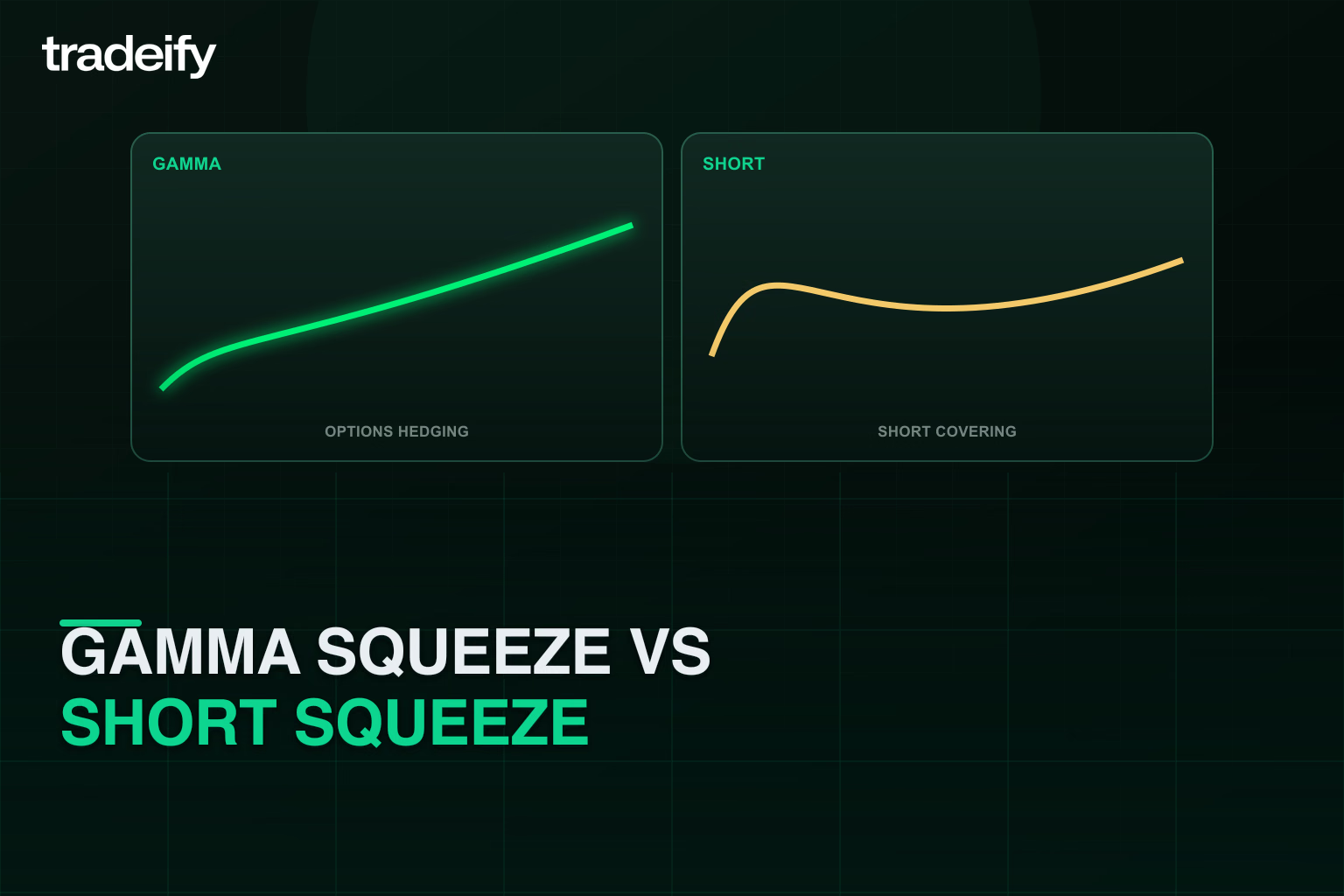
Both squeezes can create forced buying, but the buyer and mechanism differ.
Question | Gamma squeeze | Short squeeze |
|---|---|---|
Who may be forced to buy? | Options dealers adjusting hedges | Short sellers closing borrowed-share positions |
What creates the pressure? | Delta changes on a net short-gamma options book | Losses, margin pressure, borrow conditions, or risk limits on short positions |
What data matters? | Strike concentration, expiration, option flow, gamma estimates, and underlying liquidity | Short interest, float, borrow cost, days to cover, price, and liquidity |
What can end it? | Exposure is offset, options expire, call demand slows, or price moves away from sensitive strikes | Shorts finish covering, new supply appears, buying demand fades, or price reverses |
The two mechanisms can overlap. A rising stock can force short sellers to cover while options dealers adjust hedges. When both groups buy into limited liquidity, the move can accelerate.
Do not assume overlap. High short interest does not prove a gamma squeeze, and heavy call buying does not prove a short squeeze.
How long a gamma squeeze can last
There is no reliable timer.
The intense phase may be brief because the mechanism depends on live positioning, price location, liquidity, and time to expiration. The move can continue while price rises through sensitive strikes and net short-gamma hedging adds demand.
It can fade when:
- call buying slows or reverses;
- dealers offset exposure with other options;
- the underlying moves far enough beyond a strike that gamma falls;
- options expire and the hedge is reduced or removed;
- liquidity increases and absorbs the orders;
- the original catalyst loses force.
This is why late entries are dangerous. The chart can still look strongest when the mechanical buyer is closest to finishing.
Was GameStop a gamma squeeze
GameStop is the example most traders associate with gamma squeezes. It is also a good lesson in why a popular explanation is not the same as a confirmed one.
The SEC staff report on the January 2021 equity and options market events described how dealer call hedging could add upward pressure. SEC staff also reported that it did not find evidence of a GME gamma squeeze during January 2021 in the available data.
That does not make gamma squeezes fictional. It means GameStop should not be presented as a clean, settled proof of the mechanism. The episode included unusual share demand, options activity, short interest, social attention, changing liquidity, and trading restrictions. A one-label explanation hides that complexity.
For traders, the takeaway is simple: explain the move with evidence you can support, and keep competing explanations alive.
Why a gamma squeeze matters to futures traders
Most textbook gamma-squeeze examples involve stock and equity options. A futures trader may still feel related hedge flows in equity index contracts.
Index options dealers can use futures to manage directional exposure. In its SPX gamma-hedging explanation, Cboe notes that market makers may buy or sell S&P futures as the index moves. If dealers are short gamma, those hedges can run in the same direction as price. If they are long gamma, the hedges can oppose the move.
That connection matters if you trade equity index futures such as S&P 500 or Nasdaq-100 contracts. Options positioning can contribute to:
- faster movement through nearby price levels;
- abrupt acceleration after a breakout;
- sharp reversals when hedge demand fades;
- changing price behavior near a large option strike;
- different price behavior as expiration approaches.
The futures tape does not tell you which flow is a gamma hedge. Economic news, systematic funds, cash-market orders, liquidations, and ordinary momentum can produce similar price action.
Treat gamma as one layer of market context, not a complete cause.
How prop-firm traders can manage gamma-driven volatility
In an evaluation or funded account, being right about the market story is less important than staying inside the account's risk rules. A fast move can create more slippage, emotional entries, and loss escalation than your backtest assumed.
Define the gamma trade before the breakout
Write down:
- the price level that activates the idea;
- the condition that invalidates it;
- the maximum loss the account can absorb;
- the contract size that fits that stop distance;
- the event or expiration window that could change volatility.
If you cannot define those points before entry, the move is already controlling the decision.
Size futures positions for the actual stop distance
Do not choose your normal contract count first and force a tight stop around it. Start with the technical invalidation, estimate the dollar risk including realistic slippage, and reduce size until the trade fits.
That matters when price is moving quickly. One extra tick of slippage across too many contracts can turn a planned loss into a drawdown problem.
Do not chase a gamma squeeze
A squeeze can stay extended longer than expected, but that does not make every entry good.
If the only reason to buy is fear of missing more upside, wait. A pullback that holds, a consolidation above the breakout, or a fresh setup gives you a clearer invalidation point. Missing a move costs less than violating a daily loss or drawdown rule.
Keep the futures stop where the thesis fails
Do not widen a stop because the move is “supposed” to squeeze. Mechanical buying is not permanent. If price loses the level that made the setup valid, the gamma story does not rescue the trade.
Plan for gamma acceleration and reversal
Before entry, know what you will do if price:
- moves immediately in your favor;
- stalls at the next strike or resistance level;
- snaps back through the breakout;
- becomes too fast for clean order placement.
You may decide to reduce size, take partial profits, trail only after the trade earns room, or skip the setup. The important part is making the decision before the tape speeds up.
Stop when futures execution breaks down
Fast markets can tempt you to revenge trade after a slipped stop or missed fill. That is where one market event becomes an account-level mistake.
If spreads, slippage, or price speed move outside your plan, stop. Protect capital first. There will be another session.
Frequently asked questions about the gamma squeeze
Can you predict a gamma squeeze?
Not with certainty. Public options data can reveal unusual activity, strike concentration, and expiration timing, but it cannot show every dealer hedge or offset. Use the data to identify a possible volatility condition, then require price confirmation.
Can a gamma squeeze move down?
The term “gamma squeeze” usually refers to an upward feedback loop driven by call hedging. Short-gamma dealer hedging can also amplify a decline because dealers may sell as price falls. Traders often describe that more broadly as negative-gamma feedback rather than an upside gamma squeeze.
Does high open interest cause a gamma squeeze?
No. Open interest counts outstanding contracts. It does not identify the net dealer side, the delta of the positions, or the offsets elsewhere in the book. High open interest near the money can increase sensitivity, but price, order flow, positioning, and liquidity still have to align.
Can a gamma squeeze happen without a short squeeze?
Yes. The mechanisms are separate. A gamma squeeze can develop from options hedging even when short sellers are not under meaningful pressure. A short squeeze can also occur without a large options feedback loop. They may overlap, but one does not prove the other.
Is a gamma squeeze a trading strategy?
It is a market mechanism, not a complete strategy. A tradable plan still needs an entry, invalidation, position size, exit logic, and account-risk limit. Without those pieces, “gamma squeeze” is only a story attached to a fast chart.
What triggers a gamma squeeze?
The loop usually needs an initial push and the right positioning behind it. A catalyst such as news, earnings, a macro event, or a technical breakout starts the underlying moving, and the squeeze can develop when dealers are net short gamma near strikes with heavy open interest close to expiration. Without that dealer positioning, the same rally is an ordinary move.
How to detect a gamma squeeze?
You cannot confirm a squeeze from one public data point. Build a case instead: unusual call activity relative to normal, open interest concentrated near the current price near expiration, price moving toward those strikes on expanding volume, repeated acceleration with shallow pullbacks, and liquidity thin enough for hedge orders to matter. Price still has to confirm the thesis, because similar price action can appear without any options feedback.
What are the risks of a gamma squeeze?
Late entries, slippage, and sharp reversals. The mechanical buying can fade when call demand slows, dealers offset exposure, options expire, or price moves away from the sensitive strikes, so a vertical move can reverse before a late entry has room to work. In an evaluation or funded account, chasing a fast move can also turn one event into a drawdown problem.
How futures traders can protect the account
Gamma helps explain why options exposure can change quickly and why dealer hedging may reinforce a move. It does not tell you that a squeeze must happen, how far price must travel, or when the buying will stop.
For a futures trader, that uncertainty is the point. Use gamma context to prepare for faster price, weaker fills, and sharper reversals. Trade only when price gives you a setup with defined risk. If the move is already vertical and your invalidation is unclear, let it go.
You do not need every move. You need enough discipline to be available for the next clean one.
Futures and options involve substantial risk of loss. This article is for educational purposes and is not personalized trading advice.
.svg)
.svg)
.svg)
.svg)






.webp)