.svg)

.svg)

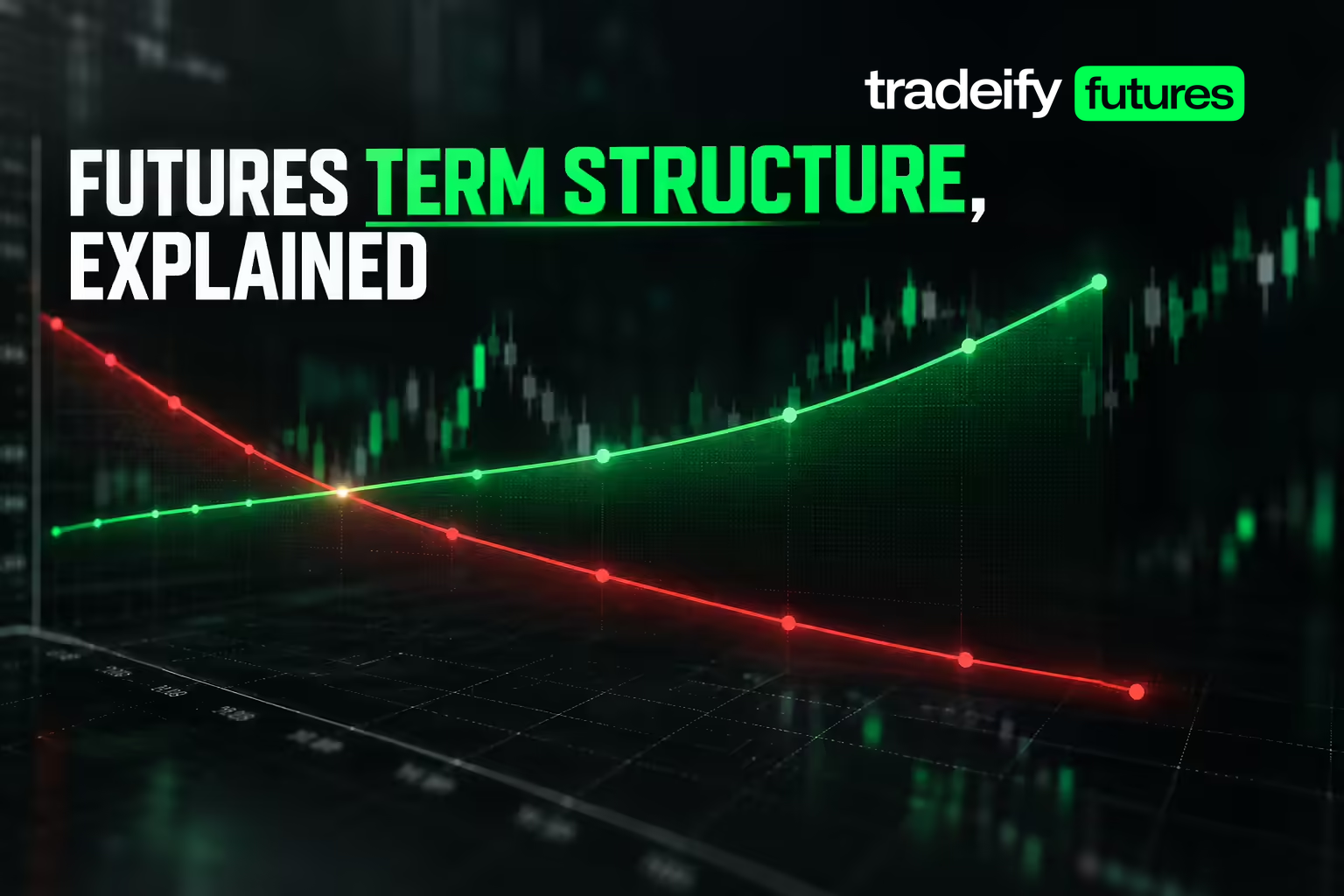
How to read contango and backwardation on the futures curve, what each shape means for hedgers and speculators, and how to calculate calendar spreads.

.svg)


How the economic surprise index works and what it means for traders' market analysis and decision-making.
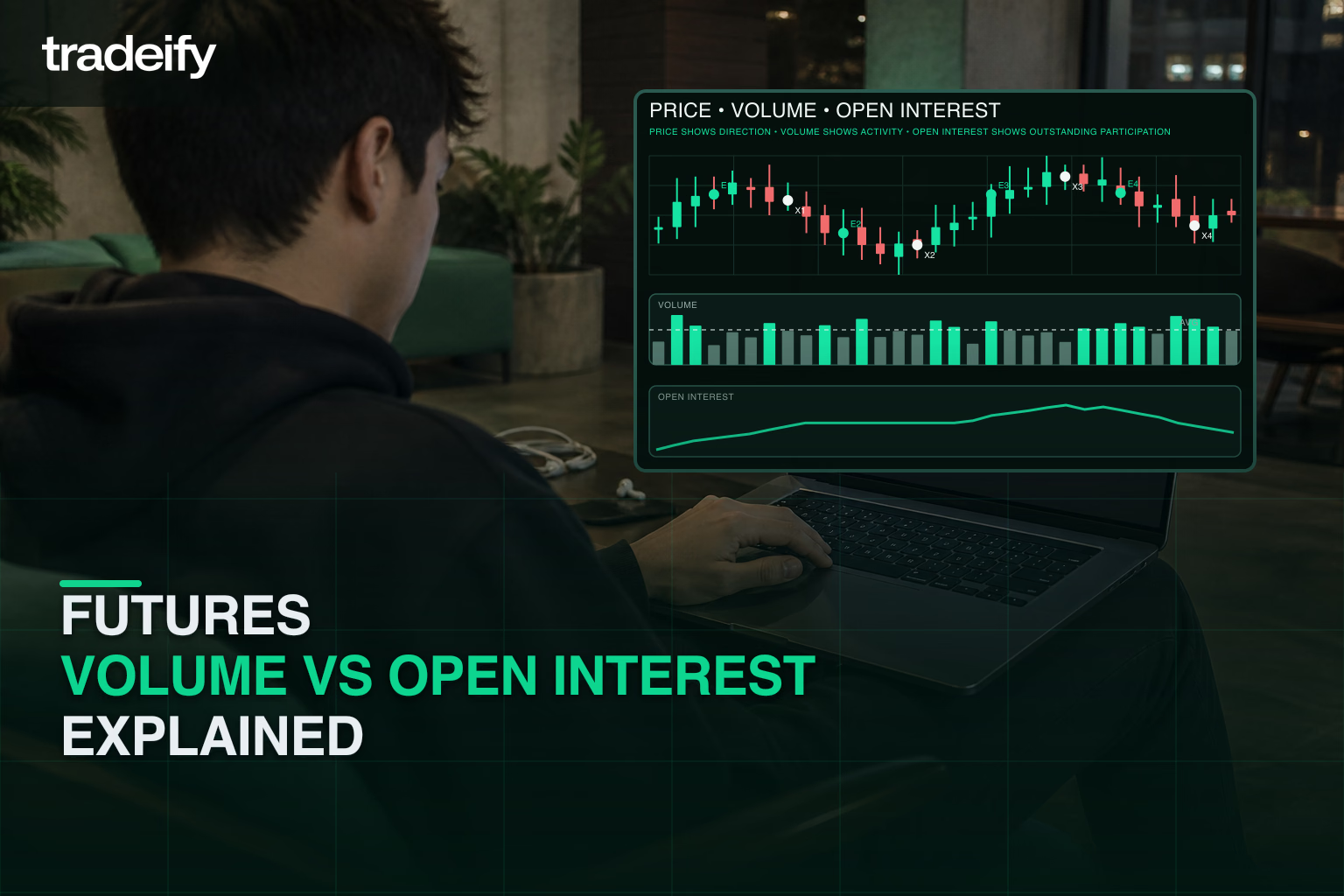
Open interest vs volume in futures. How each trade changes both numbers, how to read them with price and rollover, and where the data comes from.
Leading vs lagging indicators for futures traders, from moving averages and MACD to a confirmation-cost test that keeps late entries off the chart.
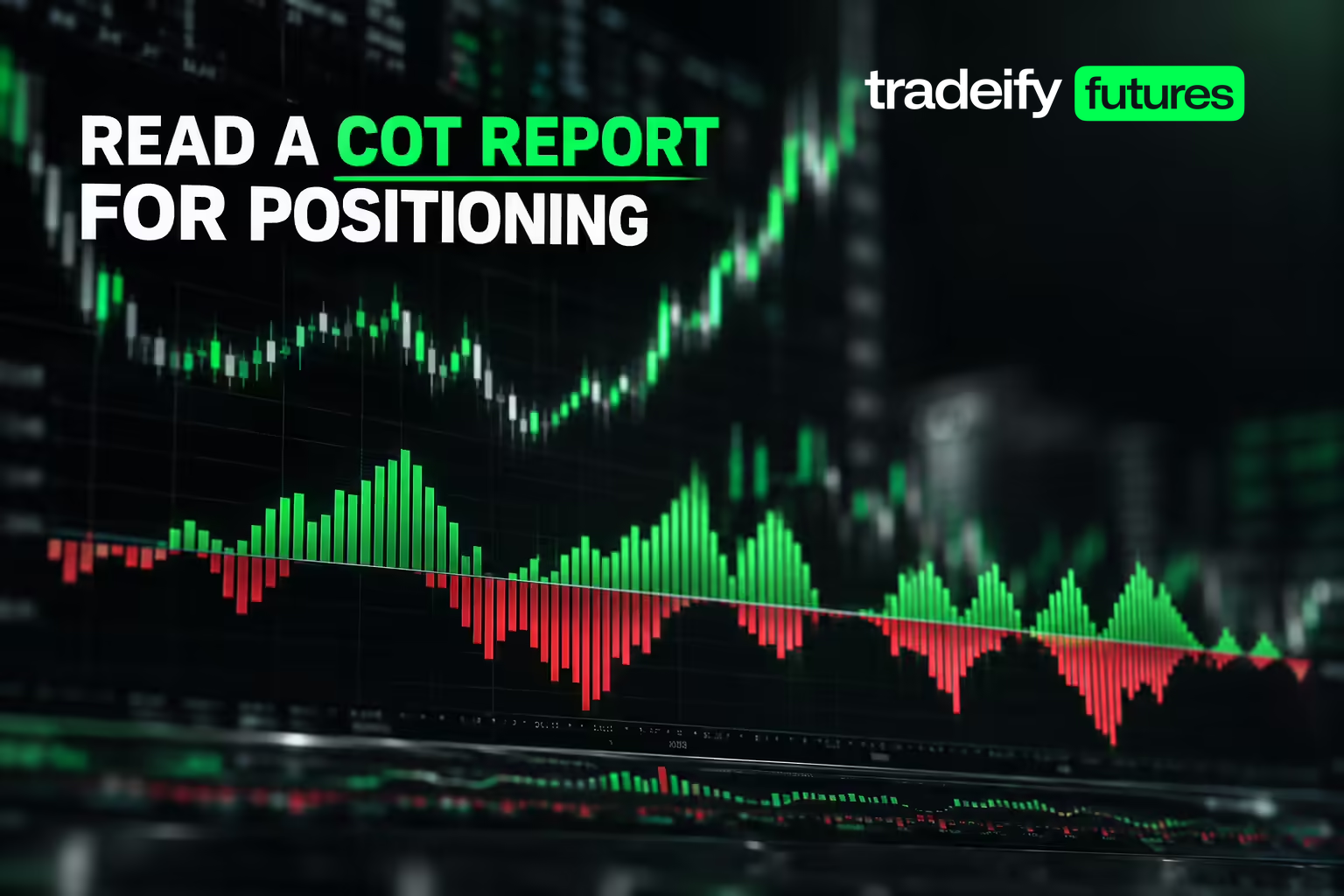
What COT charts show, how the reporting delay affects their use, and how to build one repeatable positioning review.

Learn how momentum trading works, which setups traders use, how to define entries and exits, and how to test a strategy under futures account rules.
Quadruple witching is the quarterly session when equity index futures, equity index options, single-stock options, and single-stock futures expire together or on closely aligned schedules.

Indices trading means taking a position on the movement of a market benchmark instead of a single company.
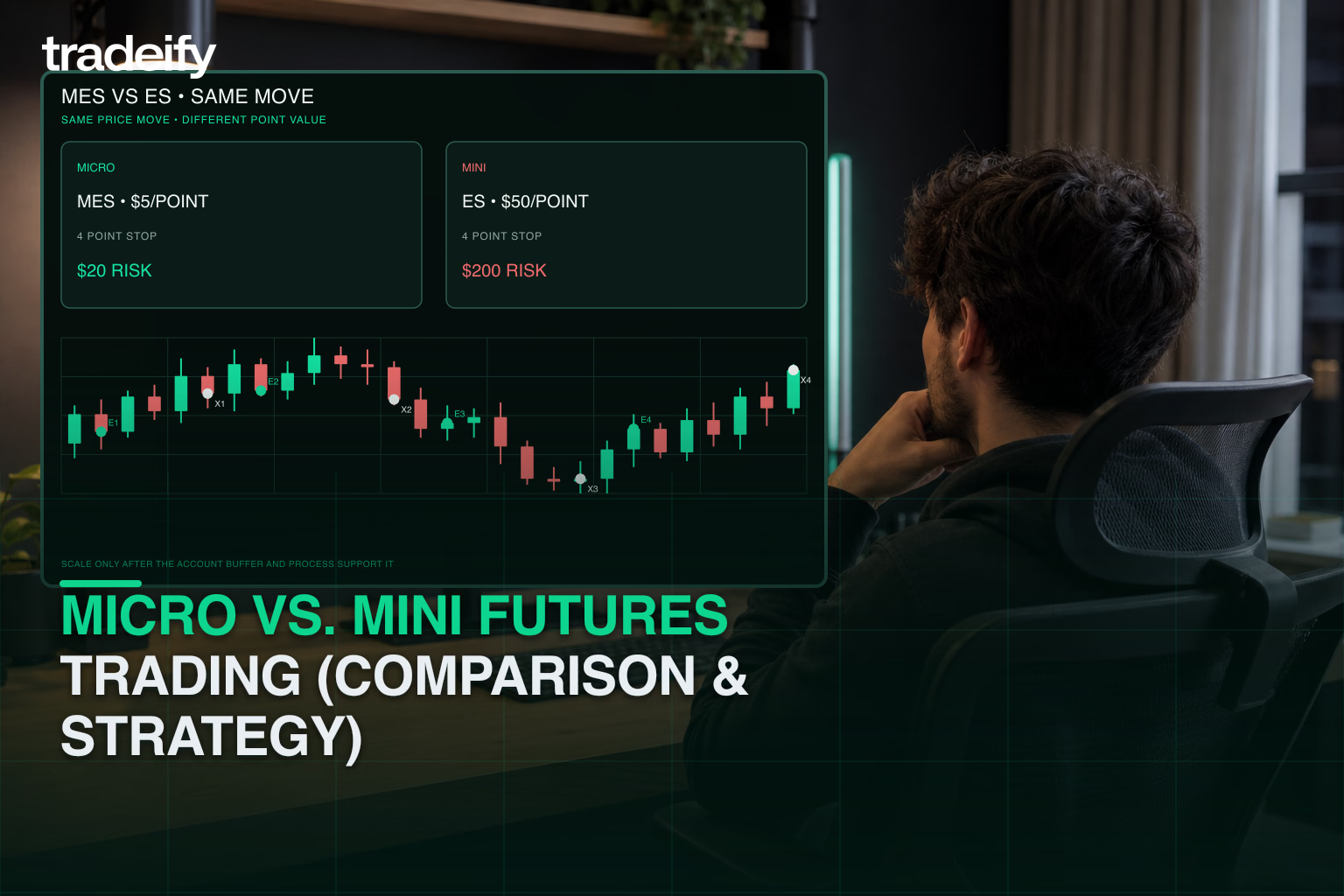
Compare micro vs mini futures by contract size, tick value, and trader fit, with a quick decision table, CME-sourced specs, and a question-led FAQ.

Learn futures market hours, daily pauses, high-volume sessions, and how to choose the best times to trade around contract and prop-account rules.
How small-account prop traders can use Micro WTI Crude Oil futures (MCL) to trade oil volatility within Tradeify's funded account rules.
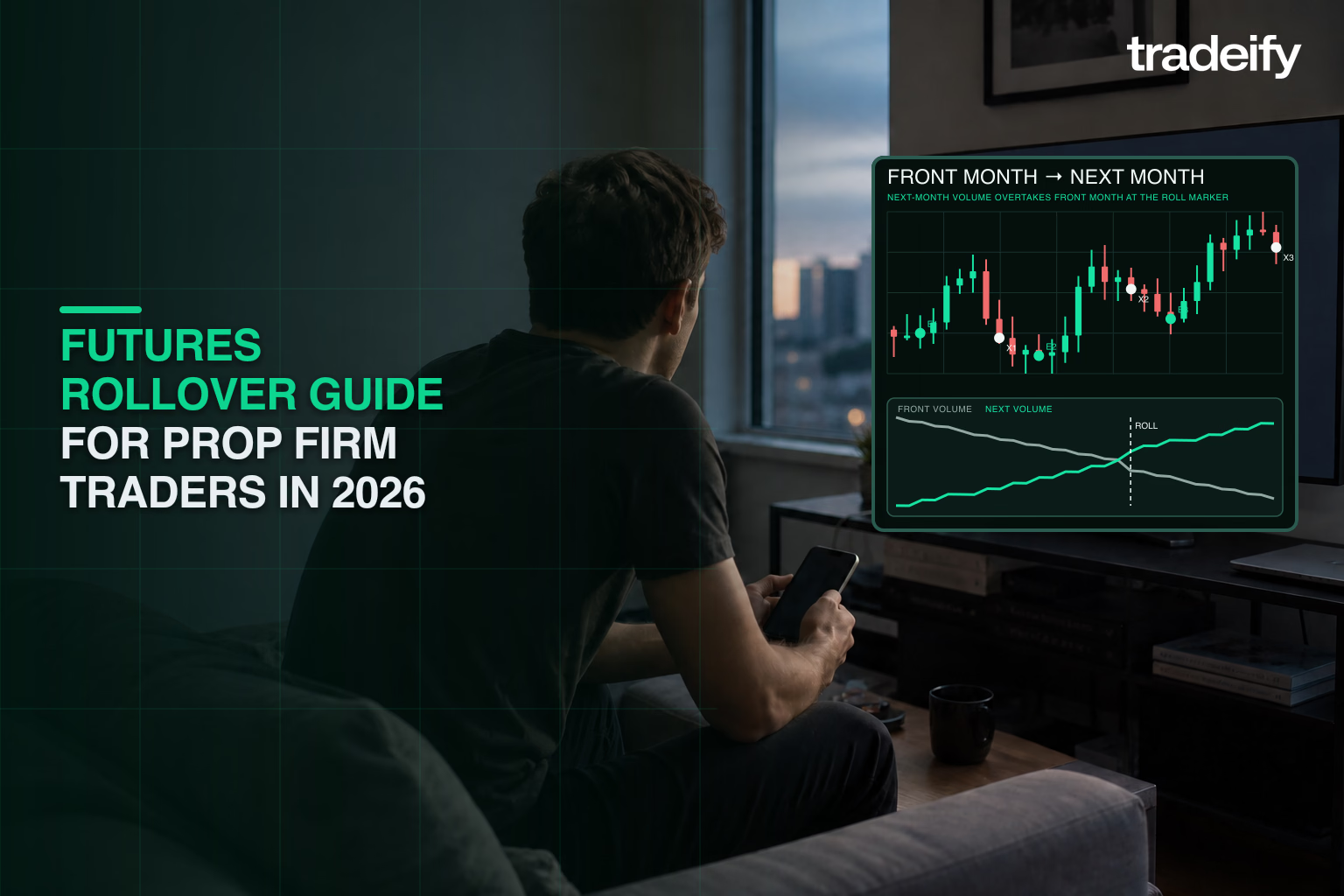
The complete 2026 futures rollover playbook for prop firm traders. Quarterly equity index dates, energy and metals cycles, and how to execute rolls on Tradovate, Rithmic, or WealthCharts without breaching Tradeify's rules.